Plate ID: How I Research & Identify Antique Plates
Need help identifying your antique dishes? Learn my step by step method for researching and identifying antique plates!
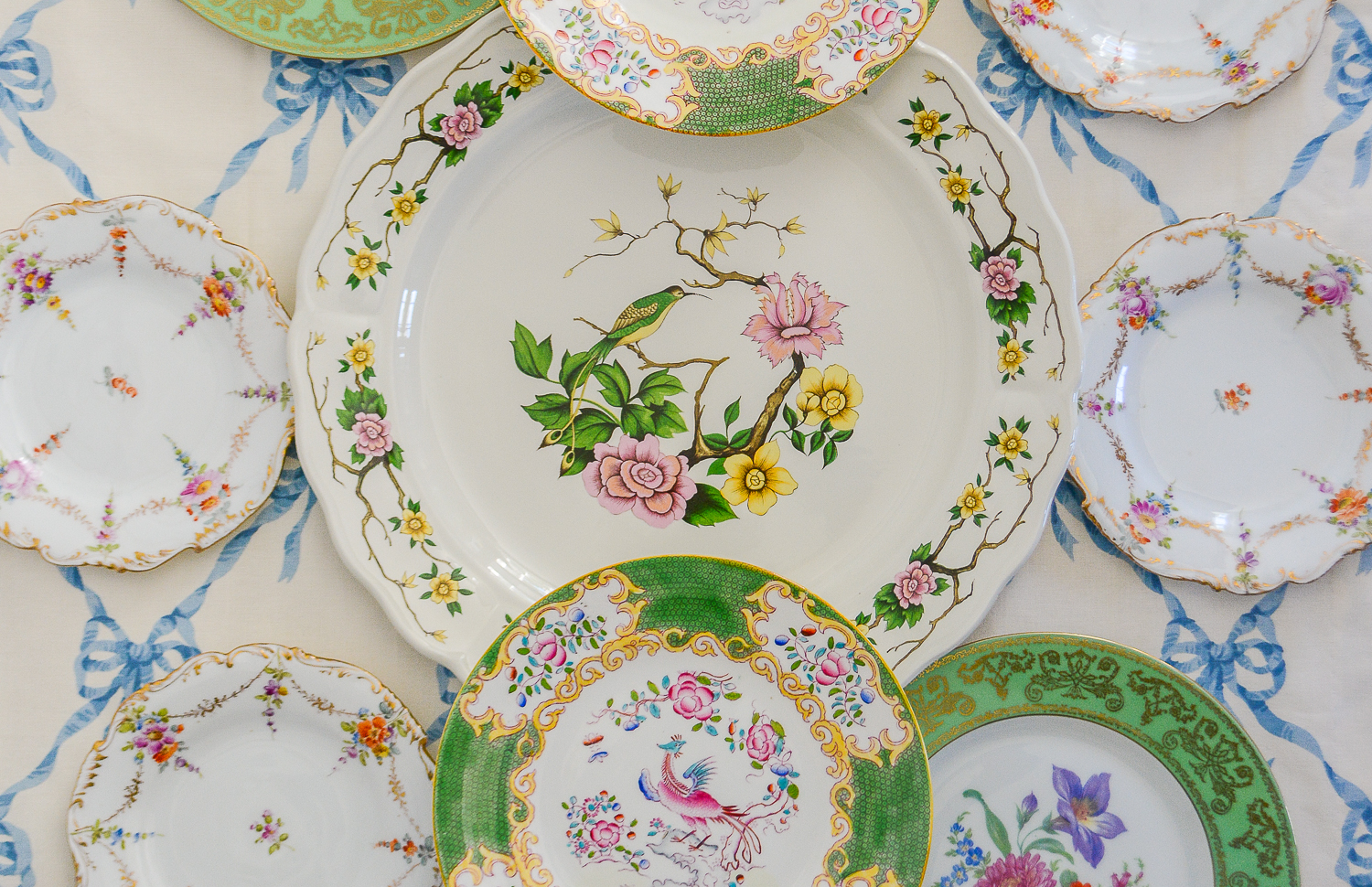
If you are a regular P&P reader, you know I have a keen affinity for plates. As I’ve said before and I’ll reiterate here…each one of these round beauties is a little work of art! And I hang them up on my walls accordingly!
Aside from the unique designs and utility to beautify a dining table, the thing I enjoy most about antique plates is researching and identifying their maker, time period, design, and value. There is just something thrilling about finding a new gorgeous patterned plate and not knowing who made it then sitting down to hunt out the gritty details. When you finally track those down it is a bubbly rush. I know…I’ve got a weird sense of fun!
But I bet many of you have a similar sense of fun. Or maybe you have picked up a pretty plate and wondered where it came from but not known how to discover it’s identity. Let me guide you through my process for researching and identifying antique plates!
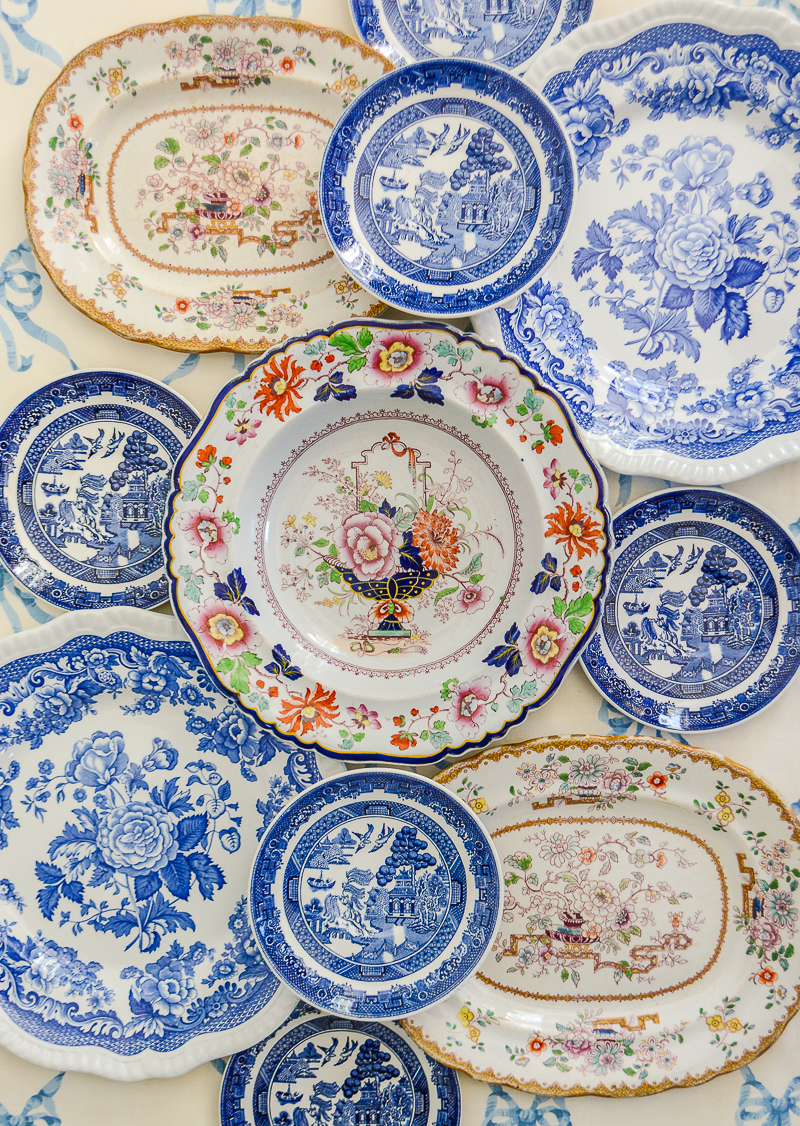
Step One: Turn the Plate Over Examine the Markings
On the majority of plates after 1800 and many earlier ones, manufacturers inscribed a unique emblem or logo (for a modern term) on the back, which labeled and advertised their production. These maker’s marks can tell us a wealth of information about a ceramic — in fact far more than a simple maker’s name. Marks may be stamped, painted, impressed, printed, or incised on the bottom of the ceramic.
Makers redesigned their emblems ever so often using a different color or making changes to the symbols and writing as their companies evolved, so you can often date a piece by matching the right mark to when it was used. A simple Google search will pull up many sites that maintain these records like AntiqueMarks.com or Kovels. If you prefer an old school approach, buy one of the many ceramic marks books like this one from Miller or this one.
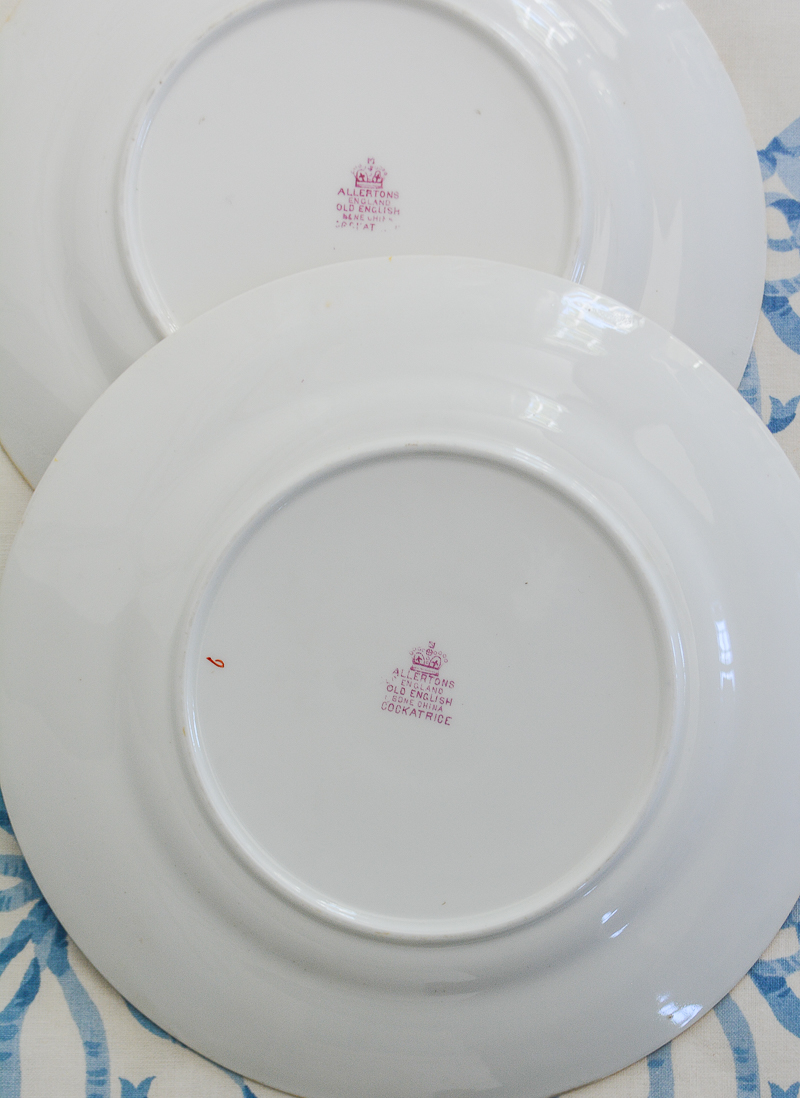
Allertons Crown Mark, English bone china, circa 1915-1920 on Cockatrice Plates.
A few emblem insights:
- Blue emblems in underglaze were commonly used for marks pre-1850, if the emblem uses a different color this maybe a helpful clue.
- Many makers used numerals or symbols to designate the year the ceramic was produced. Look for these near but not necessarily apart of the emblem. Wedgwood, Doulton, Meissen and others did this. Then you can look up that manufacturer’s code guide to find out the year.
- The individual artist who painted the design sometimes left their signature.
- If you see the words: English Bone China or Bone China, it is probably from the 20th Century.
- If a country name is inscribed, the piece likely dates after 1891 or if the phrase “made in…” after 1921 due to US importation laws that required this identification.
- Small hand-written/painted marks tend to be Pre-1800’s.
- Design Registration Marks or Kite marks with – Rd – in the center were used between 1842 and 1883.
- The use of the word Royal before a company name dates a piece post 1850.
What about two emblems?
In addition to a maker’s mark or in place of it you may see a seller’s mark for the store that commissioned and sold the dishware. This mark can also be informative, so don’t discount doing a bit of research about the seller to determine age.
Some plates have a maker for the ceramic body – the potter- and a maker for the design – the painter- when these processes were done by different companies.
Step Two: Identify the Pattern
Pattern refers to the stylized design used to decorate a specific plate or group of ceramics. While a common enough practice now, most ceramic manufacturers did not initially name their patterns. Names either developed over time or they were identified with a pattern code, while some manufacturers have been assigned names by scholars like Arlene Schleiger did for Haviland.
If the plate is marked, you can search through the maker’s patterns to discover what it is called and when it was made. I find the most helpful resource with the most extensive database is Replacements.com. Enter the maker’s name in the top right search bar and then use their filtering tool to narrow down your search. It will allow you to filter by design, color, rim style and color.
Explore my list of the top 50 rare and valuable china patterns here.
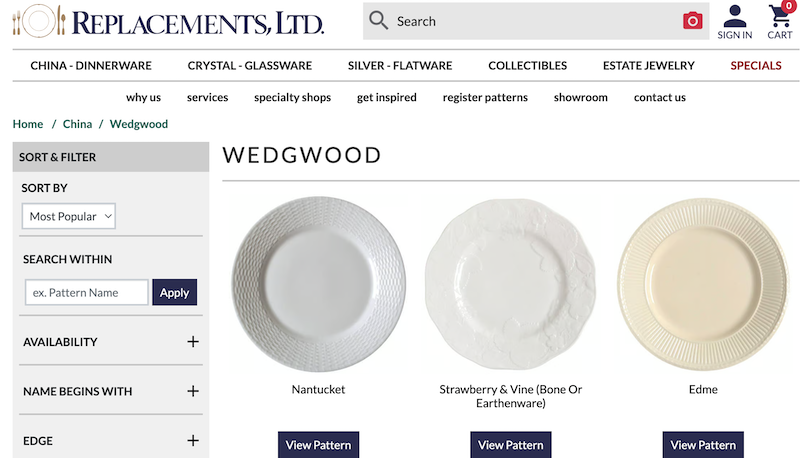
Once you find your pattern there is usually some helpful information about the type of ceramic and dates the pattern was active.
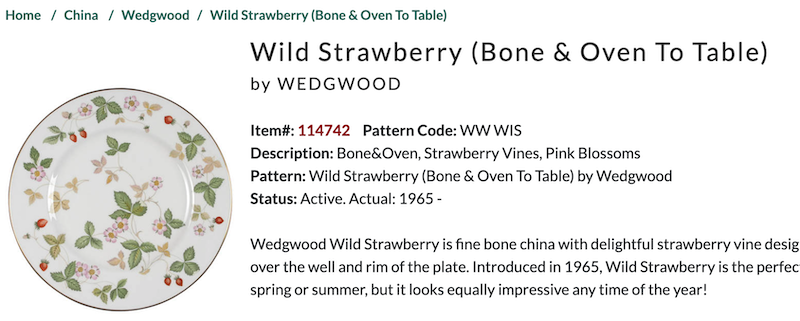
If you have ever gone down the Replacements rabbit hole, you know there can be page after page of scrolling to get through all the patterns for one of the big manufacturers like Royal Worcester, Spode, Wedgwood, or Haviland. So…how can you speed up the process? A Google Lens search!
Step Three (Maybe Step One): Let Google Do The Work
Let’s say your plate’s mark is really smudged and hard to discern!
Or…
There is no mark!
Or…
You just can’t identify the pattern!
Google to the rescue my friends. Really it has never been more easy to identify an antique plate. Simply snap a photo of your plate head over to the Google search engine and click the little camera icon on the right side of the search bar. When you do that this box will pop up:
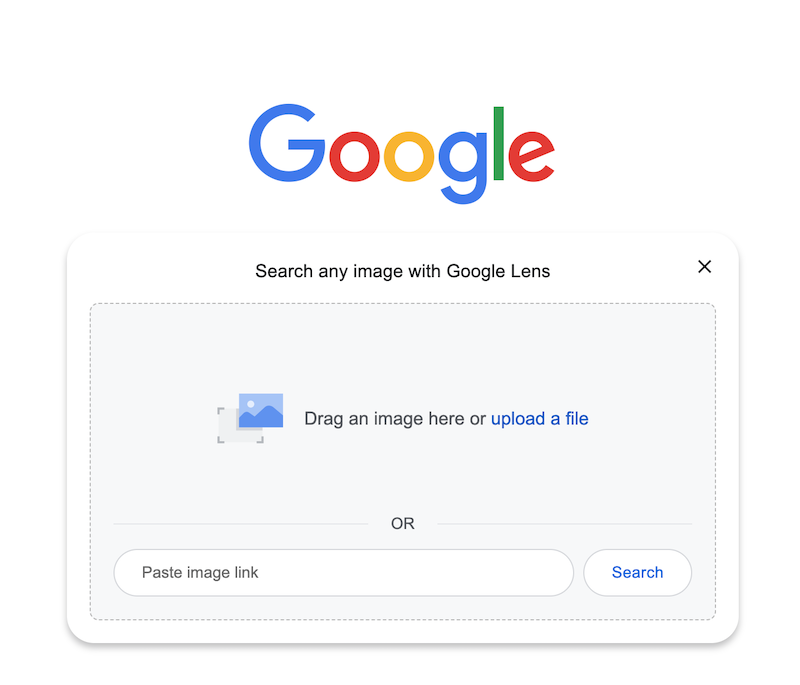
Add your image.
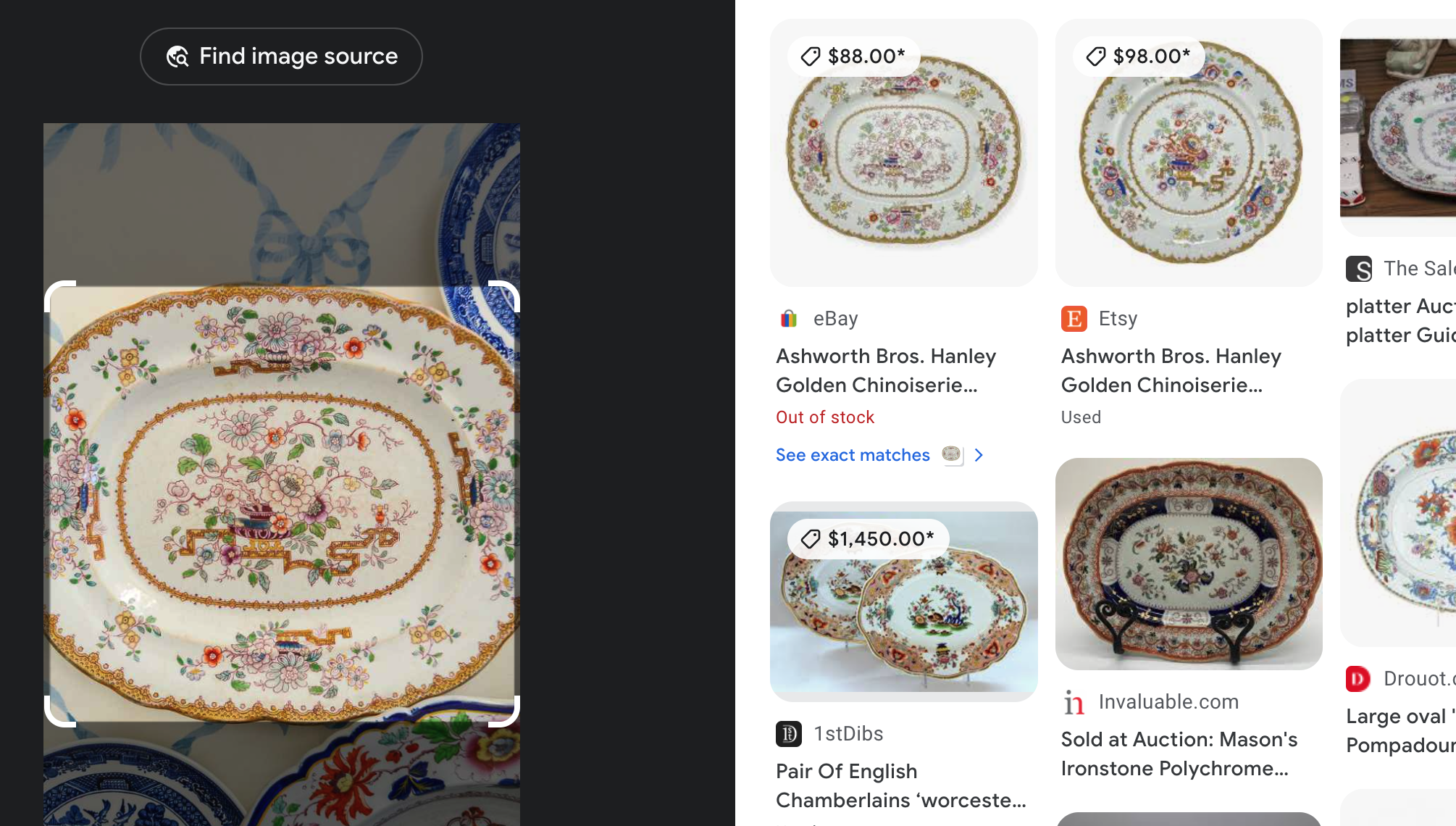
Use the corner outlines to specify the zone you want searched. Then similar visual results will pop up to the side and you can click on those listings to learn more. You can do the same image search from your phone using the Chrome app.
Here is an example of a mark search:
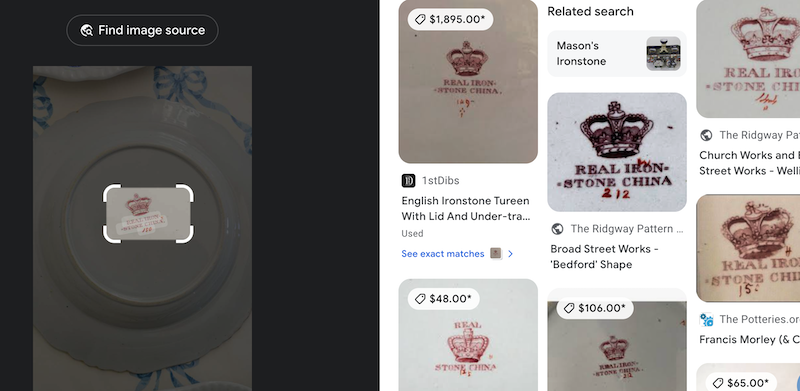
Be sure you narrow the field to the mark. As you can see there will be ceramics for sale that come up in the search. These can be useful to identify your item, but always double check the information is from a reliable source. A good rule of thumb is to look for a consensus among sellers and resources. Make sure multiple sources identify that mark as the same manufacturer.
What if Google doesn’t find your mark?
When a mark can’t be identified or there is no mark, then I turn to the pattern design for clues to when it was made and where. Stylistic characteristics can point to certain aesthetic movements that can point to a time period and/or place. This does take a more trained eye and knowledge of decorative arts, but here are some questions to ask:
- Does the plate have Asian or Chinoiserie motifs? Most antique export porcelains were unmarked. Read this.
- What colors are used in the design?
- Is the design hand painted or transfer printed?
- Is there gilding?
- What material is the plate made from: stoneware, earthenware, porcelain? Read this for ID help.
Head to this post for more on determining value without a mark.
If you want to learn more about tableware aesthetics and style evolution read this Bulfinch Anatomy.
If you want a broad look at decorative arts history read this book from Judith Miller.
For Chinese ceramics start here.
To develop your eye for the authentic read my Grandmillennial’s Pocket Guide to Chic Antiques ! The Guide explores Delft, Chinese Blue & White and Rose Medallion, Transferware, Limoges, Herend, Majolica, and Jasperware. It is a quick and easy read that will help you learn about these ceramics and identify them.
Fakes, Reproductions, & False Labels...
Everywhere!
So many antique malls don't even have antiques!
When hunting treasures how do you know what is authentic and not mislabeled?
You need to educate yourself ASAP, so you're not wasting money on knock-offs!
But how do you sift through all the millions of articles and books out there to get to the point?
Hi there! I'm Katherine...

the curator, writer in residence, and decorator behind Pender & Peony.
I’ve decorated my entire 1960s brick colonial with secondhand finds and antiques on a budget without sacrificing style, quality, or comfort.
You CAN have a traditional home with timeless charm on a budget too!
The problem isn't your taste -- it's an industry that glorifies the next big trend and only showcases high end custom design.
That's why I created The Collected Room Method to teach you my approach to the collected interior!
Hi!! Love your site!!! I do LOVE plates & can’t stop from going to “rescue” them from thrifts, etc. So,I have two that I recently found and cannot get a positive identity on…I do use ALL of your methods, however……..no good matches. Steubenville “Trend” is the mark on one of them, however I can’t find it and the other is also Steubenville that I can find nowhere. I did find a partial match (the flower design on the base of the plate, however the colors and rim are different). Can you recommend any further resources? Would you like pics to see if you know anything about them?
Hi Charlene! Thank you. So glad to hear you are helping rescue plates too. Yes, email me a few photos, and I’ll see if I recognize them. katherine@penderandpeony.com
Hi, I recently found a set of possible John Donovan plates but none of them have his name on the bottom, just a little heart stamp. Could I send you a couple pictures?
Hi Kyle! Modern art ceramics are not my speciality. I mainly deal in antiques pre-1900. I don’t think I could be much help.
My plate is plain, clear, and 8” round. No markings.
Ok…that does sound more challenging. So it is glass? What did the Google image search bring up?
Good morning! I happened upon your site and I must say it has a “Wealth” of information. My husband did two different estate clean outs and ended up with so many vintage items. Of course, I am the one researching (he is not computer savvy), and have already used many of your methods for identifying vintage plates and more. I am kind of stuck on this one serving plate. It has no markings at all but seems to maybe have a name embossed in the design on the front. Could I email you some pictures and maybe get some help? I never ever want to misrepresent something. Thank you in advance!
Hi Theresa! Thanks for visiting and I’m glad you are finding P&P useful. Sure, I’ll take a quick look and see if I recognize it. But just FYI I do not give out valuations.
Hello, I found your article very interesting. I also collect decorative plates, I found an English one that has been bothering me for 2 months, but unfortunately I can’t find anything about it. The plate is obviously quite old, I can recognize it as English by the specifics of the porcelain, there is no marking. It has a hand-painted bouquet of flowers in the middle, it is bordered with two dark pink borders, itself is two shades of pink. The borders are not perfect, which shows me that they were also hand-applied. The bouquet includes a strange type of orchid that I don’t find on any other plates. I would be grateful if you would be willing to take a look
Hi Ani! Thanks. Sure I can take a quick look.
I have inherited my great-grandfather’s family China..Wedgwood Raleigh Blue Gold Accent..soup turines with matching ladles, serving dishes etc.. Most of it is in excellent condition as they have not been used for many many years. I have no idea what do with it all or whether it is at all valuable, worth trying to sell. Any tips?
Hi Melanie, After a quick internet search I would say there is not much of this pattern on the market. Replacements has sold out. On eBay 8″-9″ non-gilt plates are selling for $14-17 per plate. You could reach out to Replacements to sell or try you hand on eBay or Etsy. I think you would have good luck.
I have some plates, saucers, cups with a pattern the people at Replacements, Ltd could not identify. There are no maker’s marks. I’ve Googled until I am cross-eye. Would you like to take a look?
I’m happy to take a quick look. If Replacements experts couldn’t figure it out, I’m not sure I can…what did they tell you about it? Sometimes patterns just aren’t identifiable you can narrow it down to material and maybe location…
Hi,
I have inherited two hand made farm/duck pond plates which I guess are pre 1820’s. They are an Irish family heirloom with a great story. I would love to know more about them. No markings, apart from a faded blue smudge under the glaze on each. Also three pottery wheel ring marks in the centre back of each. Would you mind taking a look please?
Sure. You can send me a few photos at katherine@penderandpeony.com