What’s My Antique Dish Worth?
5 Tips to help you determine the worth of your antique or vintage dinnerware!
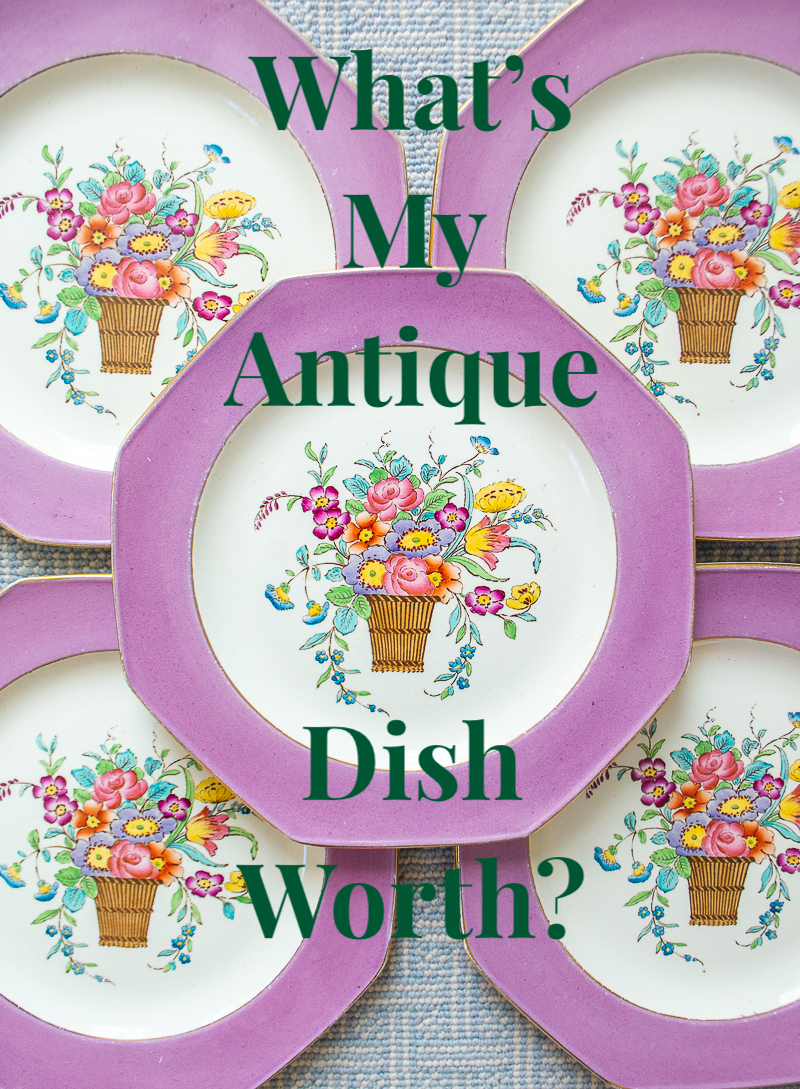
Today, I wanted to share some of my advice on collecting and/or re-selling antique dishes and determining the value. Obviously, the first step in determining value is to identify the maker and pattern. My process for plate identification is detailed in this post. But what if…
- there is no mark;
- the mark is illegible and you can’t determine the maker;
- Google can’t identify the pattern;
- there is little online information or few sales records;
- you just want a better understanding of what makes a dish valuable;
then this is the post for you!
Consider these 5 points to determine the worth of your antique or vintage dish:
No. 1 China with A Little “c”
The word “china” has become so watered down and overused that it has little meaning these days. In the common lexicon, it mostly refers to fine dinnerware but without any regard to the actual ceramic materials and whether those are refined or not. Historically, “china” was used by collectors and experts to distinguish porcelain made in China. Or when talking about bone china, which was in wide use in England by 1813 and uses bone ash in the clay mix to achieve a hard white body similar to porcelain.
What’s in a ceramic?
Knowing the materials used in the body of a dish will help you better understand the value and rarity. Porcelain, whether Chinese or European, is still largely considered the pinnacle because of it’s durable, vitreous body that is able to withstand high temperatures and resist scratching. Porcelain’s white lustrous surface is also highly prized. It allows the decoration to stand out and the modeling to be more crisp. There are 2 different types of porcelain, hard-paste and soft-paste, which I discuss in this post.
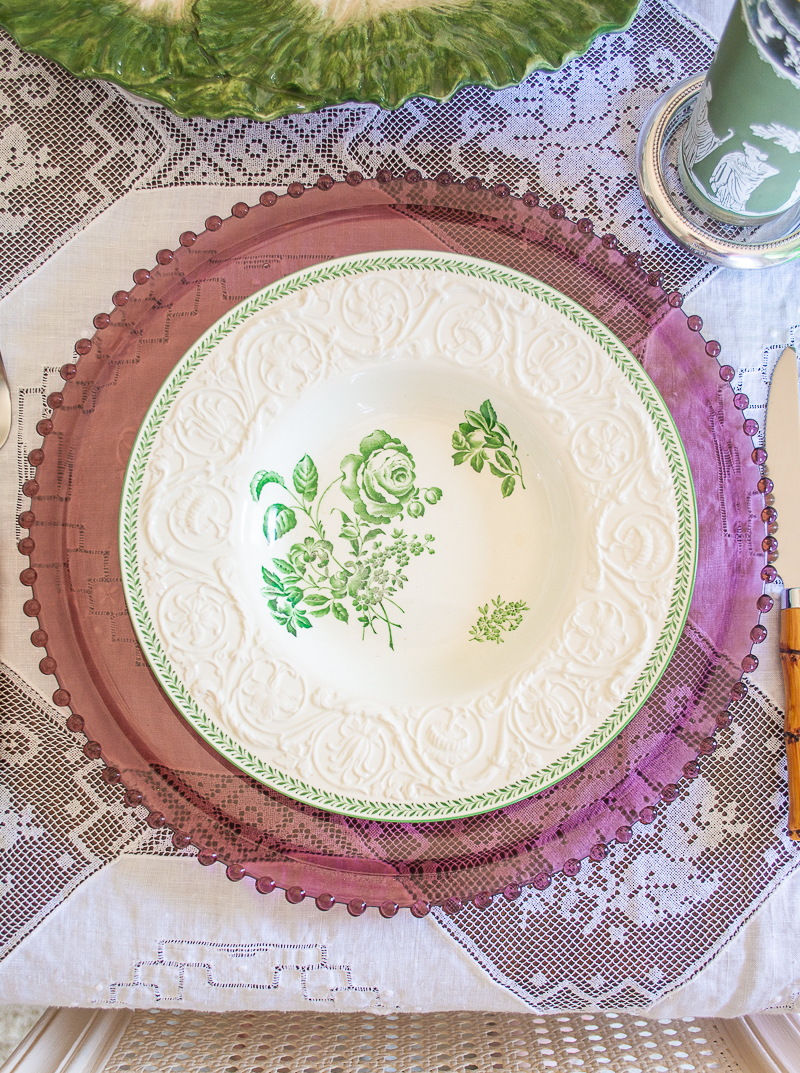
Wedgwood Queen’s Ware bowl.
Stoneware and earthenware are also common ceramic types used in antique dishware, but rarely thought of as fine dinnerware. Stoneware is durable and non-porous. Wedgwood Jasperware is a good example of stoneware. Earthenware is a low fired pottery that does not have the durability of stoneware or porcelain. Important earthenware patterns include French Faïence, Dutch Delft, Wedgwood’s creamware/Queen’s ware/pearlware.
Material alone does not confer value. Age, shape, decoration, maker, and condition are all important factors.
No. 2 Age
Remember for a piece to be considered antique it must be at least 100 years old, while vintage is used to describe something between 30-99 years old. In general, the older the piece the more value it is likely to have. However, as certain styles, makers, and/or techniques rise and fall in popularity prices will echo the current taste and demand.
What’s the backstory?
The provenance and related history if connected to someone of historical significance can greatly increase the value of a set. Also consider the pattern’s historical context. The creation of certain patterns have very interesting narratives and can increase the desirability of a dinner service — for example Flora Danica by Royal Copenhagen or the Frog Service from Wedgwood (interestingly both were commissioned for/by Catherine the Great).
Age and condition are also closely related. Light signs of use are expected on antique dishware. This may include scratches, gilt loss, hairlines, and small chips in the rim. Certain materials like earthenware and decoration techniques like overglaze enamels are more fragile and, thus, prone to damage. Collectors of these dishes usually expect to see some wear and tear on older pieces. But poor condition of the decoration or an unstable body will reduce prices significantly.
Some historic china patterns are still being produced today, while others have specific periods of production. The mark on the bottom of the plate is usually the easiest way to determine age because makers tended to change their marks over time. The design of the mark from the symbols and labeling to the colors can date a dish to a specific period. See number five in this listing for more advice on marks.
No. 3 Decoration
There are numerous decorative techniques that can be applied to a ceramic body. Most ceramics are covered in a glaze. This is a coating on the ceramic body made from various substances intended to protect and waterproof the ceramic and/or enhance or change the color. Glazes can be transparent, opaque, or colored. Feldspar, lead, tin, and salt are the main glaze types.
What’s on a ceramic?
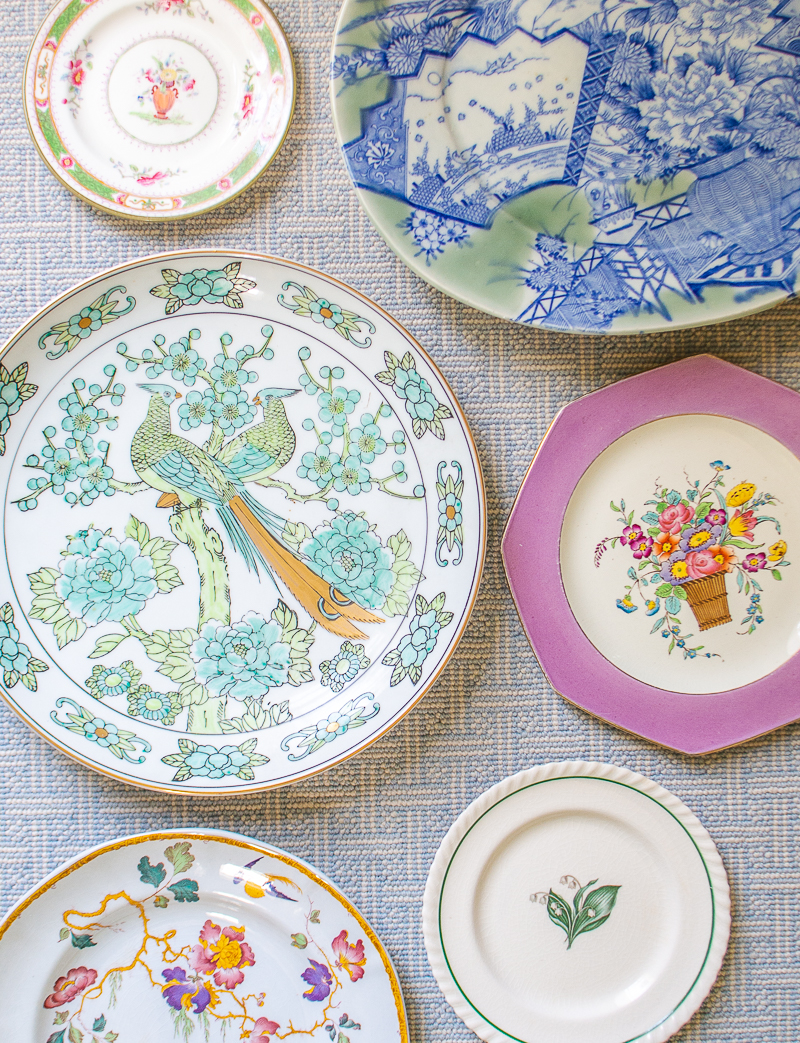
Key decorative techniques that usually indicate higher value:
-
- Hand painting – Obviously, this is the original method of decorating ceramics. It very much depends on the painter’s skill and is time consuming and tedious. Often the potting and decoration were done by different artisans. As production speed up and became more streamlined to meet growing demand in the 19th century transfer printing and stencils were used to apply decoration more quickly. For more detailed information on how to detect transfer printing and stencils read the Grandmillennial’s Guide to Chic Antiques.
- Over glaze enamels – Often a costly method of painting with multiple firings necessary that uses enamel colors made from metallic oxides and glass. These colors are painted over the glaze, which makes them more prone to scratching, but it allows for a greater range of colors.
- Gilding – The application of gold leaf to the ceramic body. Most high end china uses 24K gold, which is the purest form of gold. Gilt is the noun/adjective. Gild is the verb.
- Sprigging – This decorative technique creates a raised design on a ceramic surface by the application of a separate moulded relief adhered with a slip prior to firing. Think Wedgwood Jasperware’s Classical motifs.
- Piercing – The creation of a cut out pattern in the ceramic body itself. Also called reticulated, and this decoration is commonly seen on 18th century creamware.
- Lustre – This decoration gives the appearance of a silver or copper surface on the ceramic. Note that the copper lustre appears pink or purple when applied to light bodied earthenware. Commonly used on 19th century British ceramics.
- Pâte-sur-pâte – A French term that means paste on paste. This is a relief decoration on porcelain created by many layers of porcelain slip applied to an unfired, unglazed body then carved away to create a design. Minton and Sèvres were known for their pâte-sur-pâte ceramics.
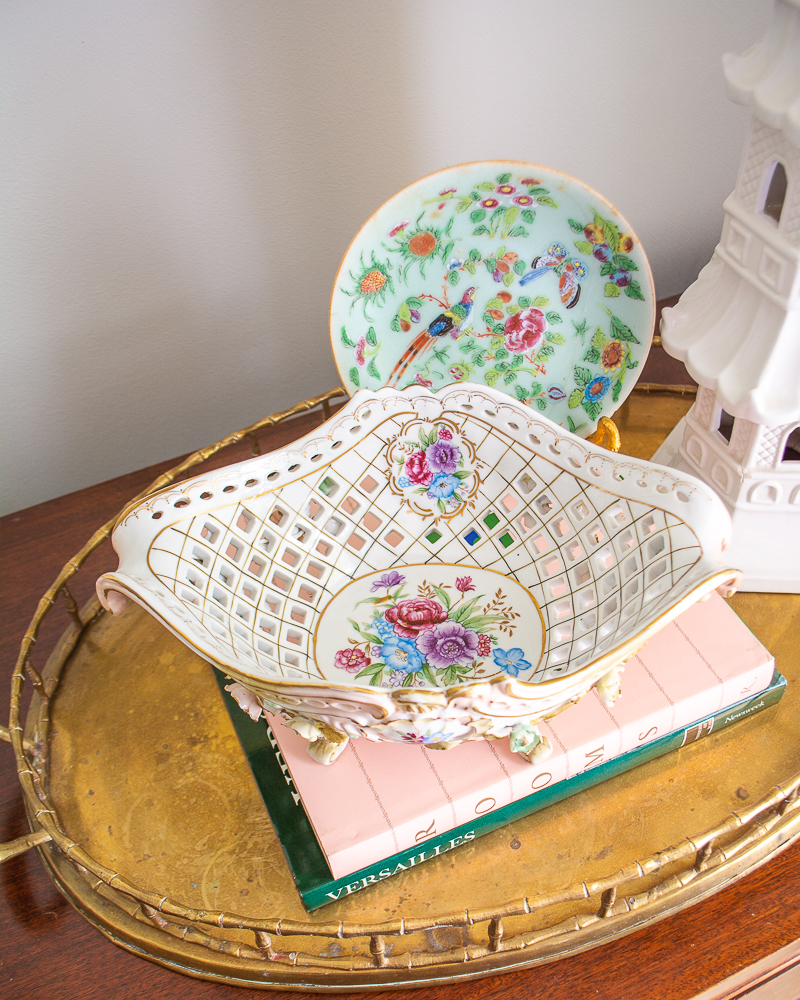
Footed compote with pierced sides and edges.
No. 4 Marks
A mark is an identifying symbol or writing that can indicate age, maker, and/or country of origin usually found on the bottom of ceramic dishware. Not all antique ceramics are marked particularly if they are pre-19th century. Marks may be stamped, painted, impressed, printed, or incised on the bottom of the ceramic. Marks are important to authentication and dating an antique dish. Always compare the mark on your plate to authenticated marks to determine authenticity.
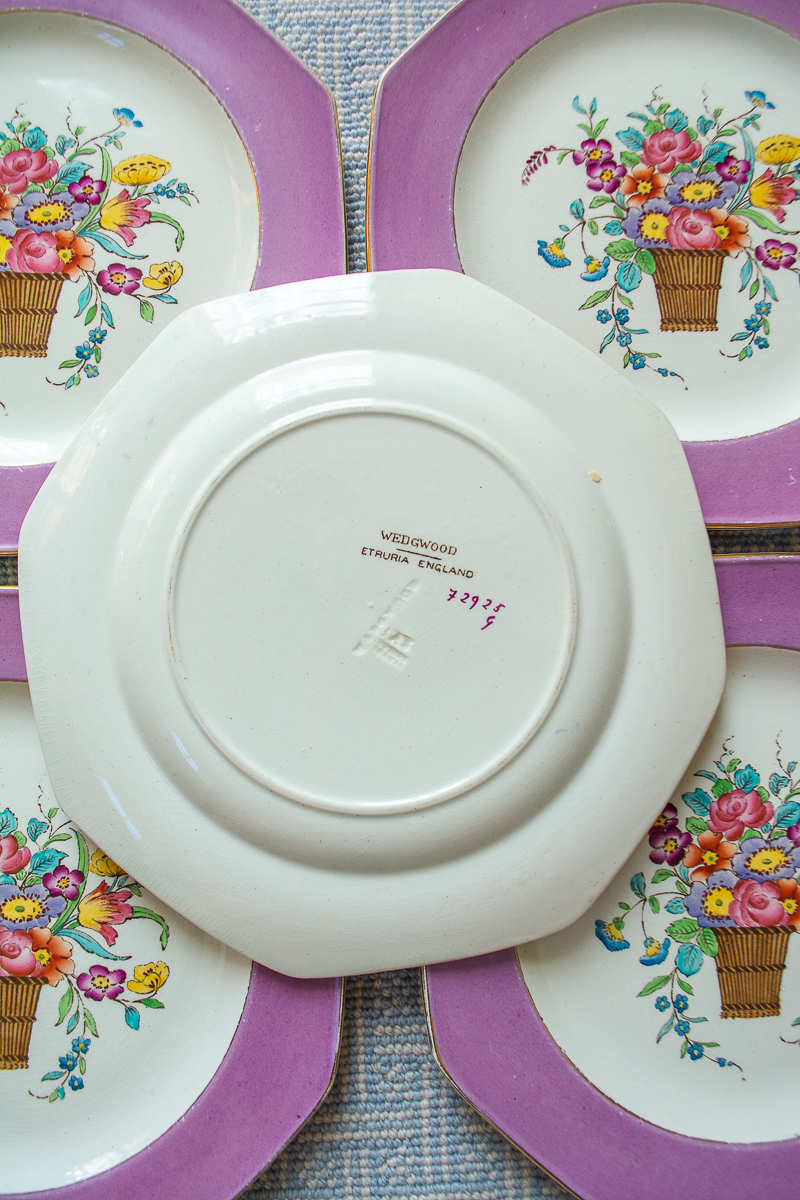
If the name of a country appears below the mark, it was likely produced after 1891. If it says “Made in…country name” then it was likely produced after 1914 due to import export laws established around this time.
There are several sites that maintain mark records like AntiqueMarks.com or Kovels, which you can use to identify and date the mark. I share more on identifying and dating marks in this blog post.
No. 5 Market Value
The fair market value is an estimated value of the item in an open exchange between willing buyers and sellers. The market may include auctions, retailers, and private sellers. This value is different than an insurance appraisal valuation. The insurance value is the cost to replace the item and is often higher due to time limits and additional cost calculations.
To establish the value search for identical/similar dishes across the following platforms and note the asking price or estimate:
- eBay
- Etsy
- LiveAuctioneers (just register for an account to view price results)
Then dig deeper to determine at what price those dishes are actually selling. On eBay and LiveAuctioneers you can check the sales record to see when it sold, the selling price, and how many bids were entered. Compare the retail prices and sales results to establish a range of value. You can explore my list of the 50 most rare and valuable china patterns here.
Why can’t I just use Replacements.com?
It is not an accurate source for the market value of dishware. I think Replacements’ prices are generally 25-40% higher than average market prices. Why? It’s in the name! As a company Replacements started in the 1980s to replace missing pieces of your dishware pattern. You are paying them for access to their vast inventory and the ability to “immediately” replace a dish that is broken or lost. This is more like the insurance appraisal valuation.
I do turn to Replacements.com regularly as a resource for pattern identification and general information. Most patterns have a brief descriptive summary that incudes the time frame of production, which is great help in dating a china pattern.
It is also useful to know that Replacements does sell on eBay, and you can sometimes find better prices in those listings. Read the descriptions carefully because sometimes the dishes are “seconds” or in a little bit poorer condition.
For more detailed information on particular ceramic makers and authenticity see:
The Grandmillennial’s Guide to Chic Antiques

There are entries on Herend, Chinese porcelains, Limoges, Majolica, Delft, Wedgwood, and more!
OR if you are at your wits end trying to research a dish, book one of my personal assessments for identification and valuation help. Learn more here!
Fakes, Reproductions, & False Labels...
Everywhere!
So many antique malls don't even have antiques!
When hunting treasures how do you know what is authentic and not mislabeled?
You need to educate yourself ASAP, so you're not wasting money on knock-offs!
But how do you sift through all the millions of articles and books out there to get to the point?
Hi there! I'm Katherine...
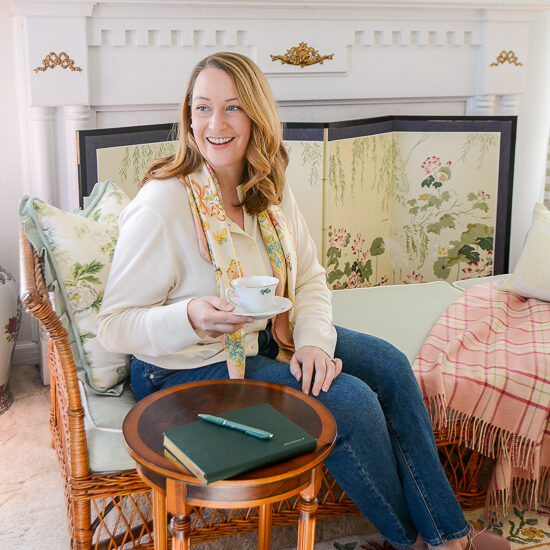
the curator, writer in residence, and decorator behind Pender & Peony.
I’ve decorated my entire 1960s brick colonial with secondhand finds and antiques on a budget without sacrificing style, quality, or comfort.
You CAN have a traditional home with timeless charm on a budget too!
The problem isn't your taste -- it's an industry that glorifies the next big trend and only showcases high end custom design.
That's why I created The Collected Room Method to teach you my approach to the collected interior!
Great info about Replacements!
Happy Mother’s Day💐to you💓
Thank you! Glad it was helpful.