China Patterns: The Rare & Valuable
Hello Lovely Peonies.
Which china patterns are rare?
Which are popular?
Which are overdone?
And how do I know if a pattern is valuable?
My e-mail has been flooded with these kind of questions lately as well as requests for plate identification help (see this post on ID and this post for determining value). I'm so glad y'all love antique plates and china patterns as much as I do! From creating a beautiful place setting on the table to hanging plates on walls, I think antique dish patterns are a decorative powerhouse that give such a wonderful glimpse into the past.
Today, I wanted to share a straight forward listing of what's rare and valuable (I'll return to what's popular and overdone in another post). To arrive at this list, I've analyzed auction records over the past 5 years for dinner services and looked at various arbiter of taste listings from Veranda to Martha Stewart as well as Replacements. I'm also taking into account what I've seen in my 15+ years working in art museums, the auction industry, and buying and selling antique dishes.
This is by no means an exhaustive list 50+. There is an endless number of china patterns, and certainly the personal meaning of heirloom dishes cannot be monetized. I have tried to mainly focus on fine dinnerware, what most people call china, but you will note a few stoneware and earthenware inclusions where those patterns match valuations or the popularity of fine china.
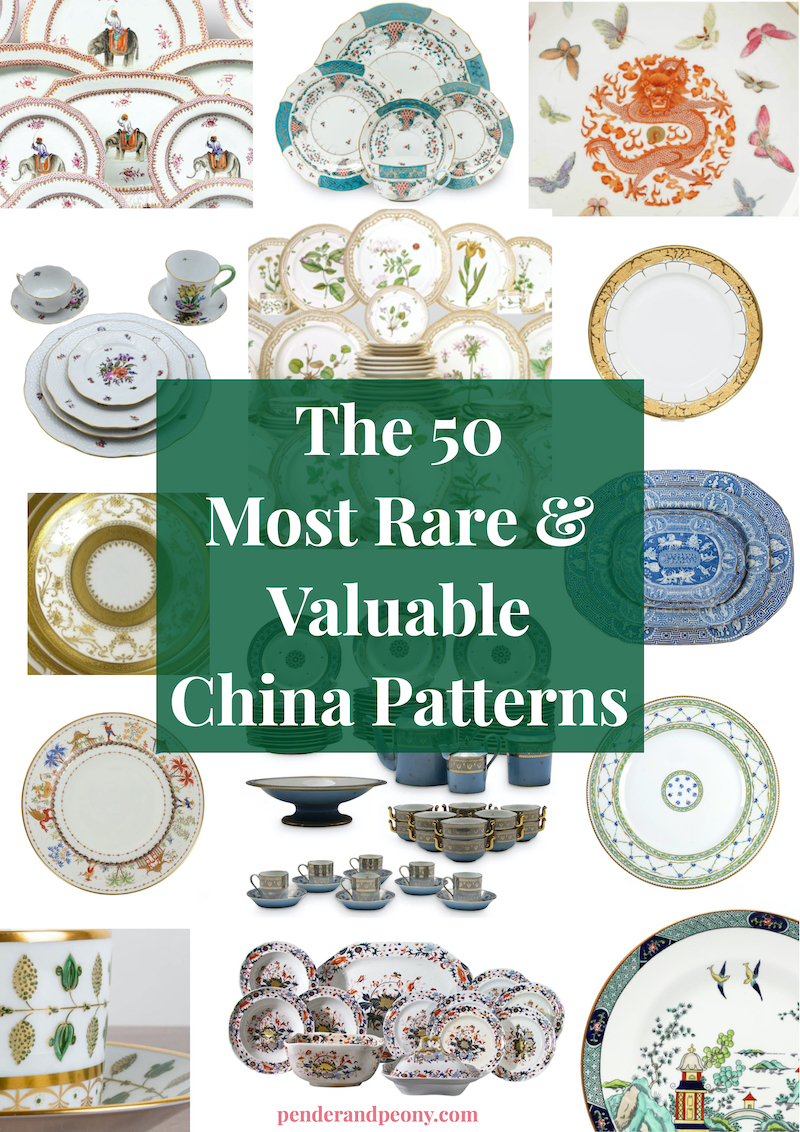
Rare & Valuable China Patterns
The patterns are organized by maker. Click on the box with the plus sign to expand the content.
For some of the most valuable patterns I've included a bit of history and why it is so highly valued as well as pricing information.
A French Limoges porcelain maker founded in 1863. Explore the making of Bernardaud porcelains here. Note that despite the price most of their products today are decorated with decals not hand painted.
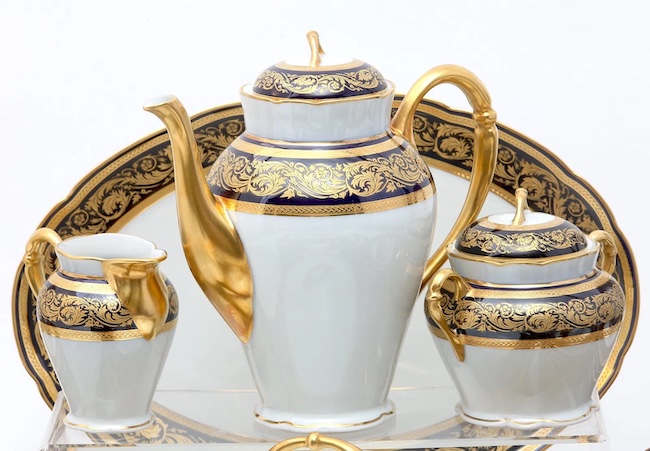
Bernardaud Vendome, Image via Liveauctioneers
Cobalt & Gilt Collections:
- Chenonceaux Cobalt (discontinued, 1986 -?), Palaiseau (1986 - 1998), Vergennes (discontinued, 1991 -?), Vendome (1972 - 2023), Parthenon (discontinued, 1986-?)
- Auction Results: 90+ sets sell for $4,000.
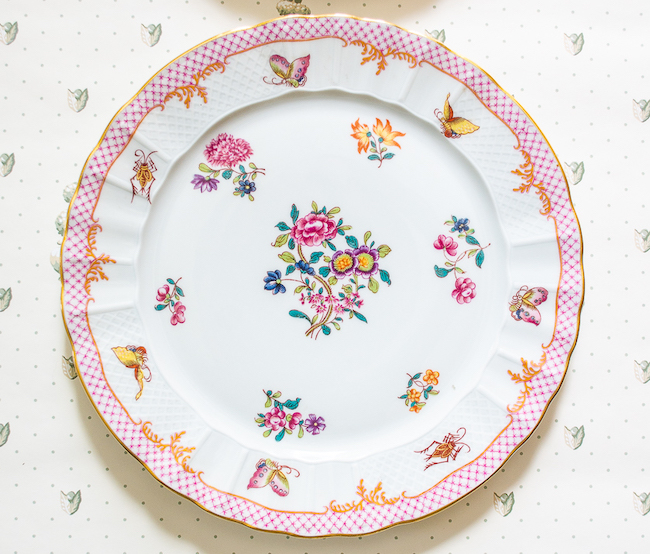
Bernardaud, Compagnie des Indes
Compagnie des Indes Red - Discontinued, 1968 - 1998.
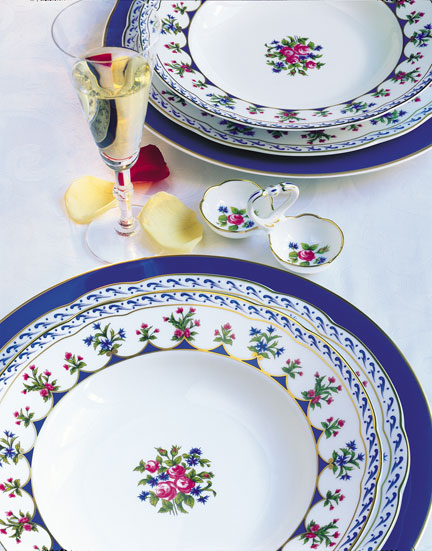
Bernardaud, Chateaubriand, Image via Gracious Style Blog
Chateaubriand Blue - Discontinued, 1972 - 2025.
Cafe Paris in Green - Discontinued, 1993 - 2007.
Curious about how to identify a china pattern? Read this post on plate ID!
For more information on Chinese export porcelains read this and this.
Armorial Crest & Monogrammed Services:
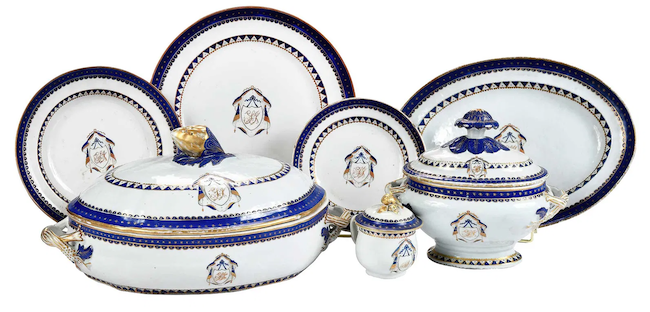
Chinese Export "SJ" Monogram, Image via Liveauctioneers
"SJ" - circa 1800 for the American market.
- Auction Results: 200+ set sold for $7,000 in 2024.
Solar de Tejada - Mexican market, Qianlong.
- Auction Results: set of 6 plates sold for $5,500 in 2023.
Crowned Monogram - European market, Qianlong.
- Auction Results: 20 pc tea service sold for $5,247 in 2021.
Western/Colonial Motifs
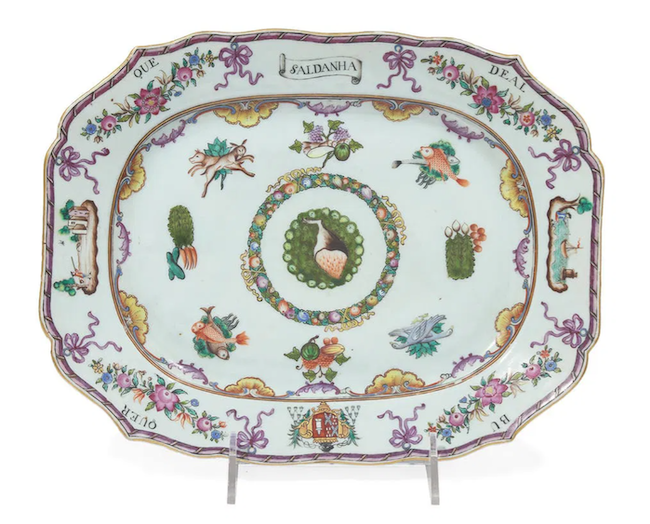
Saldanha Chinese Export, Image via Liveauctioneers
Saldanha Dinner Service - Elaborately decorated pattern with polychrome enamels, featuring an armorial crest and rabbit haunch surrounded by be-ribboned wreath, with caught animal and food motifs around including birds, fish, rabbit and boar, and various vegetables. Commissioned by the Saldanha de Albuquerque family of Portugal circa 1760-1770.
- Auction Results: late 18th century 9 pc set sold for $8,500 in 2024.
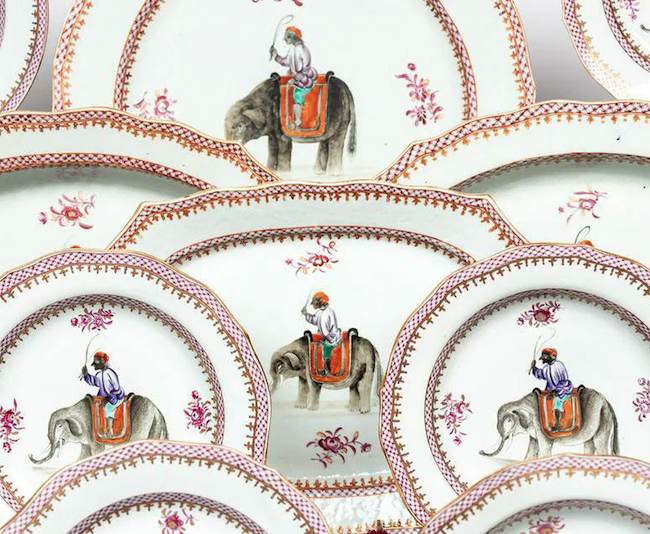
Chinese Export Mahout Service, Image via Liveauctioneers
Mahout/Elephant and Rider - A rare pattern decorated with an elephant and rider, or 'mahout', surrounded by a ring of puce floral sprays and bordered by puce bands. Individual pieces with the same pattern can be found in the collections of the Metropolitan Museum of Art. Likely made for the colonial market in British India late 18th century.
- Auction Results: 100+ set sold for $60,000 in 2023.
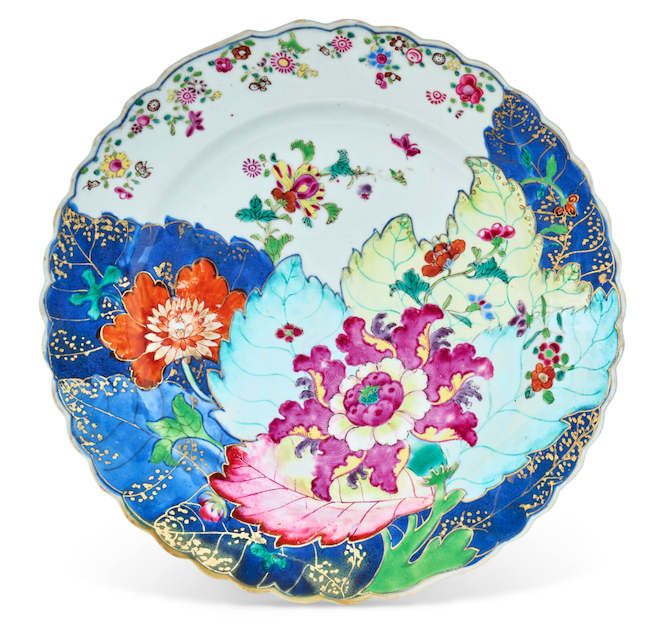
Chinese Export, Tobacco Leaf, Image via Christie's
Tobacco Leaf - Western market, Qianlong.
- Auction Result: circa 1775 80+ pc set sold for $81,900 in 2025; circa 1775 150+ pc set sold for $1,152,500 in 2018 at Christie's.
Chinese Motifs:
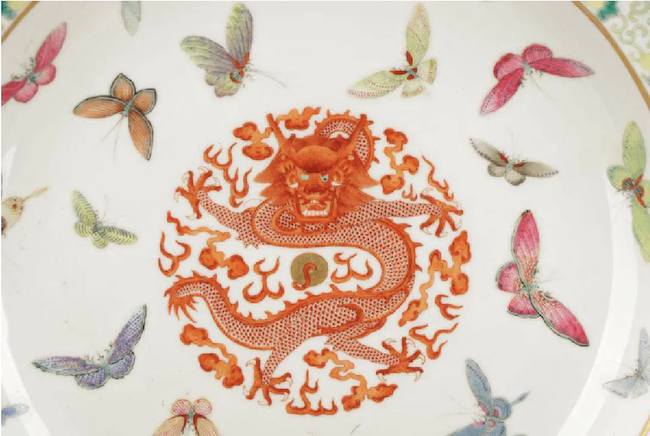
Chinese Export, Iron Red Dragon, Image via Liveauctioneers
Famille Rose Dragon & Flaming Pearl - Circa 1875-1908, Famille Rose pattern decorated with dragon(s) chasing the flaming pearl and often surrounded by butterflies, florals, and/or birds.
- Auction Results: 59 pc set sold for $16,000 in 2017.
Cabbage Leaf/ Bok Choi - 19th century.
- Auction Results: 19th/20th century 80+ pc set sold for $5,500 in 2023.
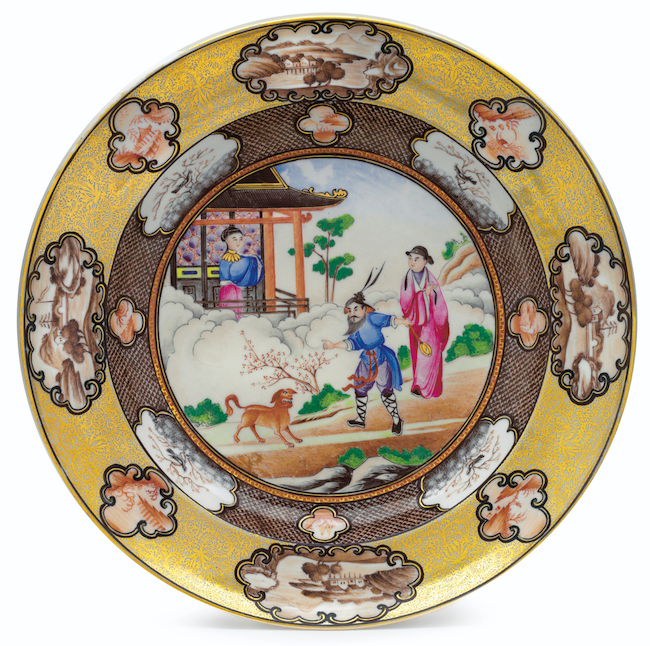
Chinese Export, Rockefeller, Image via Christie's
The Rockefeller Pattern - a lavishly enameled pattern sometimes known as 'palace ware', due to the depictions of noble men and women as well as to the belief that something this fine must have been produced in imperial kilns. The 'palace ware' patterns seem to be an outgrowth of the Mandarin palette decoration featuring Chinese lakeside garden scenes on patterned grounds in gilt or colors that was so fashionable in the 1780s, and a precursor to the richly enameled Rose Medallion porcelains of the 19th century.
Want to learn more about a variety of antiques from Wedgwood to opaline glass? Need something handy you can read on your phone? Order The Grandmillennial's Pocket Guide to Chic Antiques!
There are 4 Haviland companies all stemming from the same family working in the Limoges region of France: David Haviland (company 1853- present), Théodore Haviland (company 1892-1967), Charles Field Haviland (company 1859-1941), Robert Haviland (company 1924 - present, took over Charles Field operations).
It started in 1853 when David Haviland, an American, set up a state of the art factory in Limoges, keeping decoration in house unlike many Limoges brands that outsourced to Paris. More on the history of Haviland here and there is a helpful timeline here.
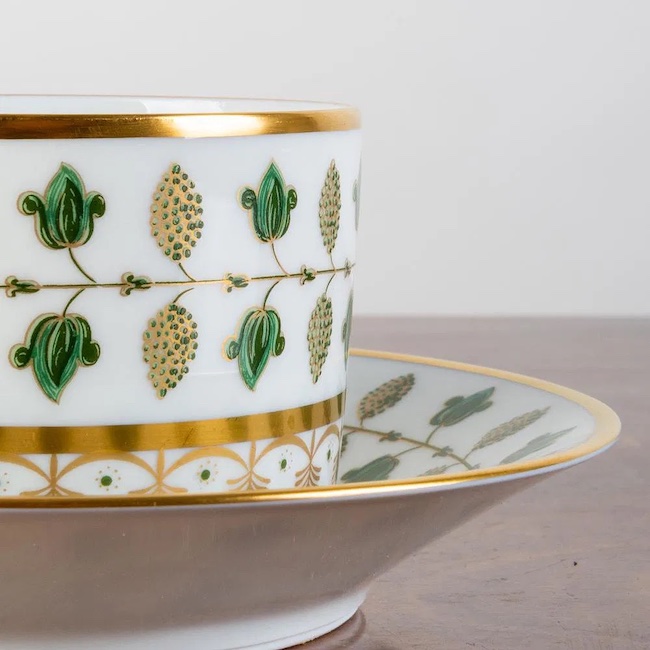
Haviland Matignon, Image via Liveauctioneers
Matignon - Robert Haviland Pattern, introduced 1974- present. The official dinnerware of the Prime Minister of France since 1974. This elegant dinnerware was created by Robert Haviland and C. Parlon in collaboration with the then Prime Minister and is based on a Japanese design.
- Auction Results: 150+ pc set sold for $14,000 in 2021.
- Shop here.
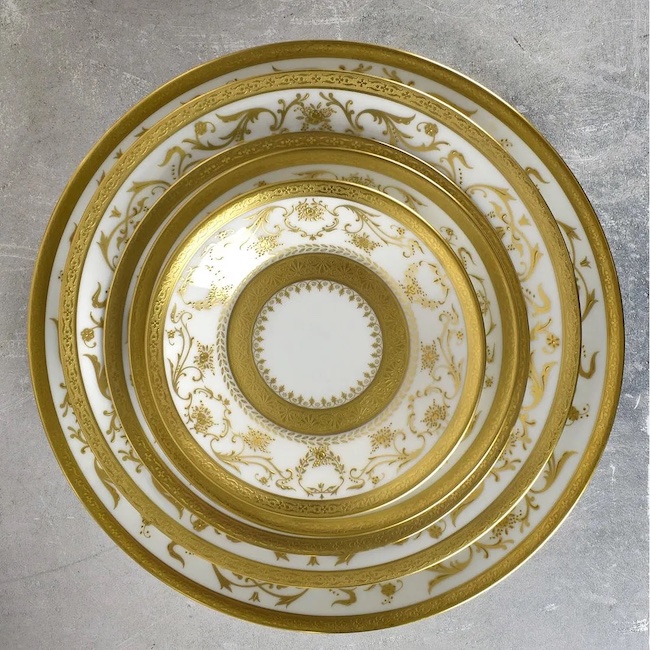
Haviland, Dynasty Gold, Image via Liveauctioneers
Dynasty Gold - Robert Haviland Pattern, Introduced 1987 - present
- Auction Results: 190+ pc set sold for $10,000 in 2025.
- Plates available here.
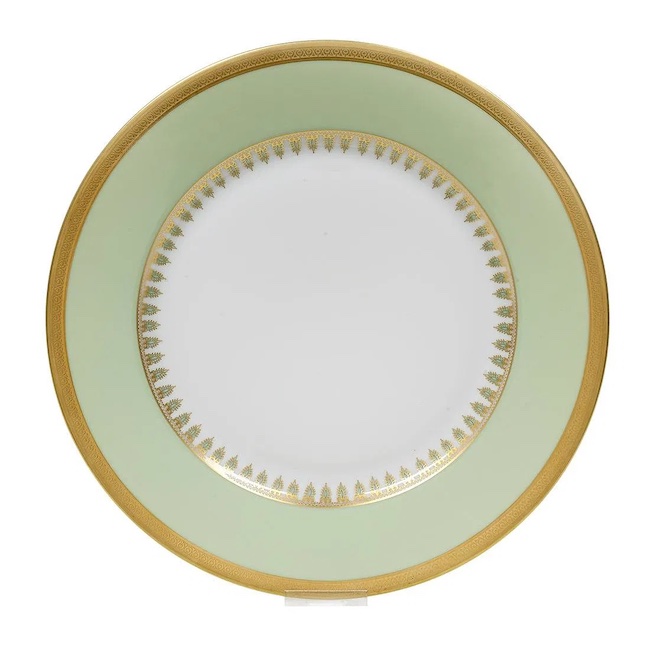
Haviland, Oasis Green, Image via Liveauctioneers
Oasis Green - David Haviland Pattern, Introduced 1998 - present.
- Current dinner plate $299 - 410
- Auction Results: 150 pc set sold for $8,000 in 2021.
- Pattern available here.
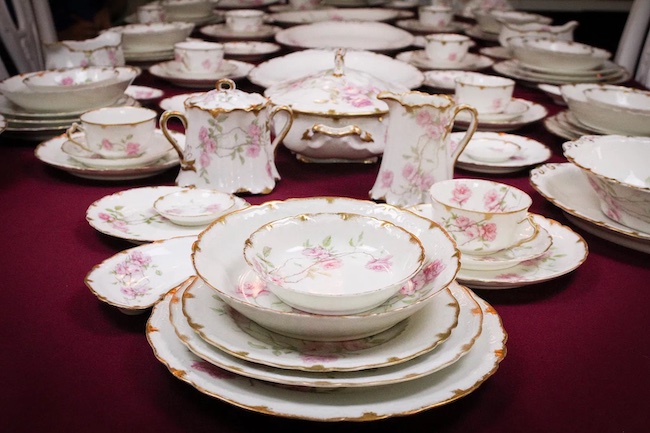
Haviland, Baltimore Rose, Image via Liveauctioneers
Baltimore Rose - David Haviland Pattern, circa 1880-1930s.
- Auction Results: 100+ pc set sold for $4,200 in 2023.
- Pattern available here.
Curious about how to identify a china pattern? Read this post on plate ID!
The Herend Manufactory was founded in 1826 by Vince Stingl in the village of Herend, which was then in the Austro-Hungarian Empire. In the late 1830s, Mór Fischer took over and switched the focus from earthenware to porcelain to take advantage of the growing European market for fine china.
Participation in the 1851 Crystal Palace Exhibition in London, the 1853 Exhibition of the Industry of All Nations in New York, and the 1855 Exposition Universelle in Paris rocketed Herend porcelain to popularity and acclaim, becoming the choice for courtly dining at the tables of Queen Victoria and Francis Joseph I of Austria.
Herend’s trademark fishnet pattern, which is widely recognized and prized as Herend’s signature design, started in 1858 when an artist who was intrigued with a Chinese plate’s fish scale design painted it onto a rooster figurine to imitate feathers.
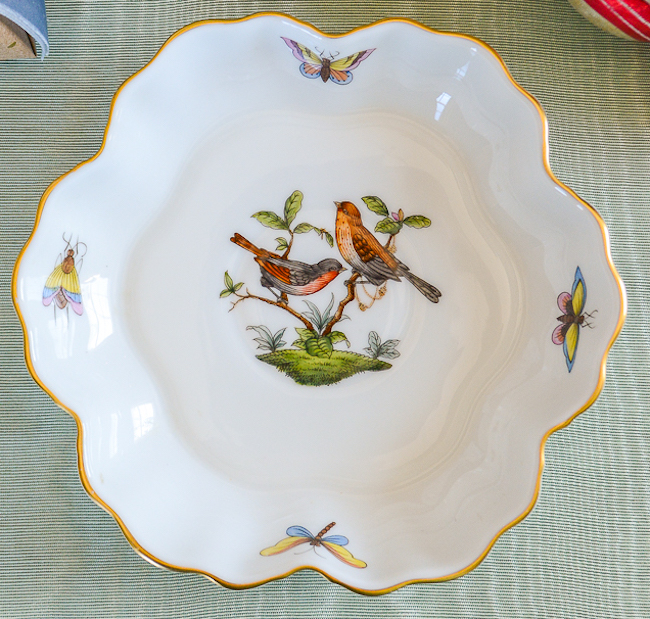
Herend, Rothschild Bird
Rothschild Bird - A porcelain pattern featuring two birds amongst the branches of a tree with a dangling necklace. Named for the Rothschild family who fell in love with the pattern in the 1850s and were important patrons of Herend. The china is said to portray a tale about Baroness Rothschild who lost her pearl necklace in the garden of her Vienna residence. Several days later it was found by her gardener when he saw birds playing with the necklace in a tree. In current production.
- Hand painted, 24 k gold, available in 3 different border styles
- Auction Results: 20th century 224 pc set sold for $10,500 in 2023; 20th century 200+ set sold from $21,420 in 2022.
- Pattern available here.
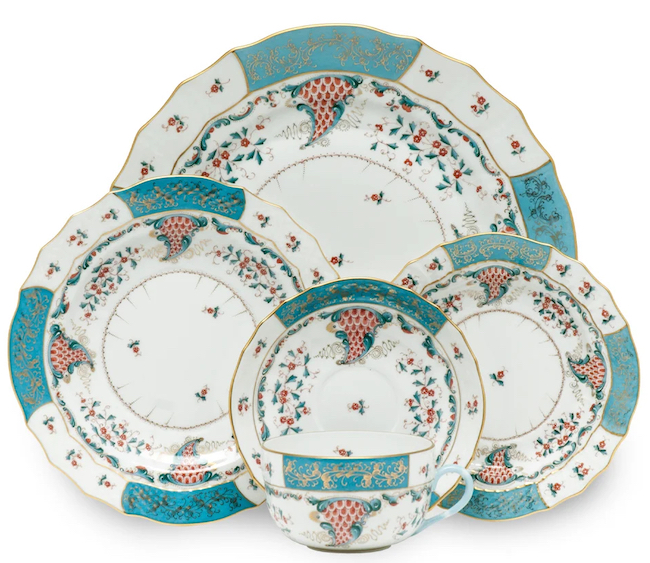
Herend, Cornucopia, Image via Liveauctioneers
Cornucopia/Tupini TCA - This intricate pattern was created in the 1870s for the Shah of Persia. Its rich use of gold is layered over shades of turquoise and pomegranate. The porcelain has a slight textural design leading up to the undulating gold rim. In current production.
- Hand painted, 24k gold, porcelain
- Dinner plate cost $399-1200
- Auction Results: 20th century 150 pc set sold for $19,268 in 2022; 50 pc set sold for $6,500 in 2022.
- Pattern available here.
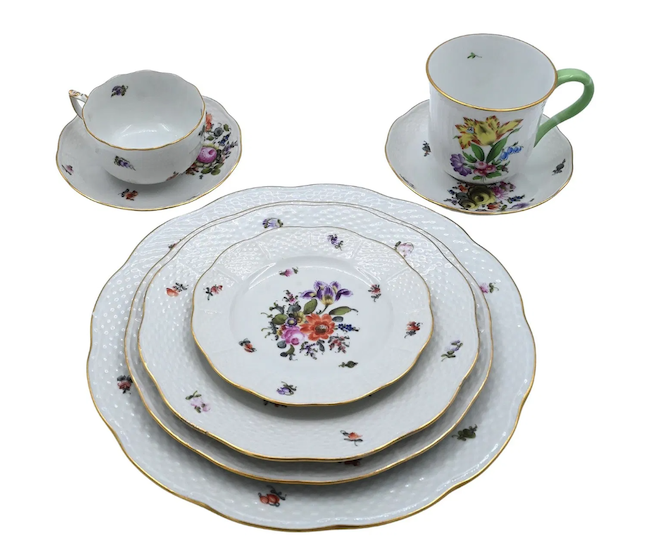
Herend, Printemps, Image via Liveauctioneers
Printemps - blooming spring flowers are painted with colorful bold brushstrokes in this 1920s-era design. Replacements lists the start date for this pattern as 1985. In current production.
- Hand painted, 24k gold, porcelain, available in 3 different border styles
- Auction Results: 20th century 100+ set sold for $3,000 in 2025; 20th century 183 pc set sold for $12,000 in 2022.
- Pattern available here.
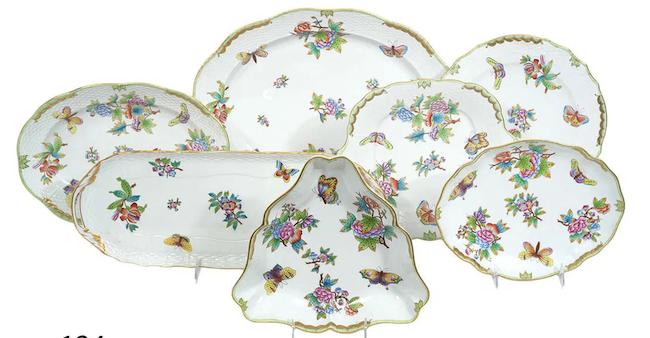
Herend, Queen Victoria, Image via Liveauctioneers
Queen Victoria - This china pattern was first presented during the London World Exhibition in 1851. There, it caught the eye of Queen Victoria, who ordered a large table service in the pattern for Windsor Castle. The pattern was subsequently named Queen Victoria and became one of Herend's most popular designs. In current production.
- Hand painted, 24k gold, porcelain
- Auction Results: 120+ pc set sold for $5,500 in 2025; 20th century 170+ pc set sold for $9,500 in 2024.
Want to learn more about a variety of antiques from Wedgwood to opaline glass? Need something handy you can read on your phone? Order The Grandmillennial's Pocket Guide to Chic Antiques!
Meissen is the first manufacturer of hard-paste porcelain in Europe. August the Strong, Elector of Saxony tasked the alchemist Johann Friedrich Böttger and Physicist Ehrenfried Walther von Tschirnhaus to discover the secrets of creating white porcelain like the increasingly popular Chinese ceramics. In 1708 they succeeded and in 1710 Augustus established the Royal Polish and Electoral Saxon Porcelain Manufactory at Meissen.
The signature crossed swords mark, taken from the coat of arms of the Electorate of Saxony, was introduced in 1722 to proclaim the exceptional quality and authenticity of Meissen porcelain.
For more on the history of Meissen explore this.
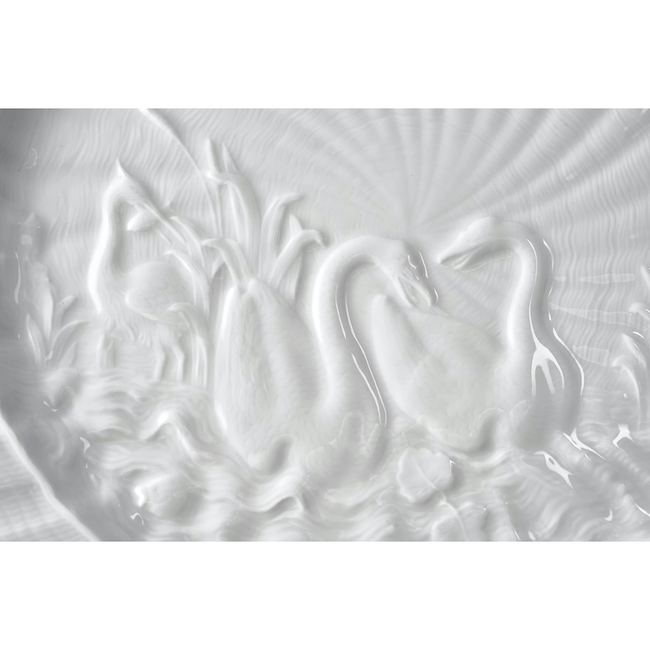
Swan Service - Production started in 1737 - Originally commissioned by the Prime Minister to Augustus III, this dinner service took 5 years to design and manufacture. The first service served 100 people for a total of 2200 pieces. Designed in a German Baroque style the pattern features two swimming swans in porcelain relief framed by a shell. Made to order.
- 3 Pattern variants: plain white, gilt rim, and Indian flower branches
- New dinner plates $143
- Auction Results: Original 1738 12" plate sold for $21,267 in 2025; 20th century 11 piece sets $1,000.
Ming Red Dragon - Chinese design and mythology were the inspiration for Meissen’s “Ming Dragon” motif. This pattern was one of the manufactory’s earliest designs --created in 1740. The figure of the dragon has four toes, which was originally reserved exclusively for imperial princes in ancient China.
- Hand painted - various rim styles: cut out, gilt, red band, straight
- New dinner plates: $1,200
- Auction Results: Early 20th century with straight rims, dinner plate $125-150; 20th century 116 piece service $2,600
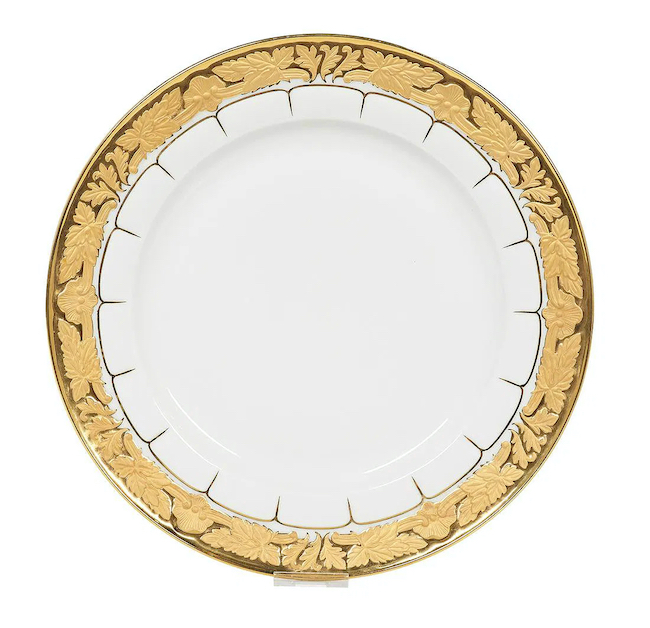
Meissen Gold Leaf
Gold Leaf - Opulent Baroque style design with a border of gold leaves and fluting. The gilding is all done by hand with 24 karat gold on the high relief of the ornaments, handles and edges. The third firing is what gives the gold a silky shimmer. Meissen refers to this finish as Gold Bronze. From the Golden Baroque series.
- Popular 1950s - discontinued
- Auction Results: 20th century 72 pc set sold for $30,000 in 2023; 20th century 37 pc set sold for $3,600 in 2020.
- Pattern available here.
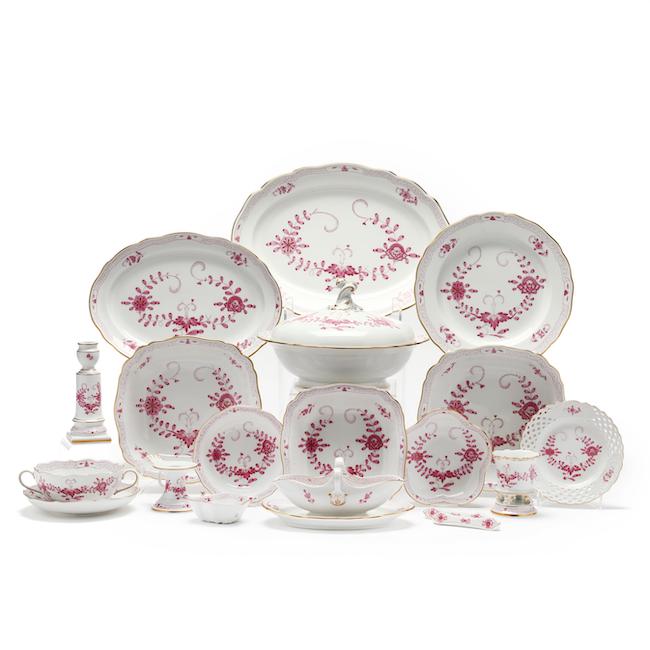
Meissen Indian Flower, Image via Leland Little
Indian Flower - One of the oldest design motifs on Meissen porcelains, dating to 1720. There are several variations, and you may see it called Indish or Indian.
- Hand painted in pink/purple or green. Various rim styles: cutout, gilt
- Discontinued
- Auction Results: 20th century 90+ pc set sold for $5,500 in 2020; 36 pc set sold for $1,100 in 2024.
Blue Onion - an iconic blue and white pattern inspired by Chinese porcelains. European decorators misinterpreted the Chinese peaches and melons for onions. Introduced 1739 - present.
- Auction Results: 19th/20th century 200+ set sold for $23,894 in 2025.
- Pattern available here.
Want to learn more about a variety of antiques from Wedgwood to opaline glass? Need something handy you can read on your phone? Order The Grandmillennial's Pocket Guide to Chic Antiques!
Mottahedeh porcelain began out of a private collection of Chinese export porcelains amassed by Rafi and Mildred Mottahedeh in the early to mid 20th century. By the late 1950s, they were commissioning reproductions from their collection and searching for craftsmen in Europe and Asia who could reproduce 18th century porcelains. Their success led them to become the main source for museum reproductions by the 1970s. Read more here.
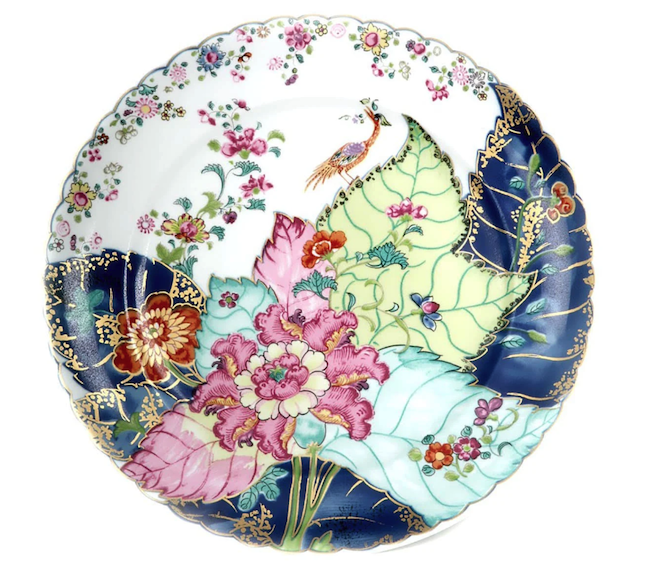
Mottahedeh, Tobacco Leaf
Tobacco Leaf - Based on a popular 18th-century Chinese pattern, Tobacco Leaf by Mottahedeh features an exotic design that includes a small phoenix perched on a curvaceous "tobacco" plant in full bloom. Read more about tobacco leaf china here. Introduced 1985 - present.
- Porcelain, 22 k gold,
- Auction Results: 90+ set sold for $6,500 in 2024; 200+ pc set sold for $912,500 in 2018.
- Pattern available here.
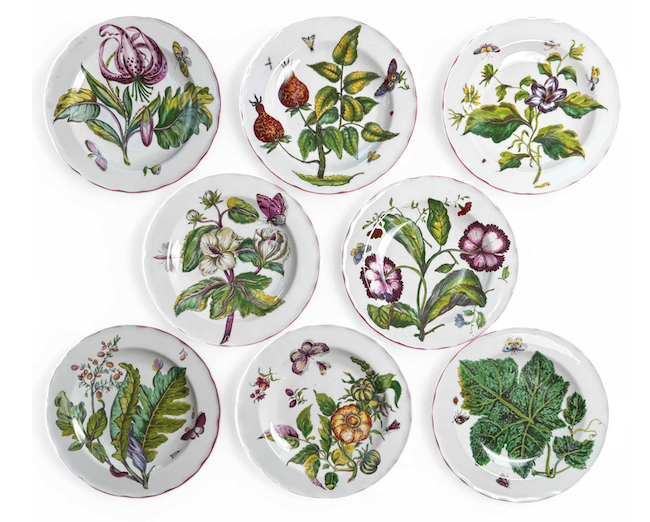
Mottahedeh, Chelsea Botanical, Image via Liveauctioneers
Chelsea Botanical - Discontinued, 1996-2021. Botanical illustrations applied to porcelain were made famous at the Chelsea factory in 18th century England. Sir Hans Sloane, physician to King George III, commissioned paintings of newly arrived Chinese plants in the Chelsea Physic Garden. These are adaptations of those paintings.
- Average salad plate $45; dinner plates more scarce: Replacements value $300.
- Auction Results: 40 pc set sold for $3,500 in 2022.
- Pattern available here.
Blue Canton - Introduced 1985 - present. The most fashionable tables in the early American Republic were set with blue and white “Canton” or “Nanking” wares -- named for the great Chinese trading ports from which they came. Chinese blue and white porcelain become a part of the heritage of many American families. Mottahedeh's reproduction is a faithful adherence to the design featuring blue band border with central scene of mountains, trees, bridge, and pagoda.
- Auction Results: 57 pc set sold for $2,900 in 2022.
- Pattern available here.
Curious about how to identify a china pattern? Read this post on plate ID!
History of Royal Copenhagen here.
Of the china patterns still in production today, Royal Copenhagen, is topping the price list with two popular patterns:
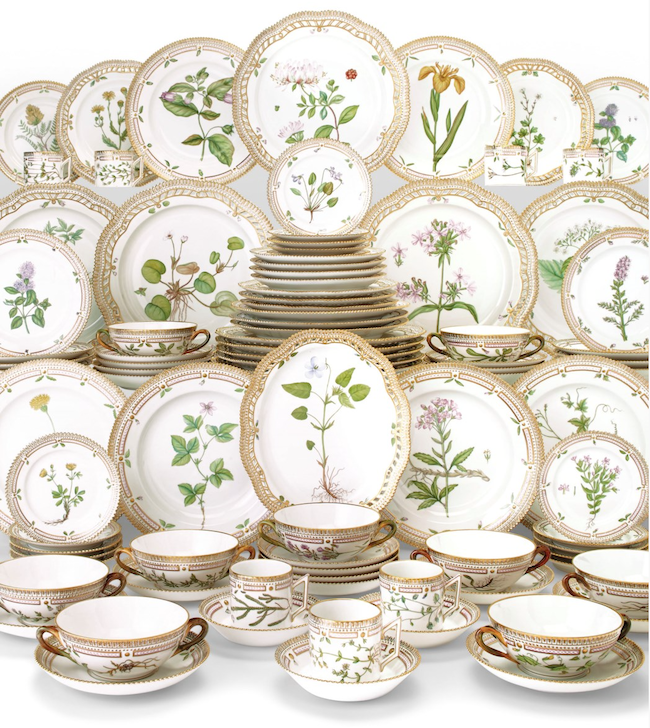
125+ set of Flora Danica, 20th C, sold at Christie's 2019 for $62,500
Flora Danica - Production started 1790 - Every piece is hand-painted in the likeness of prints from the Flora Danica, a botanical encyclopedia comprised of 51 booklets with hundreds of illustrated plants native to Denmark. The dinnerware was originally commissioned as a gift to Catherine the Great from the Danish King Christian VII although it never left Denmark. It took 12 years to create.
- Flora Danica is only made to order, and there are 3,000 flower motifs and 40 different forms to choose from. No two sets are ever the same. Made of porcelain with 24k gilt detailing and certain serving pieces have molded florals and pierced work.
- Auction results on 20th century pieces: $300+ for a dinner plate; $1200 + for tureens and serving pieces; 30 piece sets sell upwards of $12,000+; 24 pc set sold for $25,000 in 2023.
Blue Fluted Plain & Lace (3 border versions) - Production started 1775 - Also called Pattern No. 1 or mussel, this swirling pattern of flowers and lines was the first collection from Royal Copenhagen. It shows the aesthetic influence of Chinese porcelains upon Europe. In current production.
- Hand painted, porcelain, cobalt
- Auction results on 20th century pieces: 200+ pc set sold for $14,000 in 2021; 33 pc set sold for $2,500 in 2025.
- Pattern available here.
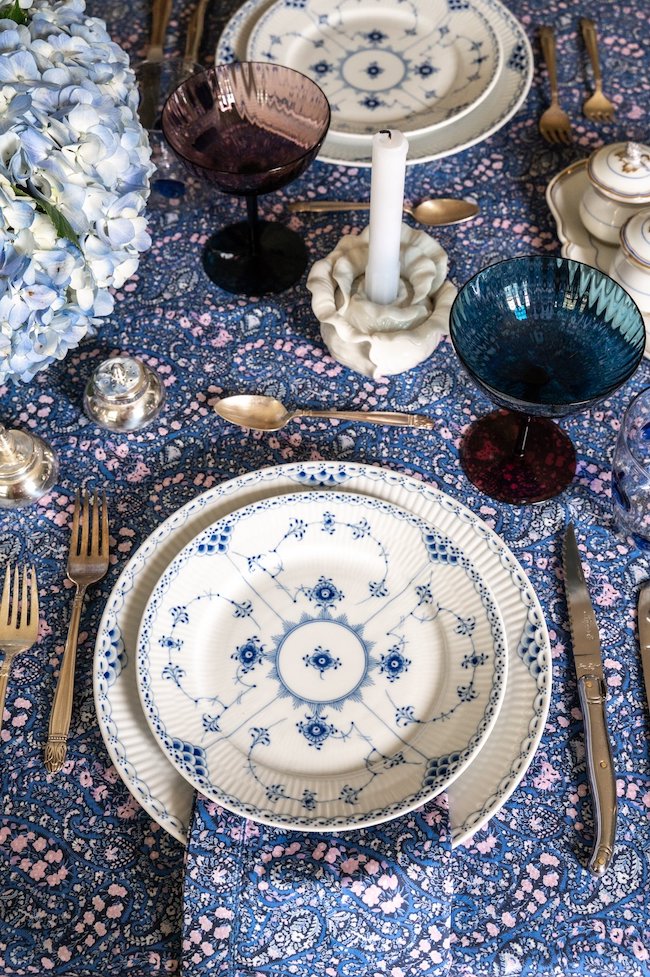
Royal Copenhagen, Fluted Half Lace, Image & Design via Stacie Flinner
Want to learn more about a variety of antiques from Wedgwood to opaline glass? Need something handy you can read on your phone? Order The Grandmillennial's Pocket Guide to Chic Antiques!
The Sèvres factory was founded in the town of Vincennes in 1740 and later re-established at Sèvres in 1756. It became the preeminent porcelain manufacturer in Europe in the second half of the eighteenth century. Louis XV was an early investor in the fledgling ceramic enterprise and became its sole owner in 1759.
For more on the history of Sèvres click here.
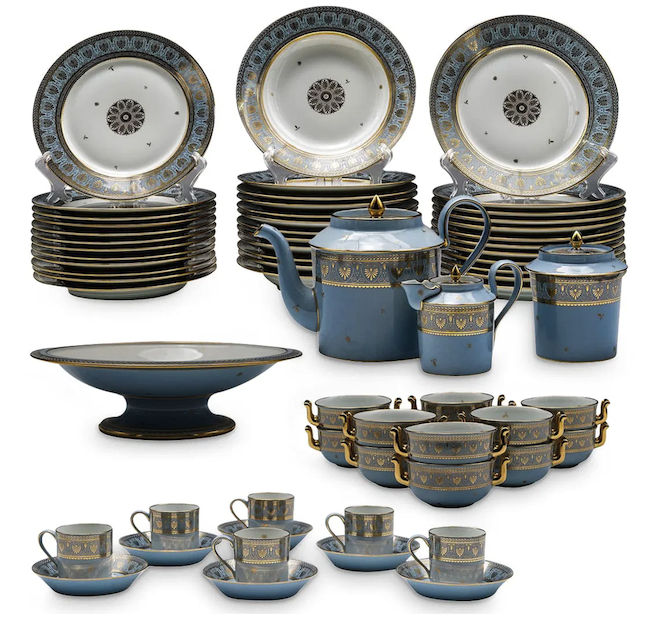
Sèvres, Fond Blue Agate, Image via Liveauctioneers
Fond Blue Agate/ Service de la Table du Roi - French Sevres porcelain "Fond Blue Agate" dinnerware set, with agate blue background with friezes of palm leaves in gold, and with rosettes in the middle of the pieces. The service is most commonly referred to as the Service de la Table du Roi, and was originally commissioned by King Louis Philippe for the Chateaux de Compiegne and the Chateau de Saint Cloud. The fond bleu agate appeared on hard paste porcelain at Sevres in the late 18th century. In January 1832, a ‘fond bleu agate’ service was delivered to the Chateau de Saint-Cloud.
- Auction Results: Original 1832 set of 12 plates sold for $7,000 in 2025; original 1832 set of 120+ sold for $60,480 in 2024; 20th century reproduction 80+ pc set sold for $30,000 in 2024.
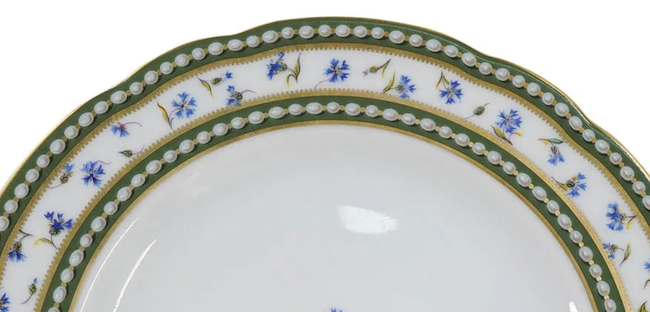
Sèvres, Marie Antoinette, Image via Liveauctioneers
Marie Antoinette - Originally created in 1782 for the personal use of Queen Marie Antoinette, this pattern features green bands with blue flowers.
- Auction Results: replica Limoges (Bernardaud) 90+ pc set sold for $5,500 in 2024;
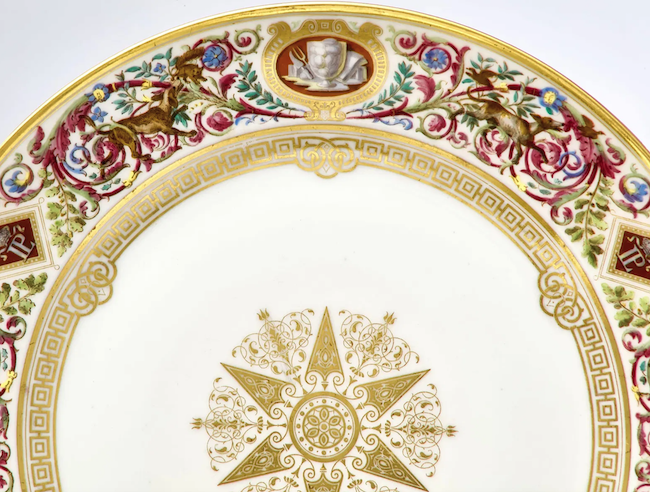
Sèvres, Hunting Service, Image via Liveauctioneers
Hunting Service - commissioned for the Chateau de Fontainebleau circa 1837. A band of hunting scenes full of animals and meandering foliage and trailing branches surround a gilt geometric pattern with a central star medallion. There are small reserves of iron red medallions of trophies. The animals portrayed are dogs, boars, birds of pray, snakes, pheasants and deer.
- Auction Results: antique 37 pc set sold for $4,000 in 2024; 1 soup sold for $4,000 in 2020.
Service des Chasses - part of the Hunting service?
- Auction Results: 19th century set of 200+ sold for $22,680 in 2024.
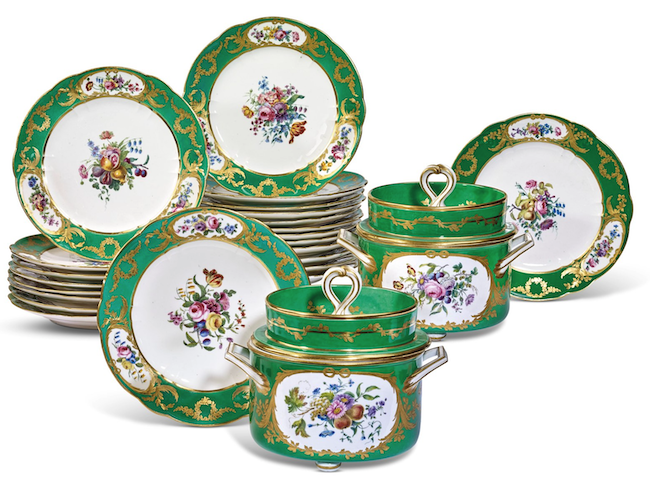
Sèvres, Green Ground Style, Image via Christie's
Green Ground Services - mid to late 18th century. Painted with groups of fruit and flowers reserved within variant by gilt foliate trails and palms.
- Auction Results: 24 pc set sold for $94,500 in 2023
Curious about how to identify a china pattern? Read this post on plate ID!
Josiah Spode established his pottery in Stoke-on-Trent in 1767. Spode’s formula for bone china and the process for "underglaze" printing for earthenware made Spode china both longer lasting and much sought after. Learn more here.
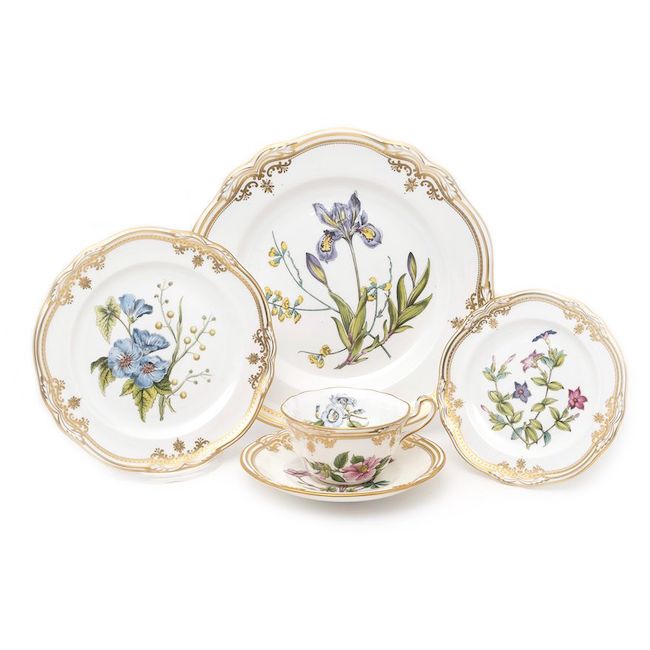
Spode, Stafford Flowers, Image via Michaans Auction
Stafford Flowers - Introduced 1986 - 2015, based on the botanical designs from the Curtis's Botanical Magazine using mid-19th century shape in bone china. In my opinion, very reminiscent of Flora Danica.
- Dinner plate cost from $150-300
- Auction Results: 150+ set sold for $8,500 in 2025; 15 pc set sold for $1,800 in 2021.
Lancaster, Cobalt & Crimson - Discontinued, 1956 - 2009.
- Auction Results: 140+ pc set sold for $6,000 in 2021; 300 pc set sold for $4,250 in 2023.
- Pattern available here.
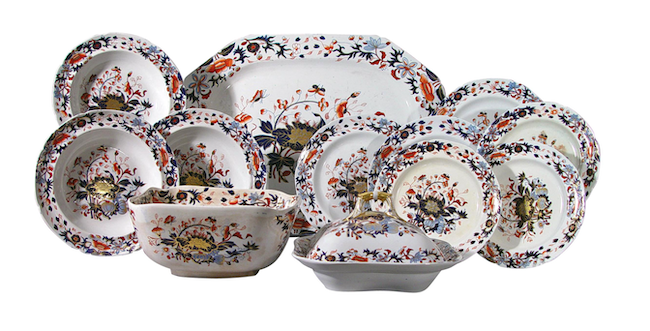
Imari Style 3504 - "Bang up" pattern?, 1823 - ?, Stoneware/Ironstone
- Dinner plate cost $100-150
- Current listing on 1st dibs for 84 pc set antique available $17,000
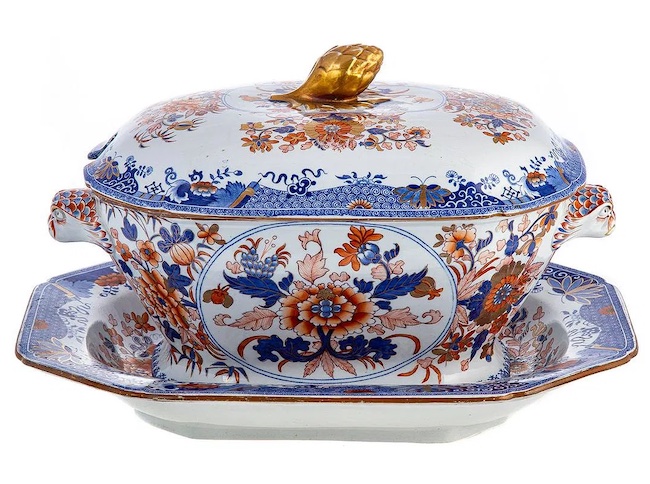
Spode, Imari 2086, Image via Liveauctioneers
Imari Style 2086 - Circa 1825-30, Stoneware/Ironstone
- Auction Results: antique 73 pc set sold for $2,500 in 2021.
- Plates available here.
Want to learn more about a variety of antiques from Wedgwood to opaline glass? Need something handy you can read on your phone? Order The Grandmillennial's Pocket Guide to Chic Antiques!
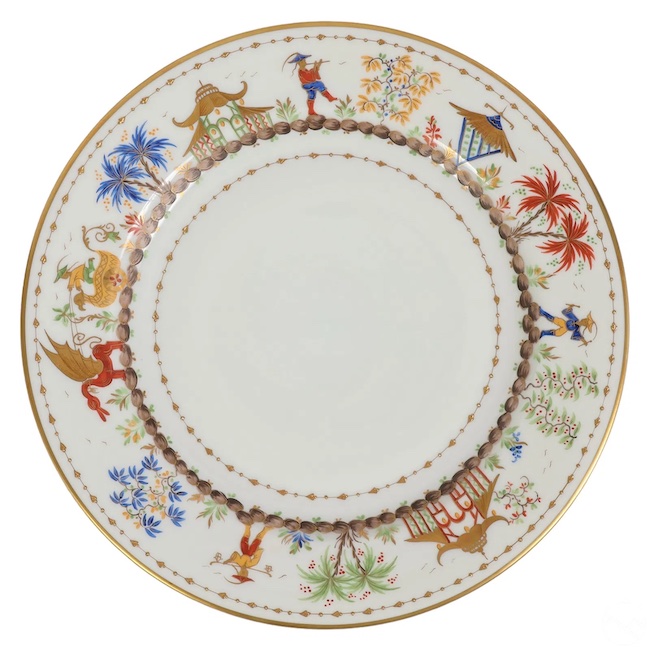
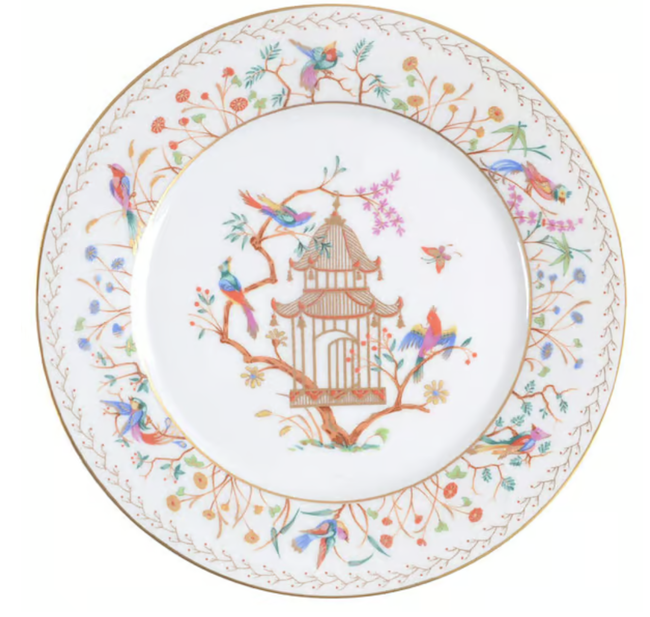
Tiffany, Cirque Chinois
Cirque Chinois - Designed by Camille Le Tallec (French, 1906-1991), made in France. Various hand painted multi-colored Chinoiserie figures with horses and pagodas on white porcelain. Introduced 2001, discontinued. Note: it seems the pattern was introduced after Le Tallec's death. Production dates unclear.
- Auction Results: 69 pc set sold for $16,000 in 2025; 37 pc set sold for $13,000 in 2024; 96 pc set sold for $40,000 in 2021.
- Pattern available here.
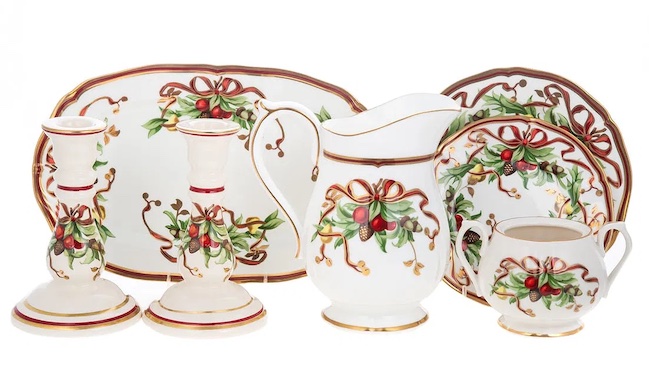
Tiffany, Holiday, Image via Liveauctioneers
Holiday - Inspired by traditional Victorian celebrations, this bone china collection features bundles of pinecones, pears, acorns and cranberries tied elegantly with rich red and gold ribbon. Made in Japan 1993 - 2019, discontinued.
- Average dinner plate $200-300.
- Auction Results: 78 pc set sold for $5,000 in 2024; 28 pc set sold for $4,000 in 2024.
Tiffany, Audubon
Audubon - Discontinued, 1990 - 2009.
- Replacements.com prices a dinner plate at $449.
- Auction Results: 16 pc set sold for $2,300 in 2025.
- Pattern available here.
Curious about how to identify a china pattern? Read this post on plate ID!
Minton
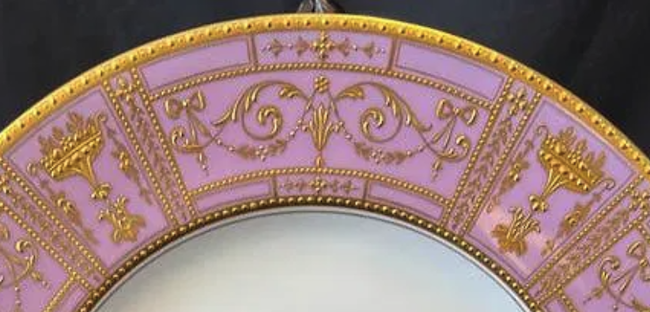
Minton, Milwaukee, Image via Liveauctioneers
Milwaukee - Originally purchased from Watts in the late 30s, early 40s. There are only ten of these services known
- Auction Results: 20th century 56 pc set sold for $11,000 in 2023
Pate-sur-pate Putti - Made for Tiffany & Co. late 1920s.
- Auction results: set of 12 plates sold for $12,000 in 2023.
- Plates available here.
Cockatrice - A variety of border colors from dark blue to verdant green, pink, turquoise, and yellow can be found. Most date from mid 19th century - to early 20th century.
- Auction Results: 100+ pc set sold for $1,800 in 2022.
- Pattern available here.
Royal Crown Derby
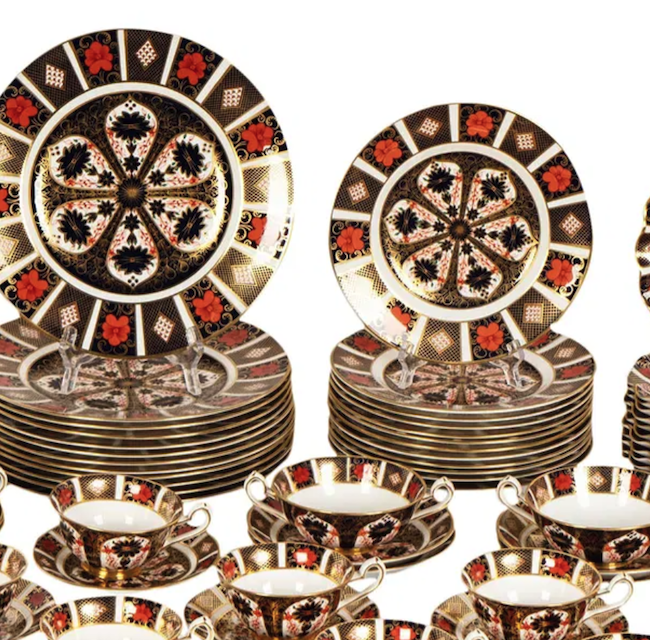
Royal Crown Derby, Old Imari, Image via Liveauctioneers
Old Imari - Introduced 1901 - present.
Olde Avesbury - Introduced 1933 - present.
Gold Aves - Introduced 1961 - present.
Raynaud
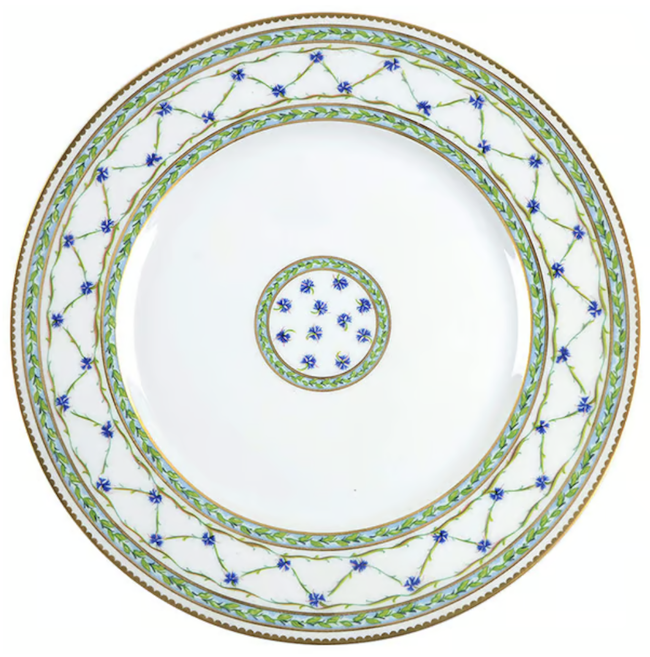
Raynaud, Alle Royale
Allee Royale - Introduced 1995 - present
- Pattern available here.
- Auction Results: 300+ pc set sold for $20,000 in 2021.
Sheherazade - Introduced 1994 - present.
- Auction Results: 20th century set of 500+ sold for $35,280 in 2024.
Montezuma Green - Circa 1901-2000.
Herculaneum Factory
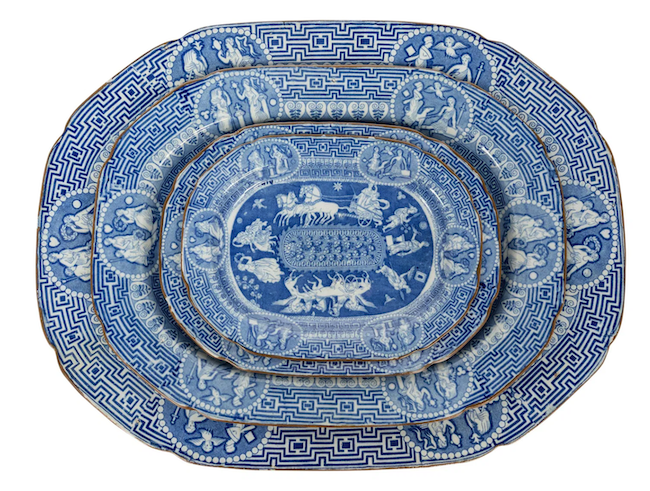
Herculaneum, Etruscan, Image via Liveauctioneers
Etruscan/Greek - Introduced in 1806, this Classically inspired patterned catered to the demand for Classical subjects created by the Greek Revival style. The images were taken from the 1804 publication: Outlines from the Figures and Compositions upon the Greek, Roman and Etruscan Vases of the late Sir William Hamilton. Drawn and engraved by the late Mr. Kirk.
- Auction Results: 60 pc set sold for $15,000 in 2023.
Wedgwood
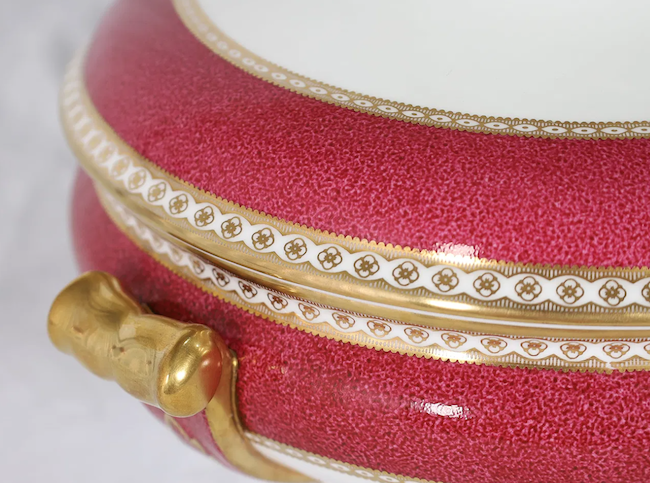
Wedgwood, Ulander, Image via Liveauctioneers
Ulander Ruby - Introduced 1927 - present. It features a powdery ruby finish with gold trim and white clover-like shapes. The textured effect is achieved through hand-tipping the finish with a fine-grain sponge. Bone china.
- Auction Results: 100+ pc set sold for $3,000 in 2023.
- Pattern available here
Seashell/Conchology/Nautilus Pearlware - Introduced early 19th century - discontinued. A fanciful bright pink with naturalistically modeled shell shaped dishes.
- Auction Results: 16 antique scallop plates sold for $3,750 in 2020; set of 17 antique conchology dessert service sold around $6,000 on 1st Dibs.
- Plates available here.
Tonquin Ruby - Discontinued, 1930 - 1990.
Coalport
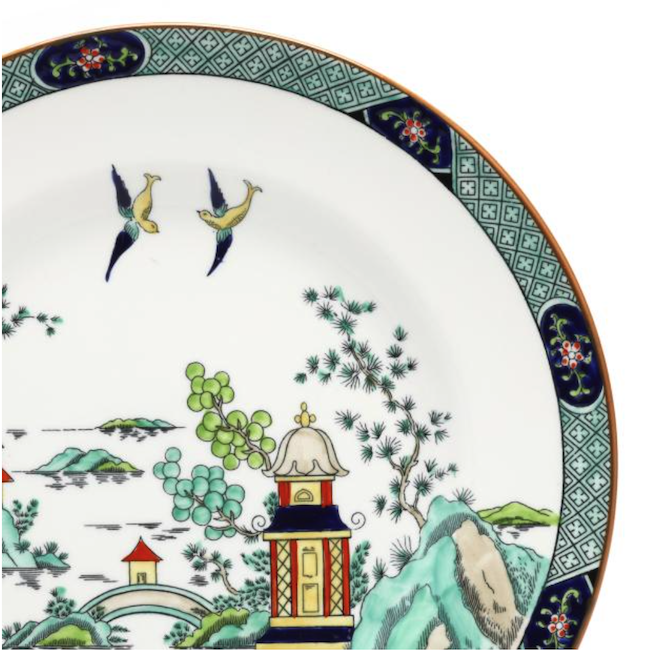
Coalport, Chinese Willow, Image via Leland Little
Chinese Willow - Discontinued, 1930 - 1984.
- Auction Results: 97 pc set sold for $10,000 in 2022.
- Pattern available here.
Hong Kong - Discontinued, 1970 - 1993.
- Auction Results: 200+ set sold for $4,750 in 2025.
- Pattern available here.
Royal Worcester
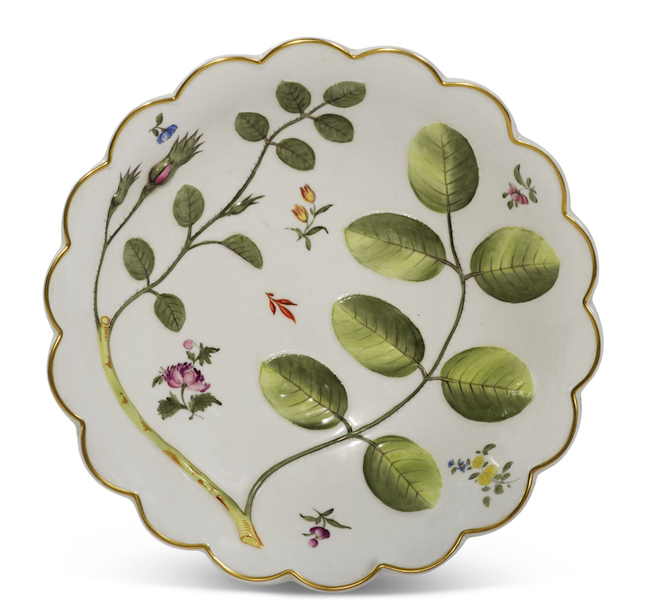
Royal Worcester, Blind Earl, Image via Sotheby's
Molded Blind Earl - Introduced 1750s - made in to mid-20th century.
- Auction Results: antique set of 28 sold for $6,500 in 2024; 20th century 50 pc set sold for $3,780 in 2022.
- Pattern available here.
Want to learn more about a variety of antiques from Wedgwood to opaline glass? Need something handy you can read on your phone? Order The Grandmillennial's Pocket Guide to Chic Antiques!

Your on the hunt resource to the chic antiques Grandmillennials adore!
If you’ve ever experienced the thrill of finding that “unicorn” antique piece after years of hunting, then you know there is no other high like it. The excitement and triumph you feel is obsession inducing!
But out there in the wild of thrift stores, estate sales, auction floors, and yard sales there are some very trying questions to be wrangled, like…
Is this priced too high?
Is it authentic?
Is it in good condition?
Is this the right one?
Sure you can do a Google image search for some quick answers, but how do you know if the AI is right? Often it's not! Instead turn to The Grandmillennial’s Pocket Guide to Chic Antiques for answers!
Explore Similar Posts
Fakes, Reproductions, & False Labels...
Everywhere!
So many antique malls don't even have antiques!
When hunting treasures how do you know what is authentic and not mislabeled?
You need to educate yourself ASAP, so you're not wasting money on knock-offs!
But how do you sift through all the millions of articles and books out there to get to the point?
Hi there! I'm Katherine...
the curator, writer in residence, and decorator behind Pender & Peony.
I’ve decorated my entire 1960s brick colonial with secondhand finds and antiques on a budget without sacrificing style, quality, or comfort.
You CAN have a traditional home with timeless charm on a budget too!
The problem isn't your taste -- it's an industry that glorifies the next big trend and only showcases high end custom design.
That's why I created The Collected Room Method to teach you my approach to the collected interior!
This deep dive into rare china patterns is a collector’s dream, this post is so informative and beautifully presented. I especially appreciated learning about the history behind each design.
Thanks Lydia! Glad you found if informative.
Nicely presented Katherine! An easy read and I gained lots of new information, from a fellow enthusiast. Thank you for sharing.
Absolutely! I’m so glad you learned something new!