My Design Tent for The Clinch River Antiques Festival
A look at my design tent for the Clinch River Antiques Festival and 5 tips for decorating a dining room with Grandmillennial style!
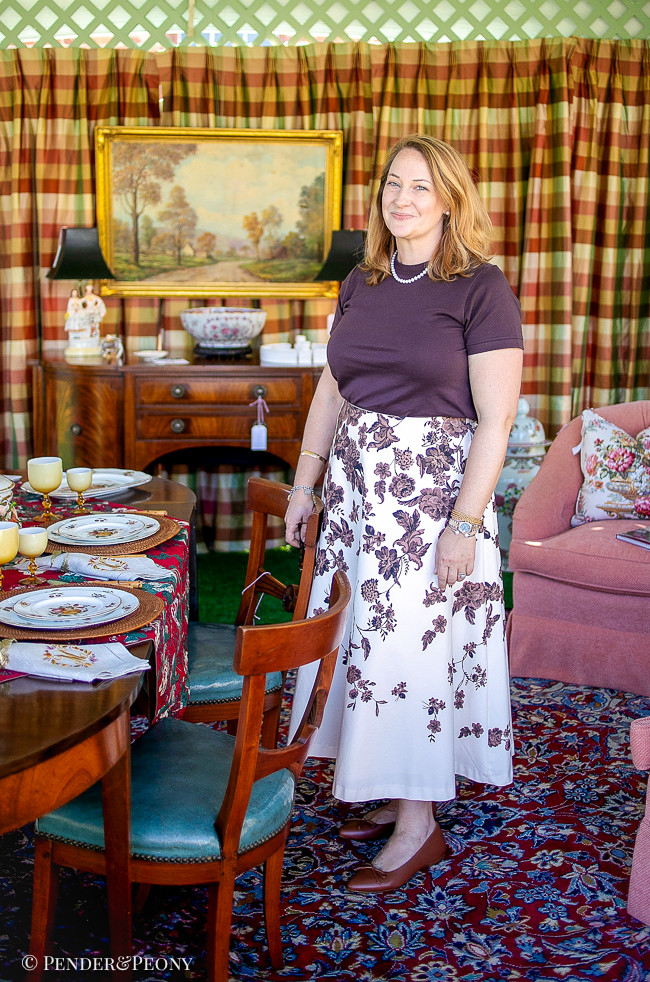
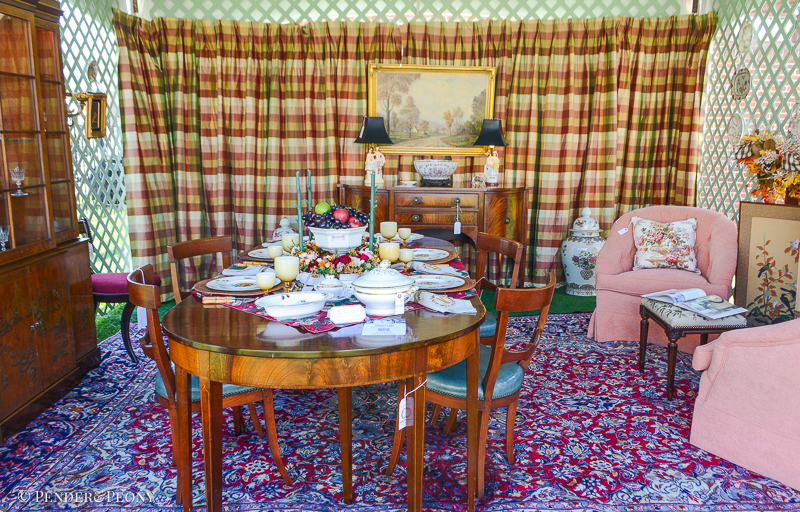
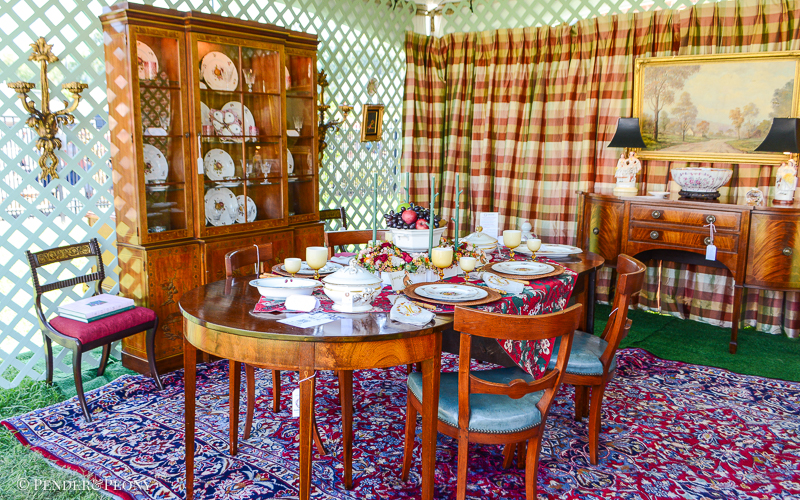
Y’all, I’ve got to say I’m pretty proud of myself! I designed and sourced an entire room in about 6 weeks; set it up under a 15′ x 15′ party tent in 3 days; and then tore it all down in an afternoon. Whew! What a whirlwind!
I would say 98% of this room is entirely secondhand: antiques and vintage pieces from auctions, estate sales, thrifts, Facebook Marketplace, and antique malls. Yes, you can design a fabulous, traditional space using nothing but antiques/vintage! Are there some tweaks I would make if I had more time and a bigger budget? Absolutely, the curtain – rug color situation is not my favorite, but overall this “room” turned out amazing.
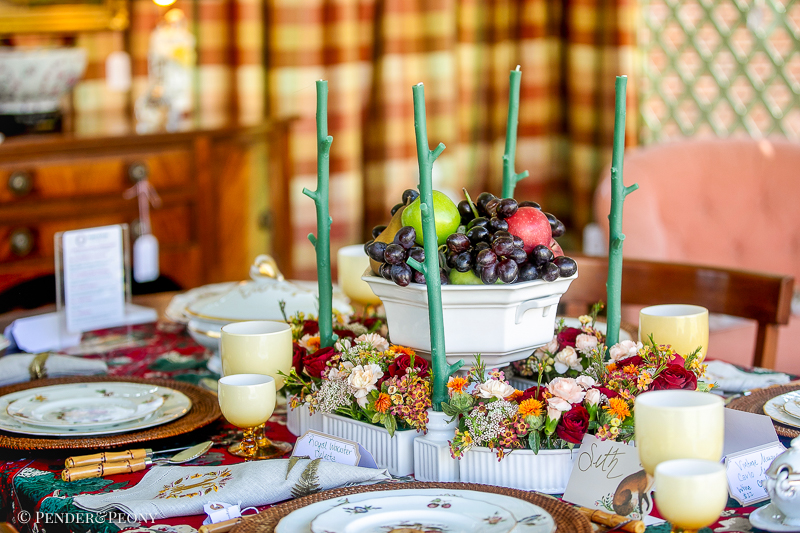
My design all started with the bone china pattern: Delecta from Royal Worcester. I fell hard for this elegant fruit and floral pattern and couldn’t get the pretty color palette out of my head. This space is total proof that inspiration can come from anywhere even a china pattern!
The silk plaid curtains were a really lucky Facebook Marketplace find. Here is a very similar silk fabric. The green on the lattice walls is Benjamin Moore Cedar Grove 444.
For source information on the decor, furniture, and tableware scroll to the end of this post.
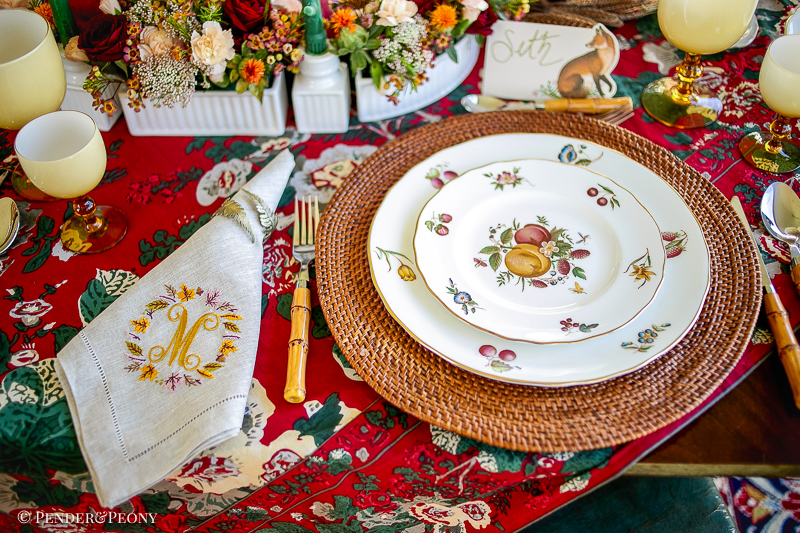
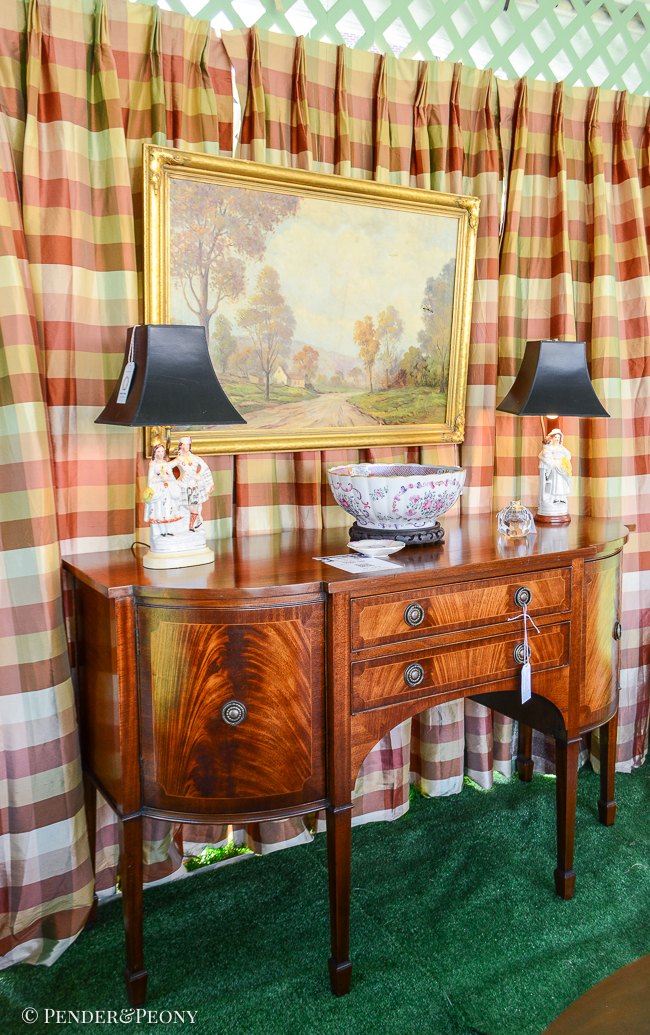
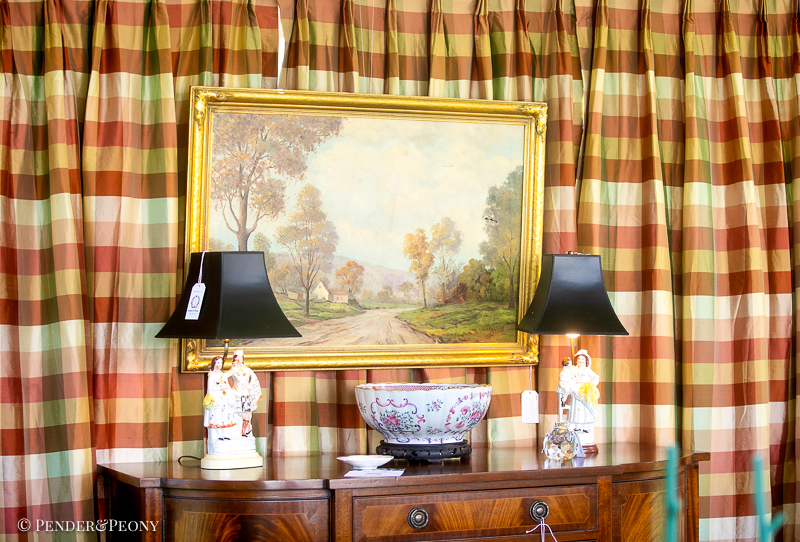
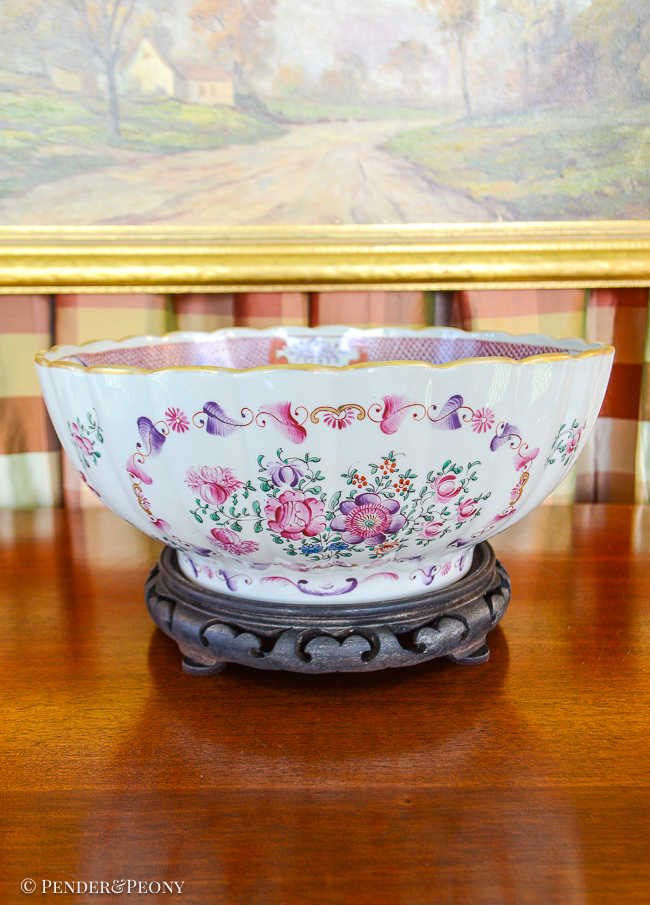
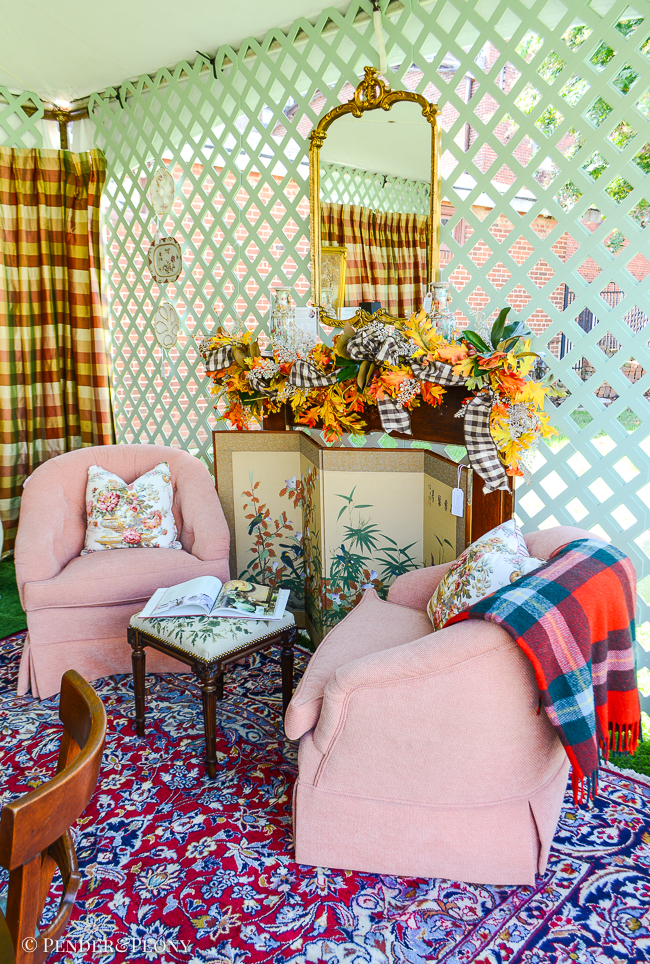
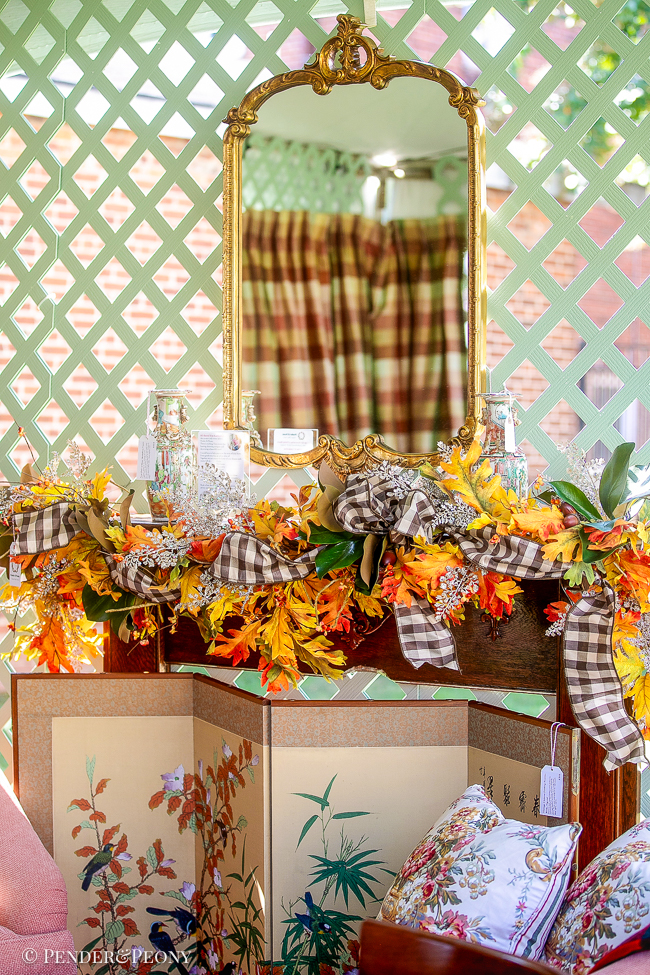
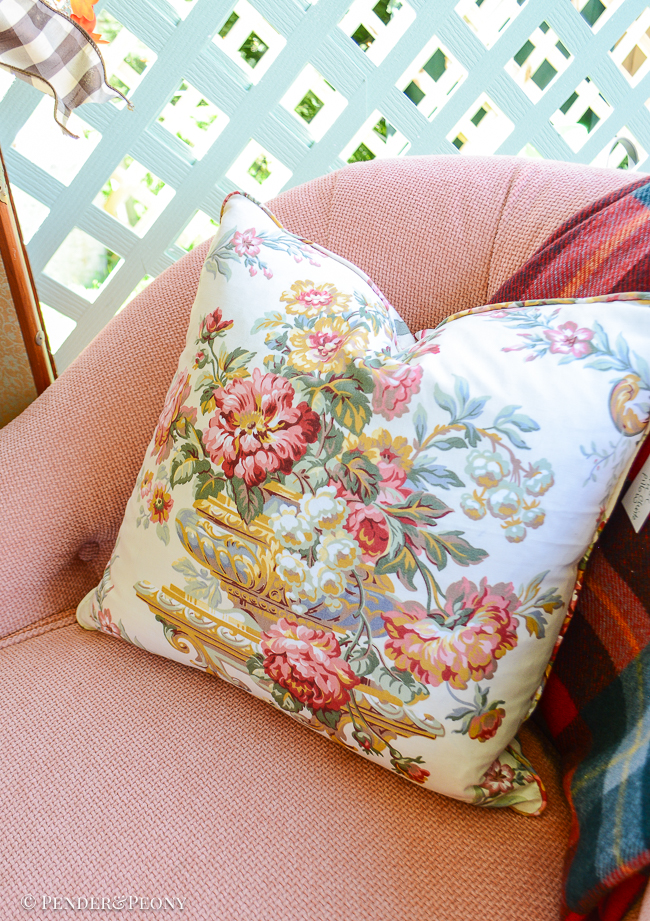
The organizers of the festival asked me to give a talk about my Grandmillennial style and designing my tent. So I thought I would share the highlights with you:
My 5 Tips for Decorating a Dining Room
No. 1 Invitation & Connection
For any room you are decorating you have to keep its purpose forefront in your mind while planning and buying. The basic question that you have to answer:
What do I want to do in this room?
Then the follow up is:
What do I need in this room to be able to do that?
For most of us, the dining room is about eating, right? We all love to sit down to a delicious meal. But if you dig a little deeper and think about the rituals of the space and how we interact in this room, it is about more than sustenance.
The dining room is invitation and connection. It is about inviting your family and friends to gather, sit down at a table, and share one of our fundamental points of connection: good food.
Thus the dining room is also about being fully present.
Your decor and your tablescape can help create an immersive experience that encourages your guests to sit back and relax — enjoy the meal and each other. This space is a room all about being together in the moment.
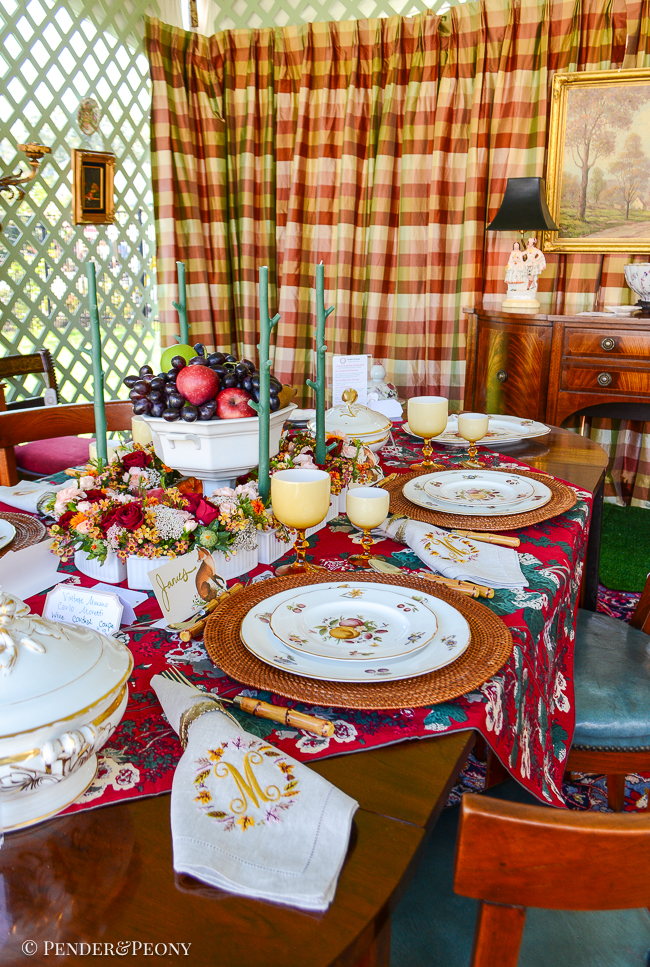
No. 2 Facilitate Flow & Storage
With the purpose at the forefront of your mind, now the question becomes:
How can you facilitate that immersive experience and that relaxation — that ease of dining?
You have to functionally make your dining room work! The spatial layout is everything!
There needs to be enough space around the table for chairs to be pulled out and sat in ( about 20-24”). If you want people to be able to walk behind those seated, then plan for 36”-48” out from the sides of the table. You want to make sure your chairs aren’t snagging the edge of the rug (choose a rug 30″ – 48″ larger than your table).
Think through big gatherings! What happens when you add a leaf to the table?
If you have a sideboard, make sure guests can walk to it and around the table easily when you serve buffet.
Consider your lighting. You want a chandelier that’s about 30” from the table top, and I always recommend a dimmer switch on it, so you can really control the lighting for various situations.
Make sure you have storage in the dining room itself for china, glassware, silverware, etc. so you don’t have far to go when setting the table. A china cabinet is always a good idea to store and display your valued tableware. In this space, I used a vintage Drexel Chinoiserie cabinet to show off crystal and Amberina glassware as well as the RW pattern.
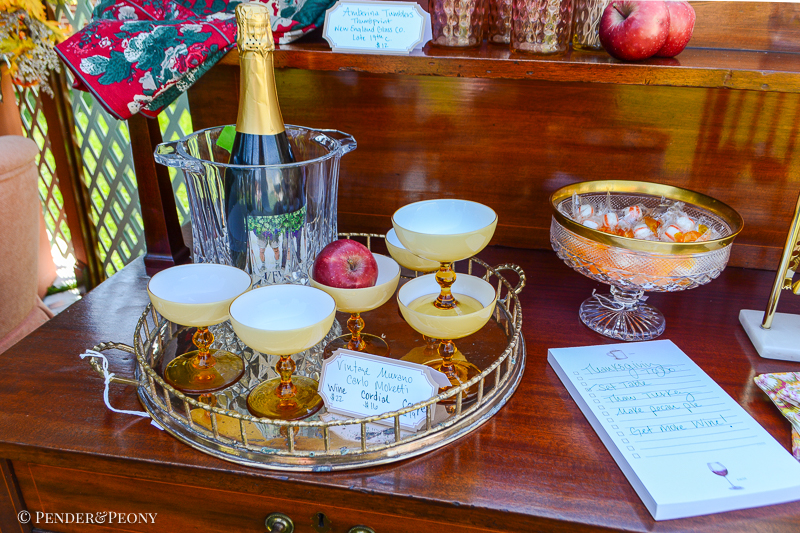
Think about the way your furniture can be multi-purpose. Something like the Edwardian mahogany server is so versatile. I have it set up like a bar, but you could easily serve the main meal from it, set up a dessert station, or layout goodie bags for a party on it.
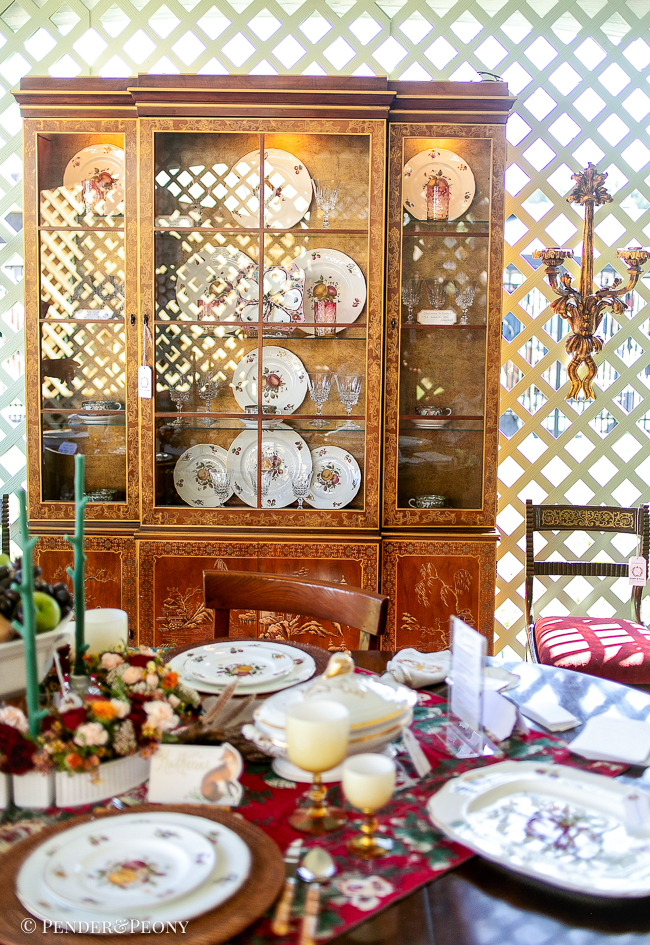
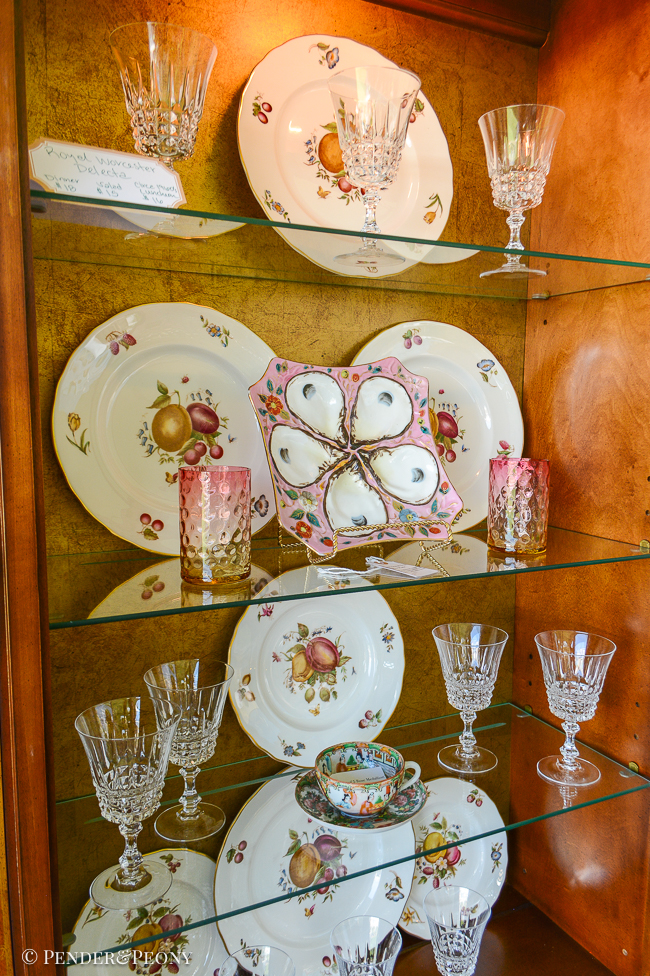
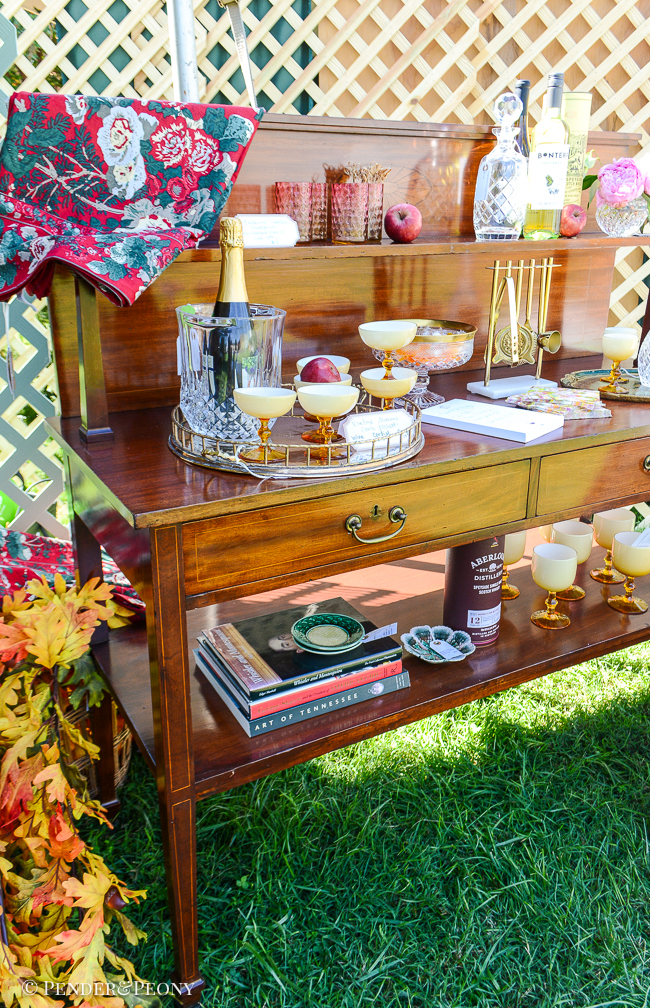
No. 3 Color & Pattern
One of the first things I like to ask a client when we’re decorating a dining room is whether they love to collect china, what their favorite patterns are, and if tablescaping is important to them. When that client likes to go big for the holidays and mix up their table settings and try different color and pattern combos in their linens and dishware, then I think it’s important for the dining room design to be a suitable backdrop to the evolving table.
When choosing colors and patterns for the walls and upholstery, in this scenario I choose softer colors and more subtle patterns. Not neutral, but soft pastel greens, pinks, and blues can be very versatile and mix really well with other colors more easily. For patterns I recommend beautiful multi-colored plaids or stripes and smaller scale florals. Then bring on beautiful rich brown furniture in mahogany, satinwood, cherry, or walnut.
What happens when you go really bold in a dining room with patterned wallpaper and upholstery in really strong colors is that you lose your tablescape a bit in the mix of it all. And it might feel like it is always in competition with everything around it or even clashing with the design of the room.
On the other hand, if mixing up the table is not a big deal to you. Let’s say you have a wedding china that you use for every occasion and the same linens then choosing bolder colors and patterns for the overall room design in concert with that tableware can make a lot of sense.
A great way to add pattern, texture, and color to your walls in a very flexible way is with a plate wall display. Once you configure a layout for the plates that works for a wall you can even rotate it seasonally as long as you keep the plates roughly the same size and shape.
No. 4 Add Drama
Dining rooms are a wonderful opportunity to bring in some drama. You can use tasteful statement pieces to make the room feel extra special. Think about the decor elements that can really catch the eye and be a focal point for the room besides the dining table itself: a statement chandelier, beautiful billowing silk drapes, a gold mirror, or a colorful piece of art.
These pieces will elevate the space, making it more interesting and sophisticated.
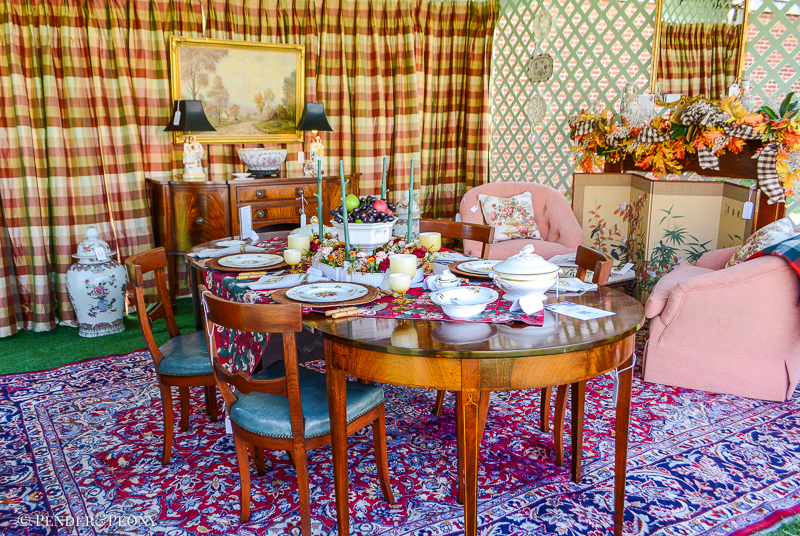
No. 5 Heirlooms
Give heirlooms a spot to shine. Display your mother’s silver tea set. Hang up a great aunt’s china on the wall. Or make a sweet display of your family’s baby cups on a shelf. These beloved heirlooms will wrap the dining room in meaning and connection. They can be wonderful conversation starters and help tie in the traditions and rituals you remember from your childhood to your family now.
If you don’t have any heirlooms specific for the dining room or your mother/grandmother’s style just doesn’t jive with yours…become the caretaker of someone else’s heirlooms that do reflect your taste! An heirloom starts somewhere with someone, and what you collect today might be really meaningful to your children or children’s children someday.
One of the most beautiful things about collecting antiques is that you are bringing the past forward and giving those objects new life. Even when you don’t know the full story about a piece it has a patina that is special.
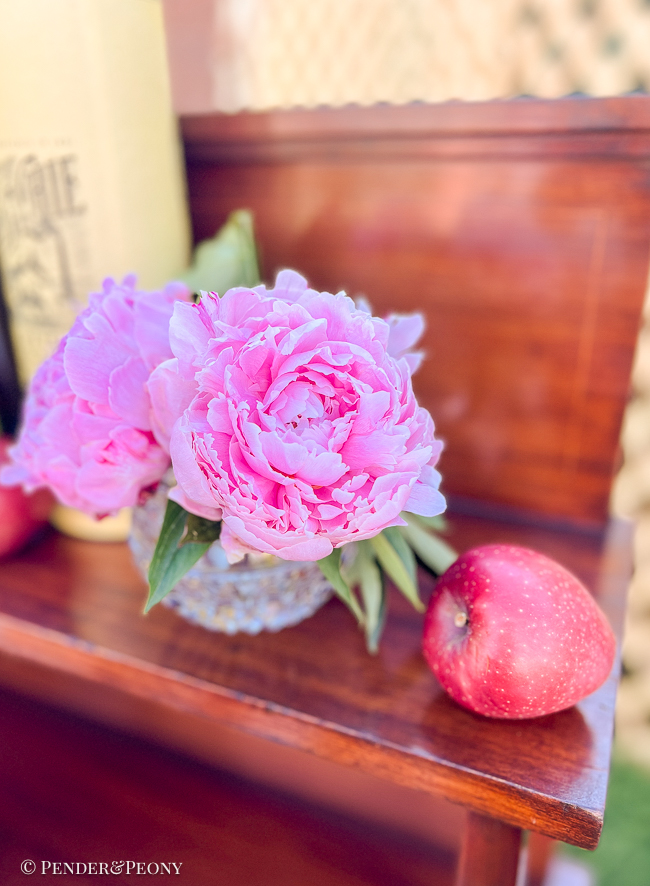
As I was cleaning this antique server for the festival, I noticed all of the little dents and scratches in this front edge. At first I wondered if that hurt the value of this piece, but then it dawned on me why there are so many little nicks. It’s because countless people – guests at a party – came up to this piece and maybe hit the edge with a belt buckle or button when serving themselves food or a drink or picked up a piece of cake. How great is that?
There is an undeniable mark of all these family and friends using this piece of furniture for celebrations or weeknight dinners. Now this front edge feels special! Its patina of age and use inspires us to think about the past and how people lived and used it. Now there is this wonderful circle of connection there that you just can’t get with something new.
I hope you’ve enjoyed this look at my dining room design tent for the 24th Clinch River Antiques Festival. Here are the details for decor and furnishings:
Design/Decor Sources
English Mahogany Server – Available, circa 1900 54″ L x 21″D x 55″H inquiries katherine@penderandpeony.com
Amberina Tumblers – pink to gold thumbprint pattern, circa late 1800s
Amber Carlo Moretti Goblets – vintage 1960s, coupes, cordials, and wine goblets
Cristal D’Arques Champagne Bucket
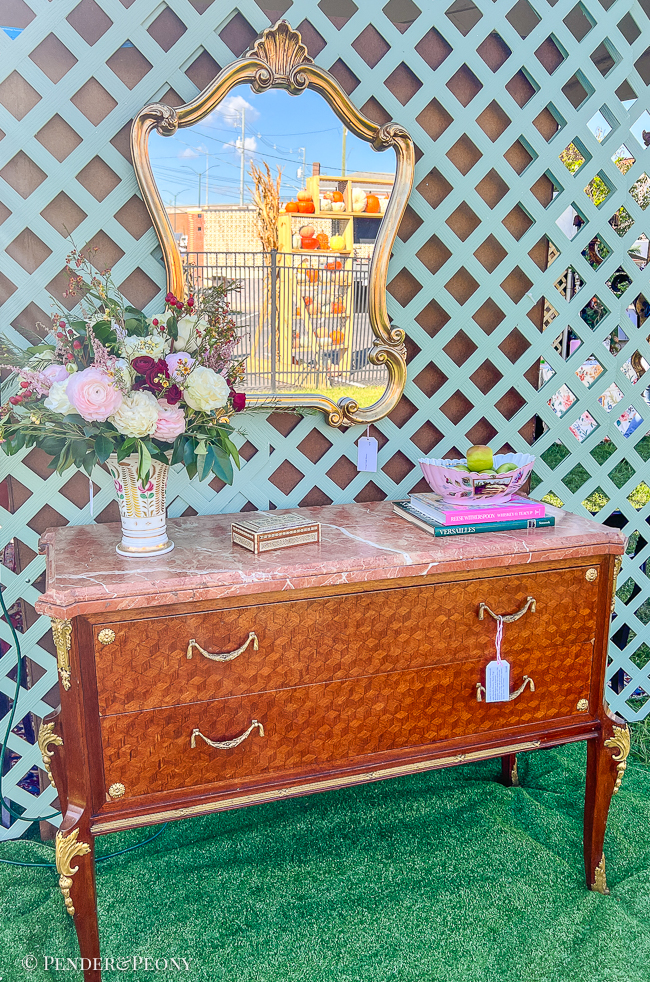
Gilt Mirror – vintage
Pink Chairs – custom upholstery, probably NC made
Green Floral Needlepoint Stool – SOLD, similar here
Famille Rose Temple Jars – Chinese export 28″H, inquiries katherine@penderandpeony.com
G.T. Rackstraw English Mahogany Sideboard – SOLD
Chinese Style Porcelain Bowl – Samson French porcelain
George De Voss Landscape Painting – SOLD
Isfahan Rug – SOLD
Dining Table – Georgian style banquet table, SOLD
Set of 4 Italian Biedermeier Chairs – inquiries katherine@penderandpeony.com
Royal Worcester Delecta Bone China
Red Chintz Tablecloth – April Cornel
Monogrammed Napkins – JKafie Studio
Green Stick Candles – Maple
Antique Limoges Round & Oval Tureens
Drexel Heritage Et Cetera China Cabinet – 55″ W x 79″H, inquiries katherine@penderandpeony.com
Crystal Goblets – Cristal D’Arques
Pair of Regency Brass Inlay Side Chairs – inquiries katherine@penderandpeony.com
Louis Transitional Commode with Pink Limestone/Marble Top – 36.5″H x 49″L x 18.5″D, inquiries katherine@penderandpeony.com
Fakes, Reproductions, & False Labels...
Everywhere!
So many antique malls don't even have antiques!
When hunting treasures how do you know what is authentic and not mislabeled?
You need to educate yourself ASAP, so you're not wasting money on knock-offs!
But how do you sift through all the millions of articles and books out there to get to the point?
Hi there! I'm Katherine...
the curator, writer in residence, and decorator behind Pender & Peony.
I’ve decorated my entire 1960s brick colonial with secondhand finds and antiques on a budget without sacrificing style, quality, or comfort.
You CAN have a traditional home with timeless charm on a budget too!
The problem isn't your taste -- it's an industry that glorifies the next big trend and only showcases high end custom design.
That's why I created The Collected Room Method to teach you my approach to the collected interior!