
5 Priorities to Tackle Your Next Decorating Project
The first 5 priorities I address to tackle a decorating project that speed up the design process and make sourcing easier.
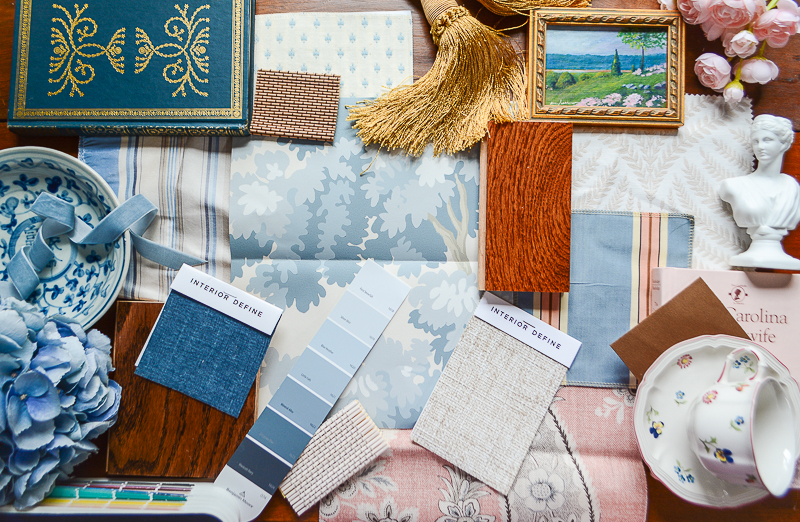
I’m a planner, and I love the beginning of a design project because there is so much to sort out and strategize. It’s like putting together a puzzle. You know you’ve got to set up your box cover where you can see it; turn all the pieces right side up; then locate the straight edges, and organize by color to really jump start the process. Apply the same methodology to decorating: gather your inspiration; figure out what you are working with; define the essentials.
For some this isn’t such an enjoyable undertaking. I hear from design clients regularly that they struggle to sort through all their inspiration and make clearcut decisions. If this is you, I hope today’s post gives you some actionable priorities you can focus on to jumpstart your next decorating project.
5 Priorities to Tackle Your Decorating Projects
No. 1 A Guiding Light
Most of my projects start with an inspiration piece — a fabric, an art work, a color, a theme that sparks my creativity and lays the foundation for the room. This piece can be almost anything, but it should be interesting and it should really captivate you. In my opinion, it is not enough for your inspiration to simply be a decorating style like Grandmillennial or Chinoiserie. You need an actual physical token. You can and should have a style or theme as a rubric of sorts that informs your decisions, but then you’ve got to hunt out the specific piece that embodies how the room should look.
Sometimes inspiration is lurking in the original vision you had for the room, but that kernel gets lost in the myriad of inspirations you see while perusing Pinterest or Instagram. If you are struggling to decide on your inspiration, go back to your original desires for the room. Ask yourself:
- How you want the room to feel?
- How you need to use the room?
- What do you dislike about it currently?
- Is there a color, pattern, or decorative piece you keep coming back to?
Another helpful exercise is writing out a personal decorating philosophy. This is a series of statements about your home aesthetics, and it can be tremendously helpful in clarifying decorating decisions. You can read mine here and learn how to craft your own.
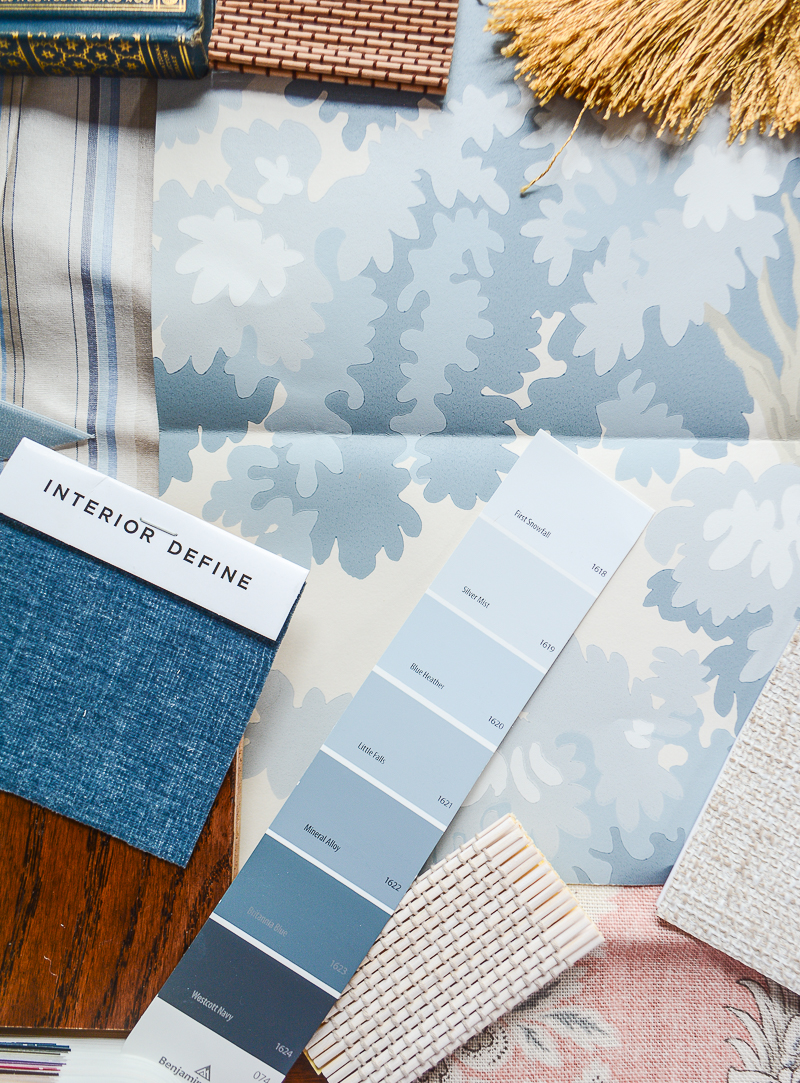
This is a mood board for a client I’ve been working on using Raphael wallpaper as the inspiration.
No. 2 Spatial Planning
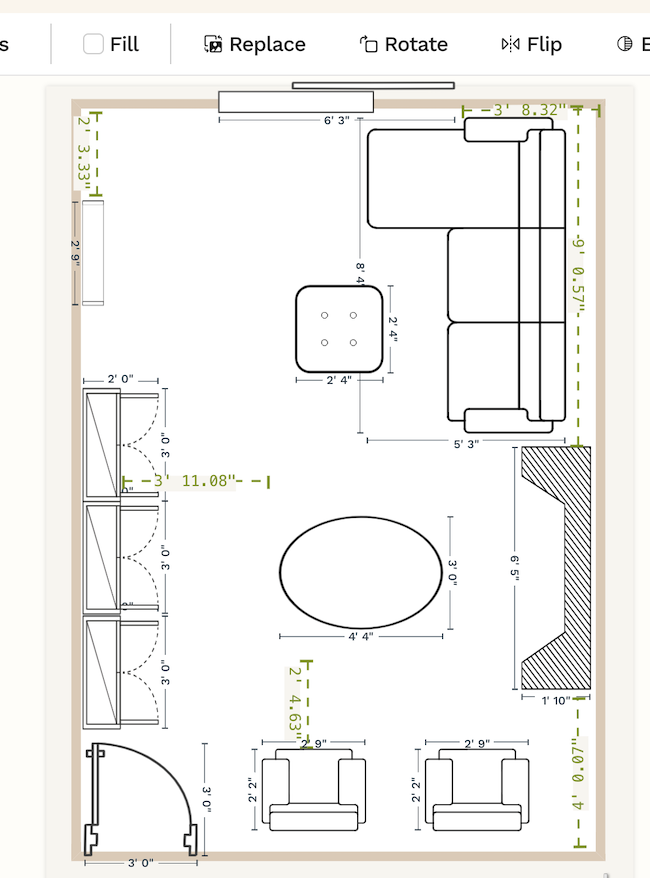
This is the part of puzzling where you turn over all the pieces and find the straight edges! Applying this step to your decorating process means measuring everything! You need to know your room dimensions and the size of the architectural elements that make up the room like fireplaces, windows, doors, columns, etc. as well as how far apart each one is from the other. You’ve got to know what you are working with in other words.
This information is vital to start playing with layouts for the room and sourcing furniture. It will save you time, money, and missed opportunities. There are then two things you need to do with these numbers:
- Write them down on a couple of index cards. Stash those cards in your room portfolio (more on that below), your handbag, your car, and by your computer. Haha yes we do live in the 21st century and you probably have a smart phone, so make a permanent note of them on there too!
- Draw a layout of the room. You can go old school with graph paper and pencil or use an online software program like Spoak, which is what I just switched to and love it. This app will let you create floor plans and 3-D elevations. Try it here for $10 off your membership. In the floor planning tool you can play with your layout and get a good sense of what will fit where.
No. 3 Color Scheming
Using your inspiration, it’s time to color scheme! Deciding on the key colors for the room allows you make so many decisions about what will go in the space. You can narrow down your upholstery, paint, fixtures, and more. Order samples and look at all the colors in person!
My advice on how to create a color scheme is in this post.
No. 4 Physical Mood Board(s)
Now for the really fun part of decorating a room…playing with all your samples and figuring out what works best together. This is your chance to play editor and mix and match different elements to find the best combinations. If you are having trouble deciding which way to take a decorating project or oscillating between two patterns or colors, this is usually when one direction will become very clear.
Place your two different combinations in one giant layout with the inspiration piece in the center like I did for this blue and white design then see which one really draws you. This design client really wanted a blue and white space, but we both kept coming back to this Schumacker Le Castellet pattern in blush, and voila when we laid out the mood board with more pink accents that cemented the design in that direction!
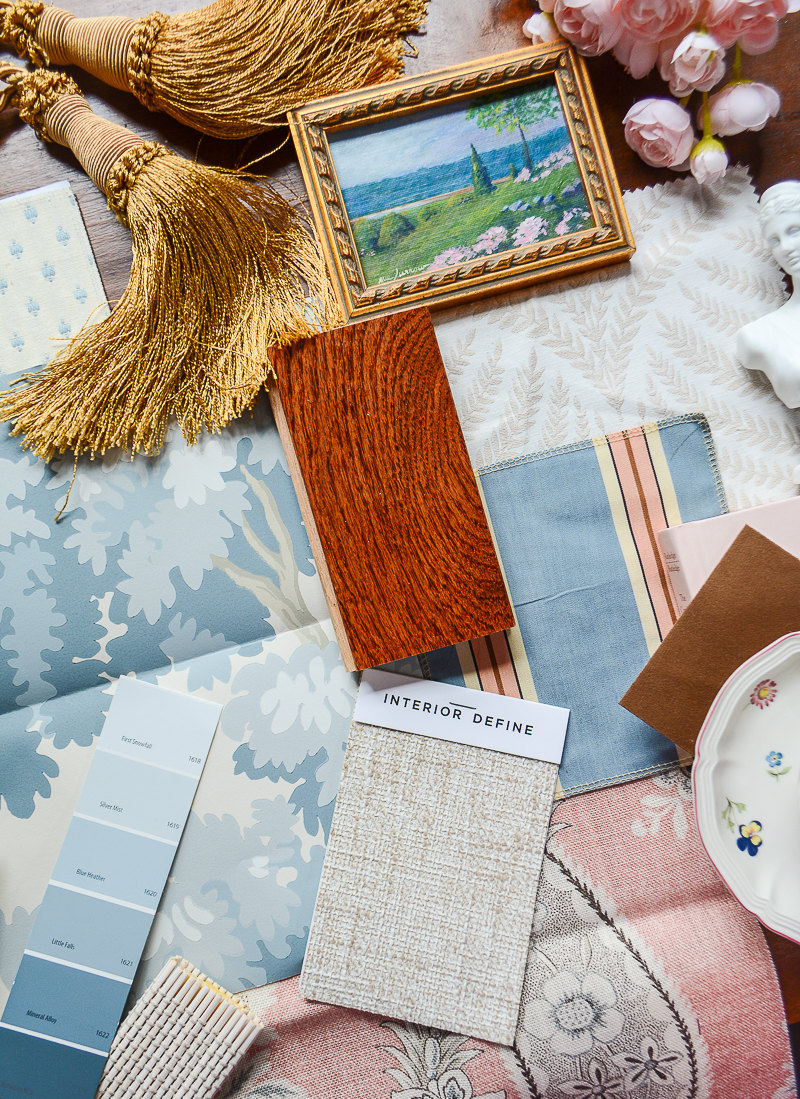
I always do physical mood boards as well as digital because it is so important to see the colors of your wallpapers, fabrics, paints, etc. in person and together. The computer is wonderful, but everyone’s monitor is calibrated differently and you don’t know if the photographs were color corrected, so a sample’s colors in person can look completely different than they appeared online. The tactile nature of a physical mood board is also important because it allows you to experience textures and look at your samples in the room’s lighting.
A mood board is also about visualizing the feeling or vibe of a room, so be sure to pull in other inspirational elements like fruit or flowers, flooring samples, hardware, and even small decorative objects to more fully visualize the space.
No. 5 Portable Sample Stash
As your design starts to coalesce, put all your samples, a measurement card, and paint chips into a room portfolio. Stash it in your handbag or car, so you have it for reference any time you are out antiquing or shopping. A folio like this works really well to corral all of your samples. I often order 2 or 3 of the samples I am definite about, so I can have multiple folios stashed in multiple places.
Well…do you feel ready to start your next decorating project? I hope so!
Focusing on these 5 priorities when you start decorating a space will make the design process much smoother and help you source faster. But if you feel really stuck need help with a project, reach out I offer in person and e-design services. Learn more here!
Hi there! I'm Katherine...
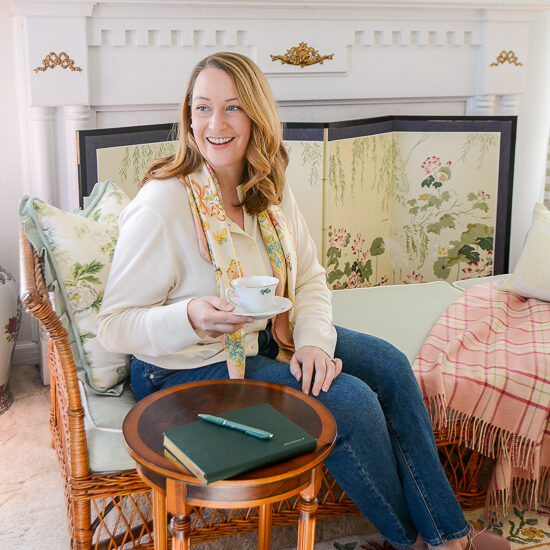
the curator, writer in residence, and decorator behind Pender & Peony.
I’ve decorated my entire 1960s brick colonial with secondhand finds and antiques on a budget without sacrificing style, quality, or comfort.
You CAN have a traditional home with timeless charm on a budget too!
The problem isn't your taste -- it's an industry that glorifies the next big trend and only showcases high end custom design.
That's why I created The Collected Room Method to teach you my approach to the collected interior!