The Merry Punch Bowl
A deep dive into the history of the punch bowl and its staring role in merrymaking of the past.
With a season of festivity ahead of us I thought it timely to delve into the history of some of our time tested entertaining principals. Let's start with the punch bowl!
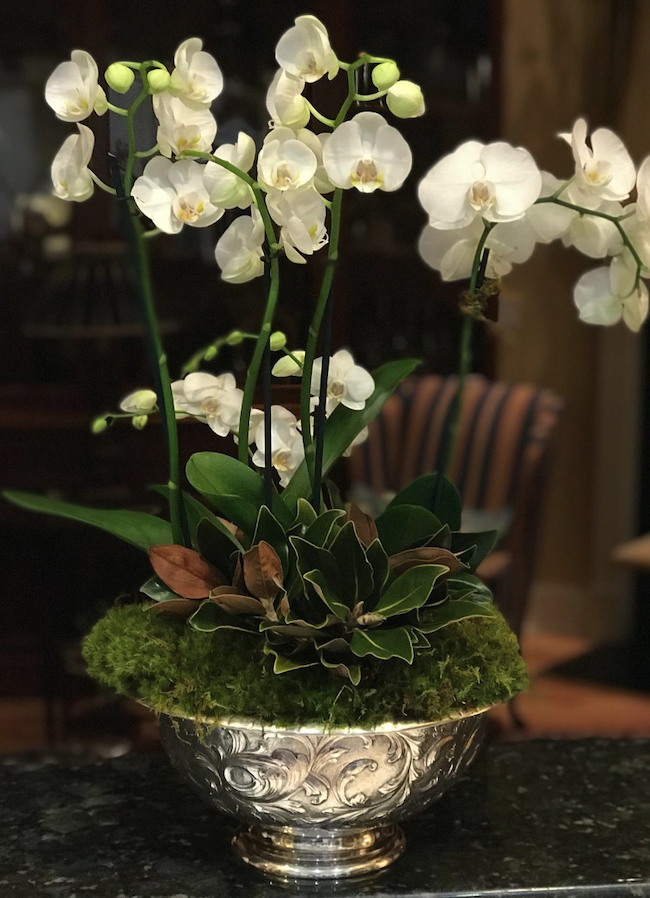
You know that vessel you've got your orchid in. ; )
"The Sailor's Pleasure"
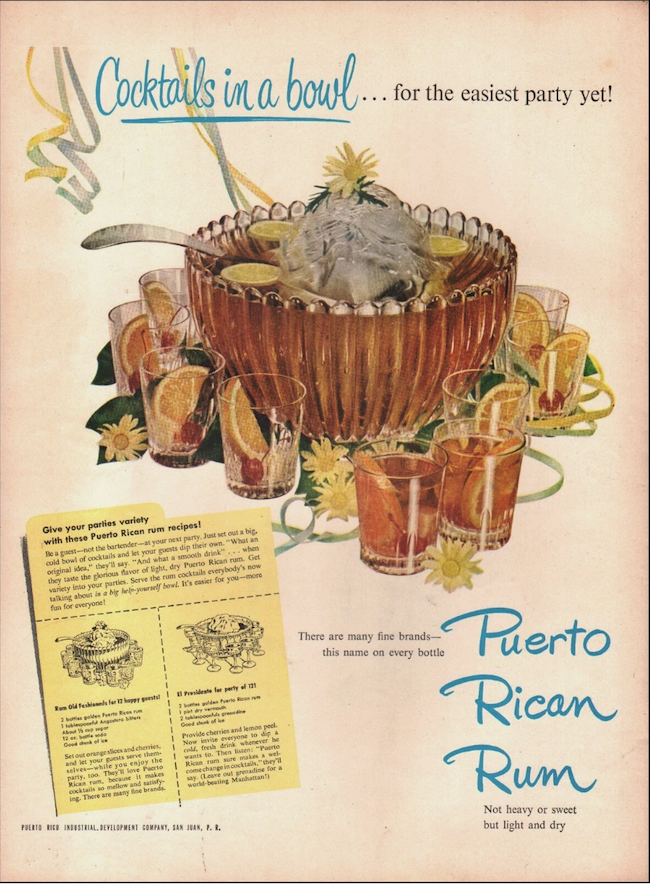
Chances are good when you hear the word punch you may have a fond flashback to parties at your grandmother's house where a syrupy red concoction swam inside a large bowl with big chunks of ice. But the history of punch actually goes all the way back to the mid-1600s when merchants and sailors via the British East India company partook of local mixed liquor drinks. The Brits were out of wine and the beer had fallen flat in the heat of the Indian sun. What were they to do?
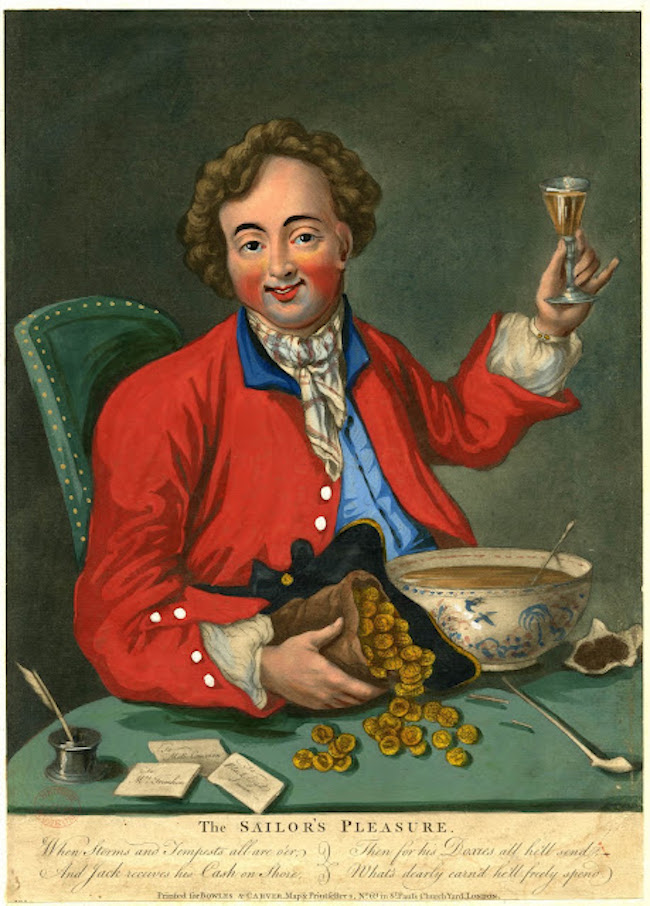
The Sailor's Pleasure, Bowles and Carver, c1793-1800, Image via British Tars
On the other side of British colonial expansion the delights of rum were being discovered, and it came pouring out of the West Indies headed to English ports. Now this rum was quite jagged going down, but cut it with some water, sugar, citrus, and spice - the "punch" learned in India - and you have something worth toasting. Rum quickly replaced the sailor's rations of wine and beer by the 1700s and was imported to England in huge quantities edging out the then hard to acquire French brandy.
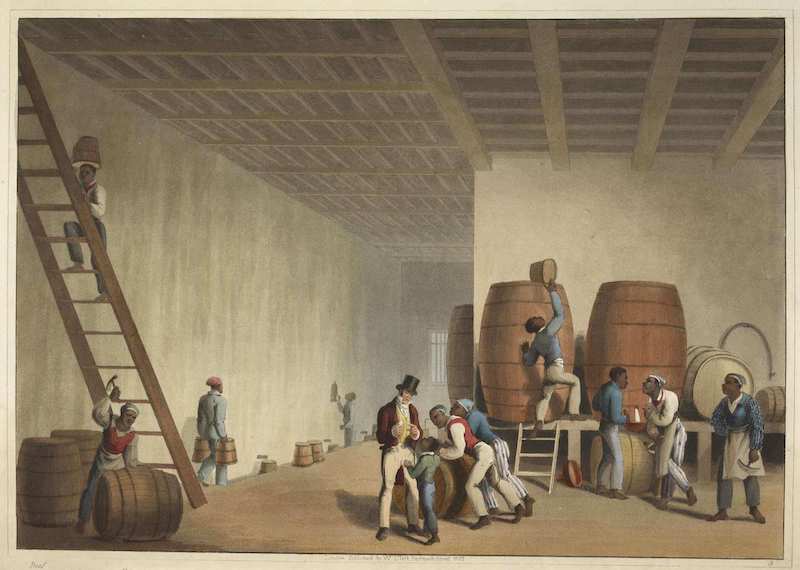
Interior of a distillery in Antigua, 1823, Image via The West End Museum
Ship investors commonly met their newly arrived cargo at the docks and were invited to celebrate the successful voyage with a bowl of punch. Soon enough punch was being served in coffee houses and taverns. The drinking of punch quickly became a bonding ritual amongst men and part of toasting rituals of the time.
"The Flowing Bowl"
As more of the ingredients became available in England, punch became the fashionable tipple amongst the well-to-do who could afford the pricey mix. Punch democratized quickly in the early 1800s as global trade picked up pace.
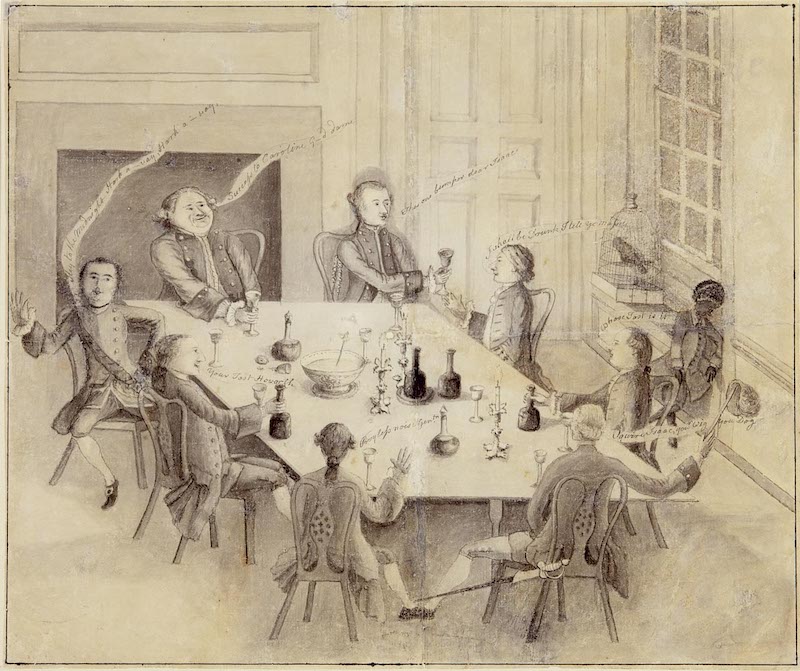
1760 Mr. Peter Manigault (1731-1773) and His Friends, Image via MESDA
Punch was very much a communal libation meant to be savored around a table with friends, mostly male comrades, but over the course of the century punch found its way into private homes and became part of social entertaining customs and a means of celebration.
By the end of the 1700s punch was very much apart of hospitality rituals and regularly offered to visitors upon arrival; served to men before a fancy dinner began; or offered at the end of a meal when men and women separated. The men stayed at table to smoke and pass the punch bowl, while women adjourned to the drawing room and partook of tea!
As one 1730 song put it...
"You may talk of brisk Claret, sing Praises of Sherry,
Speak well of old Hock, Mum, Cider and Perry;
But you must drink Punch if you mean to be Merry."
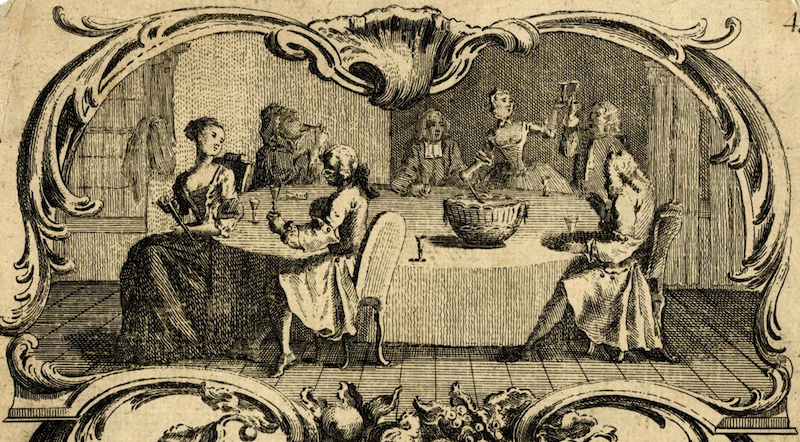
1737 Cartouche on Music Sheet by Bickham The Younger, Image via The British Museum
Women certainly did enjoy a bowl of punch, but to lesser and more private degree than men. Women's punch drinking mostly occurred within the private or semi private walls of homes during elaborate dinners or parties and less so in public spaces like taverns. This was definitely a case of "boys will be boys" and girls must remain moral and perfect.
It was expected and even encouraged that men in the Georgian period drink to excess, but women were expected to observe decorum and not appear drunk.
Interestingly, in this mezzotint from 1779 we see women enjoying an afternoon bowling game outdoors. Do you see what is happening on the left side? The women are sharing a bowl of punch!
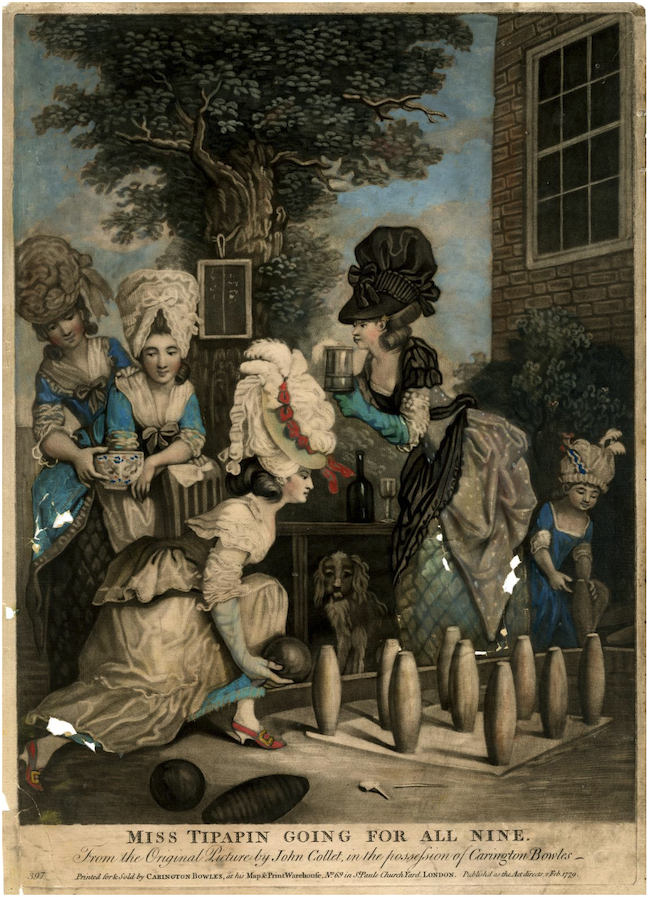
"Miss Tipapin going for all nine" February 1779 Hand-coloured mezzotint with some etching, Image via British Museum
Concerns did arise about the dangers of alcoholism and excessive punch drinking at the time. Satirists commonly poked fun at the boisterous punch party that devolved into barbarity. Despite raised alarms punch remained the mixed drink of choice in the English speaking world for nearly 200 years.
What do you serve this fabulous libation in?
A bowl of course: sterling if you're hobnobbing it with the royals and ceramic or glass if you work for a living but have disposable income.
The punch bowl became a ubiquitous symbol of hospitality in the 18th century. The bowls were made in varying sizes from those small enough to pass around the table and drink from (like pictured above) to those big enough to hold 10 gallons. A wealthy household might inventory multiple sizes to accommodate various size gatherings.
For much of the 18th century, ceramic punch bowls were ordinaire, especially Chinese export vessels. Native potteries in England and the US made punch bowls too in stoneware, soft-paste porcelain, and later hard-paste porcelain.
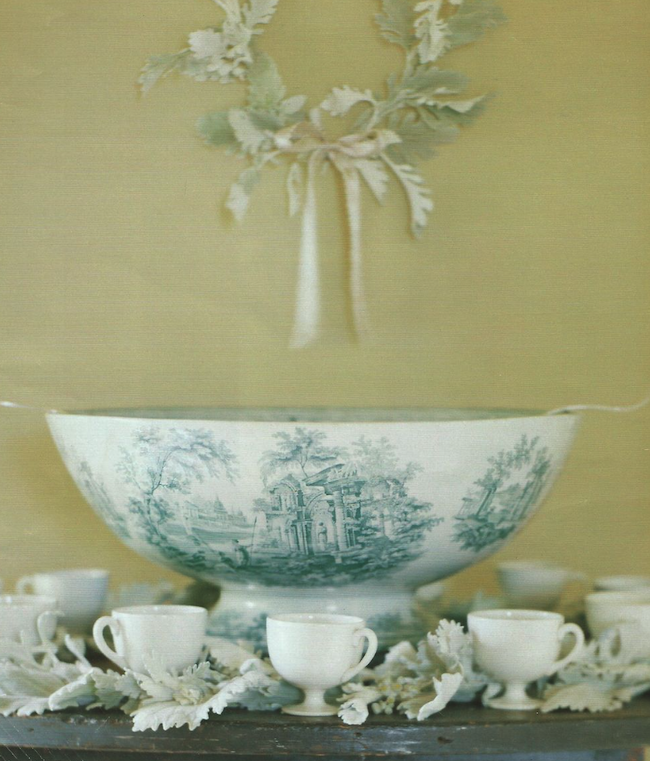
Transferware punch bowl via Martha Stewart Living 2000, Image via Martha Moments
As Benjamin Franklin wrote in Poor Richard's Almanack 1737 for a "printer's punch"...
"Boy, bring a bowl of China here,
Fill it with water cool and clear:
Decanter with Jamaica right
And spoon of silver, clean and bright.
Sugar twice-fin’d in piece cut,
Kni[f]e, sieve and glass in order put,
Bring forth the fragrant fruit and then
We’re happy till the clock strikes ten."
Franklin's opening line suggests just how common and connected Chinese bowls were to punch, and in fact we know thousands up thousands of them were made and shipped to England and the United States during this period. These porcelain bowls were highly decorative and often commissioned to celebrate fraternal orders, guilds, voyages, marriages, and births.
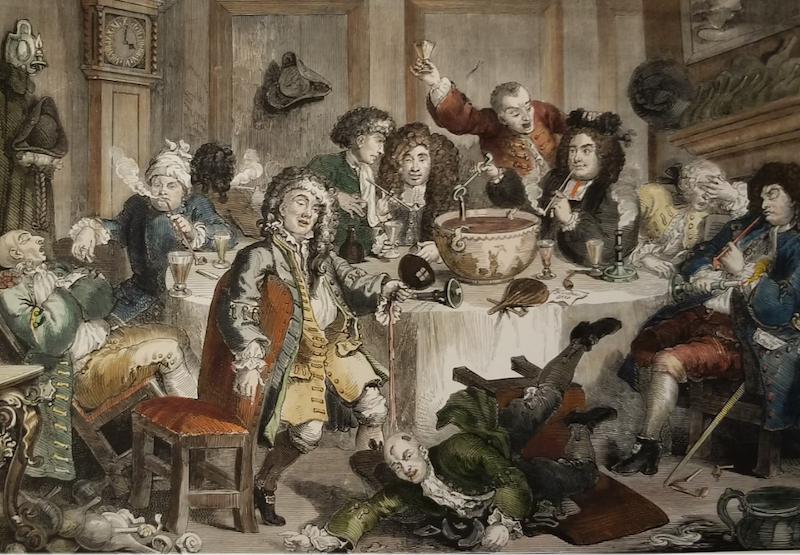
"Midnight Modern Conversation" by Hogarth, Image via The Square Magazine
Some bowls poked fun at the raucous punch drinkers with re-prints of Hogarth’s A Midnight Modern Conversation on the exterior walls, while others featured witty messages inside the bowl:
“Drink Fair / Don’t Swear”
“Pass it Round”
“One Bowl More”
In the 18th century, blue and white designs, armorial motifs, Imari, and florals in the Famille Rose style were popular Chinese porcelain styles. Just because ceramic bowls were widely used to serve punch does not mean that a "China" bowl was not impressive. These elaborately enameled colorful bowls would have definitely conferred status on the owners and were probably displayed prominently when not in use.
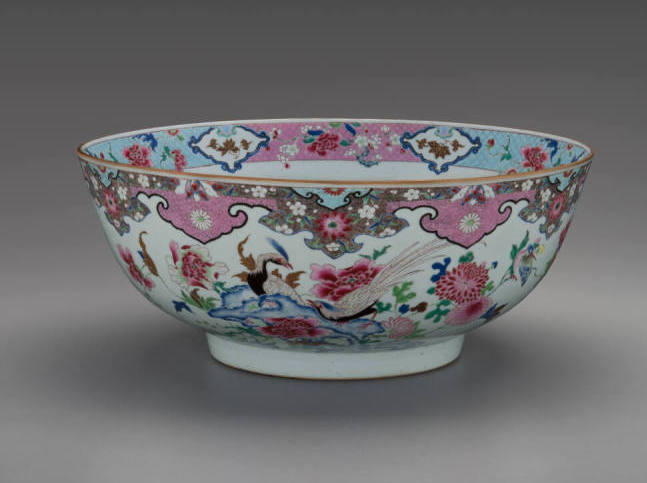
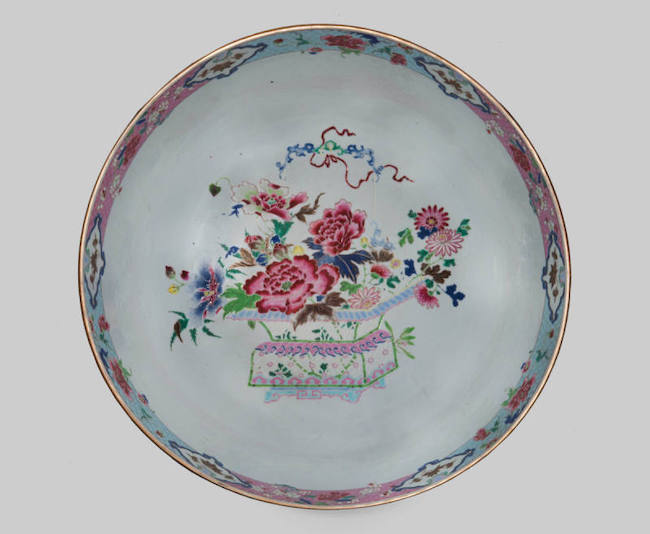
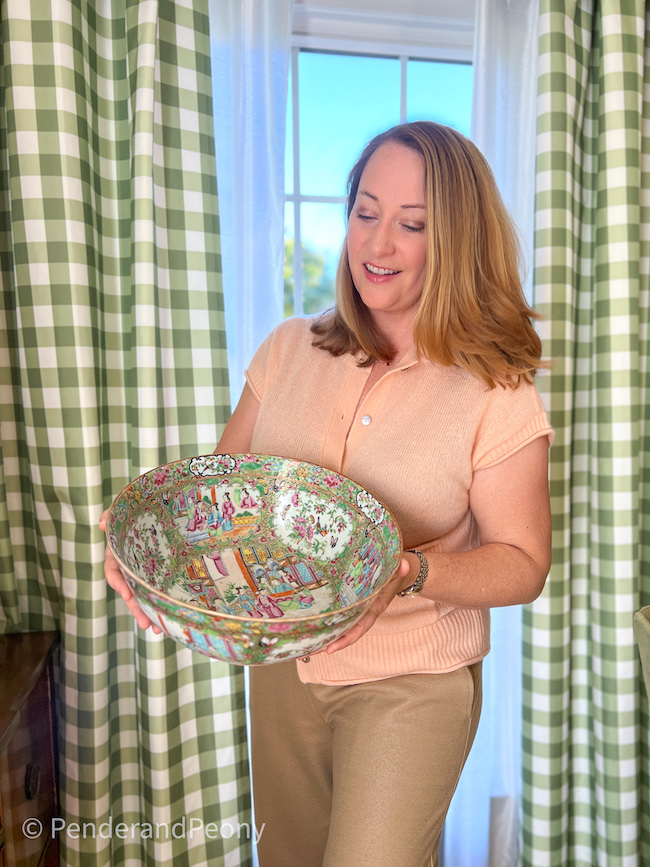
The Rose Medallion punch bowl pictured at the beginning of this post was made as punch was declining in popularity, while still common at parties its heyday waned in the 19th century, and the cocktail took its place.
By the early 1800s, improvements in glass production reduced the cost of glass tableware and glass punch bowls became more widely accessible. By the end of the century brilliant cut glass bowls were highly prized wedding gifts. Some much preferred the aesthetics of the glass punch bowl as it showed off the brightly colored fruit punches.
The next time you turn your antique punch bowl into an orchid pot (which I find totally acceptable) be sure you stop and contemplate its supreme role in merry making and life of revelry.
Sources & Further Reading:
"History of Punch" by Simon Difford
"The Flowing Bowl Part 1 & 2" from The Historic Interpreter
"Punch Versus Tea in the 18th Century" by Erin Blakemore
"'This Brittle Ware' Identity Politics..." by Elizabeth Hill
"Artifact of the Month..." by Jeremy Borrelli
"Drinking Punch in the 18th Century" by Rachel Conroy
“LIQUEURS WITH THE LADIES AFTER DINNER”: PUNCH RITUALS IN DOMESTIC PUBLICS DURING THE EIGHTEENTH-CENTURY by Catherine Daniels
"How the East India Company Became the World’s Most Powerful Monopoly" by Dave Roos
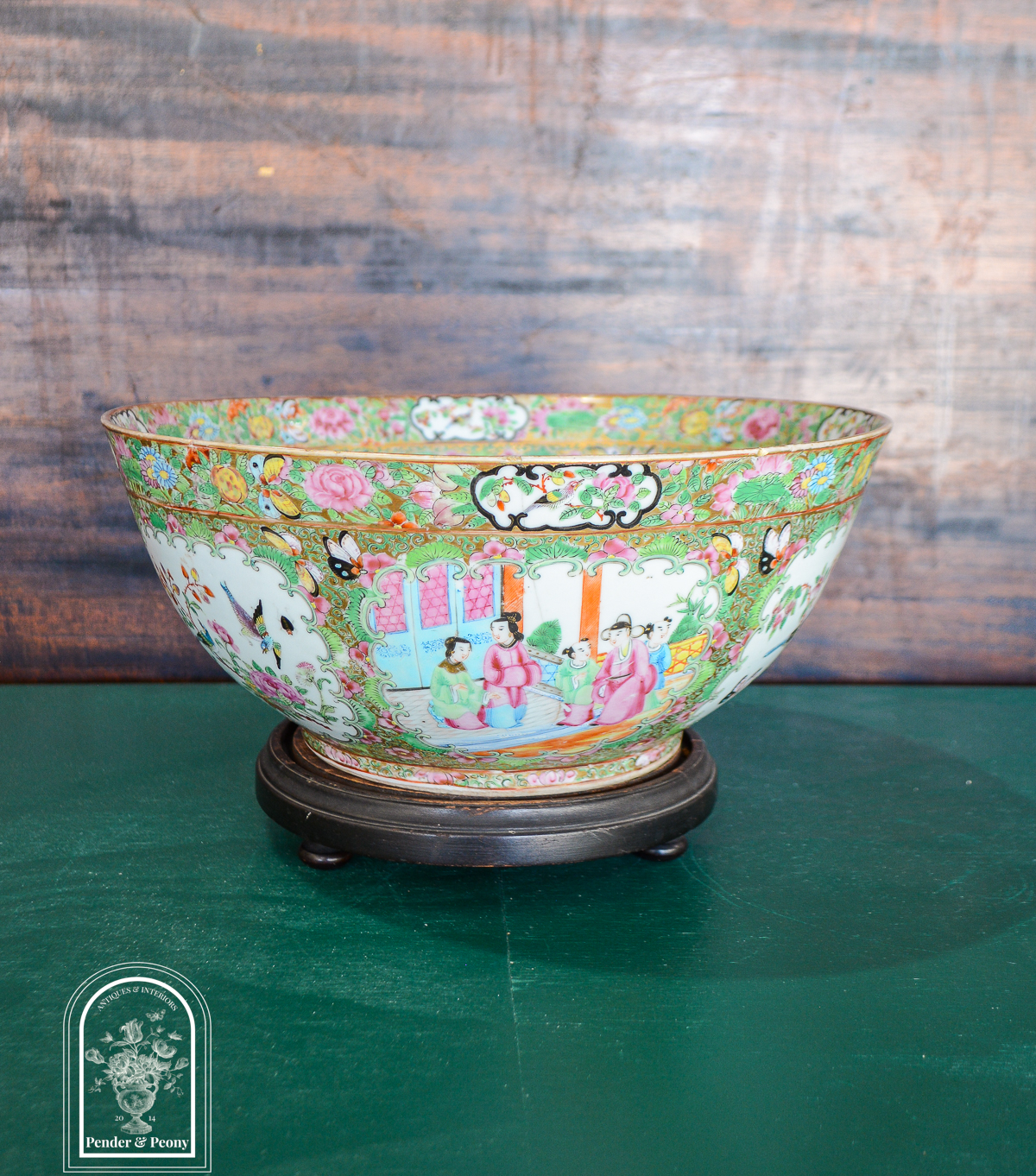
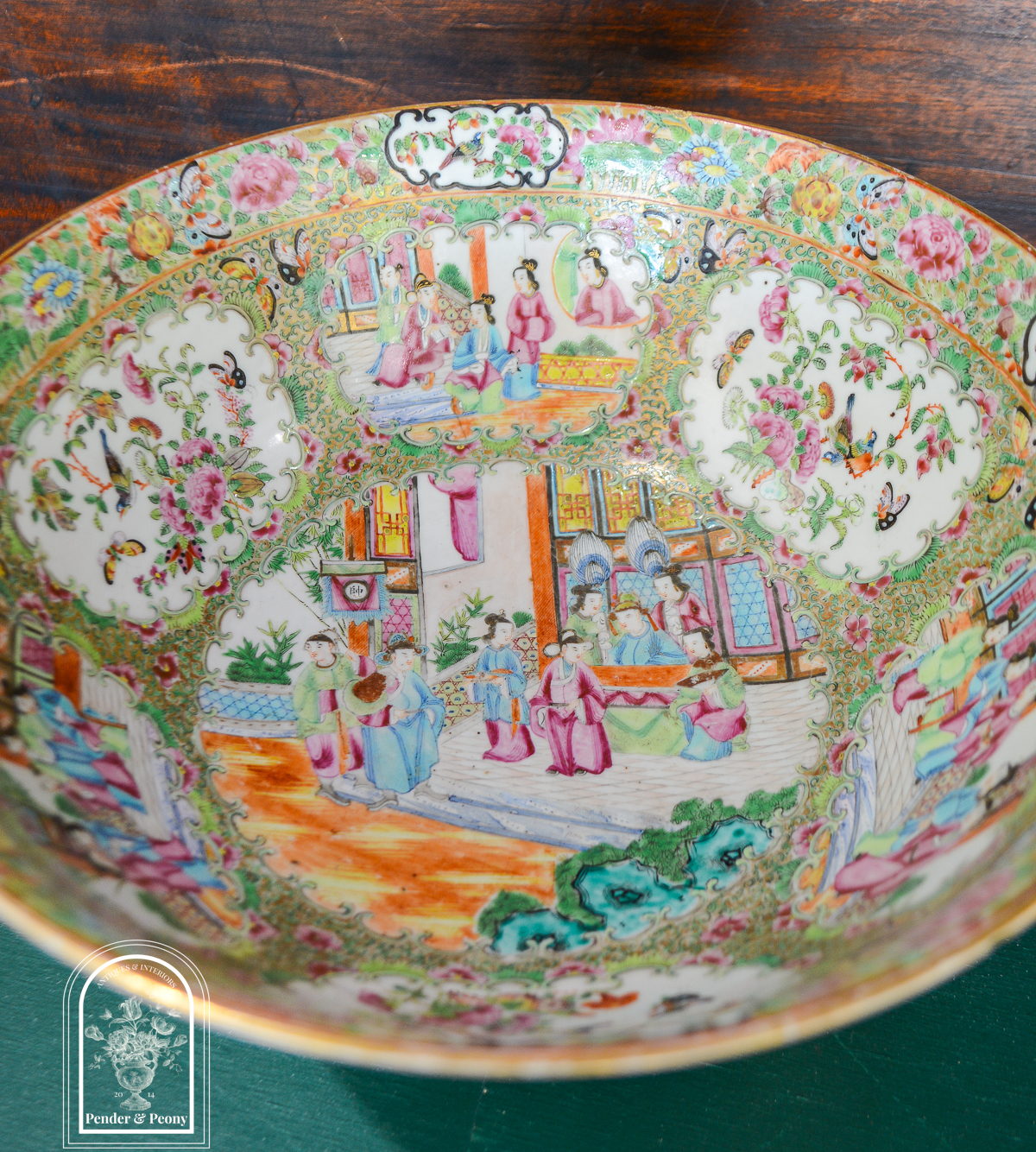
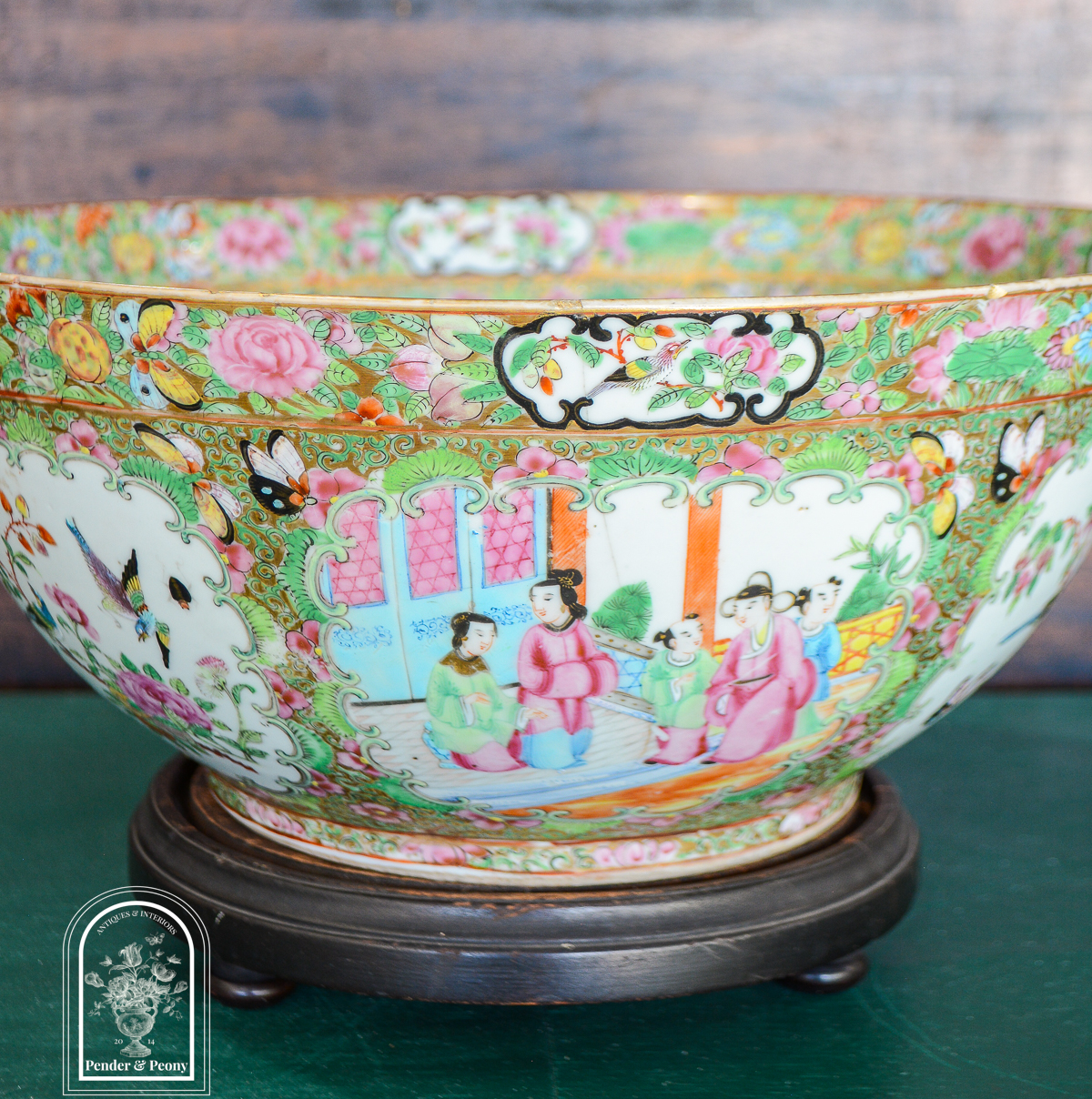
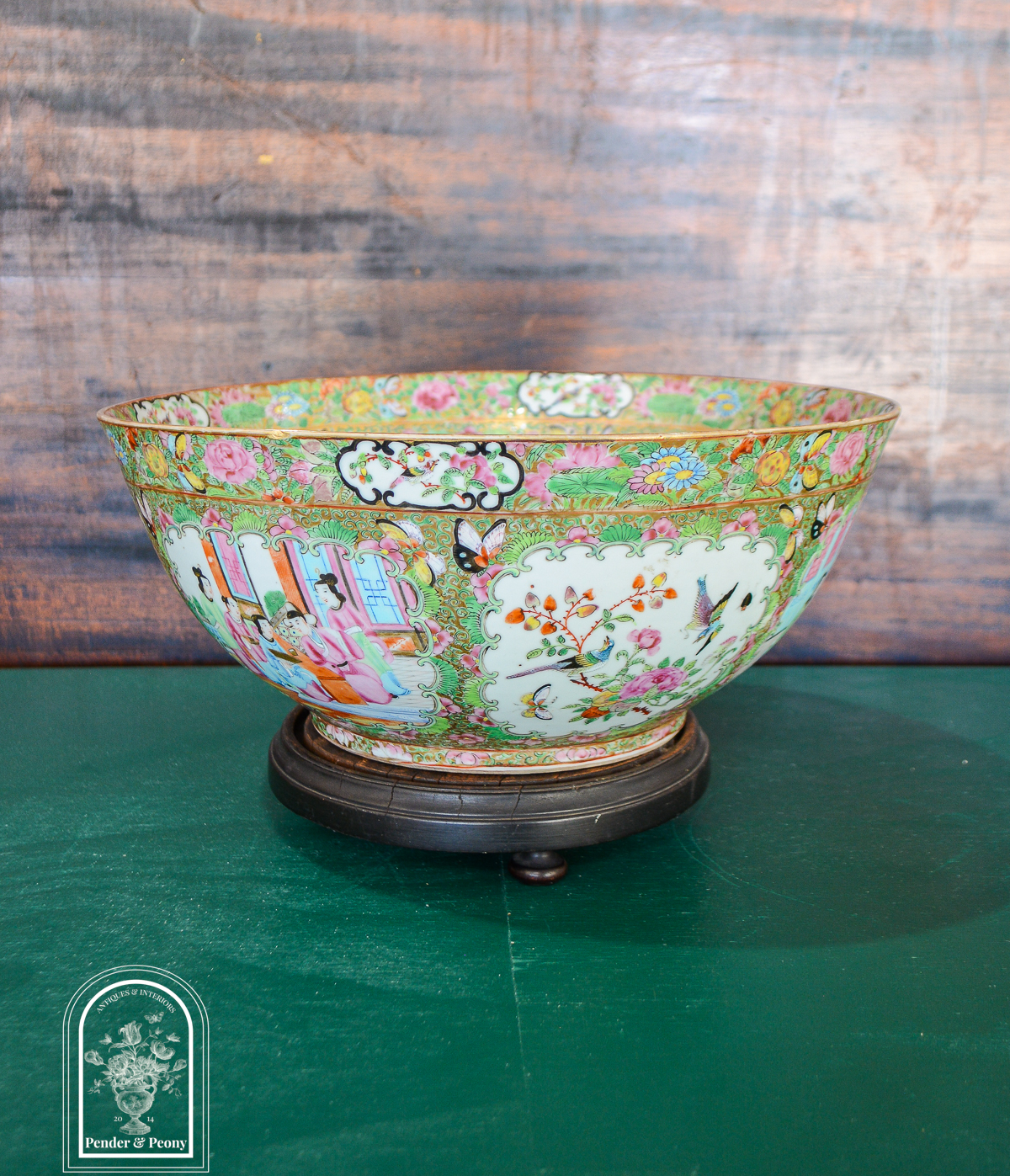
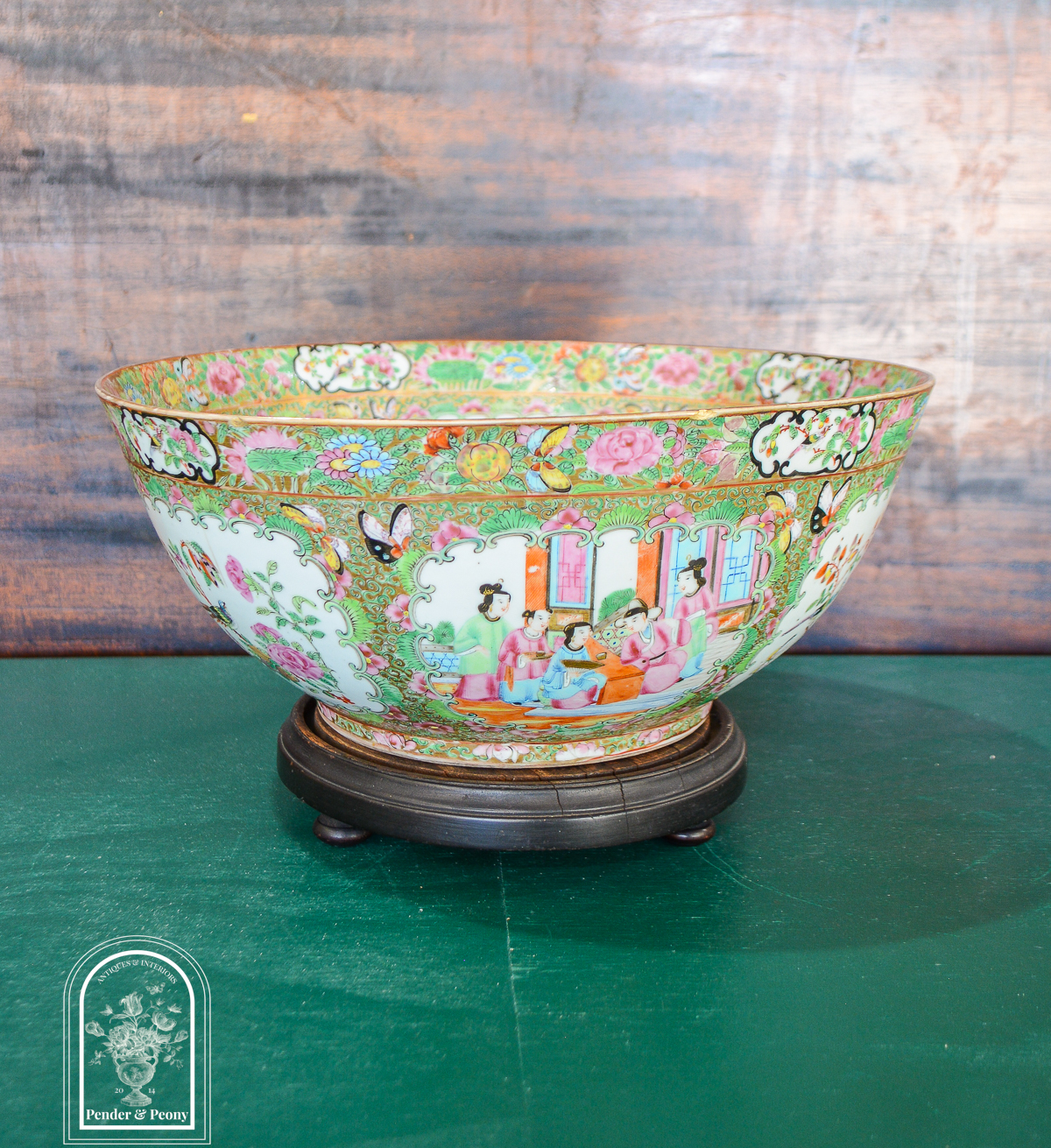
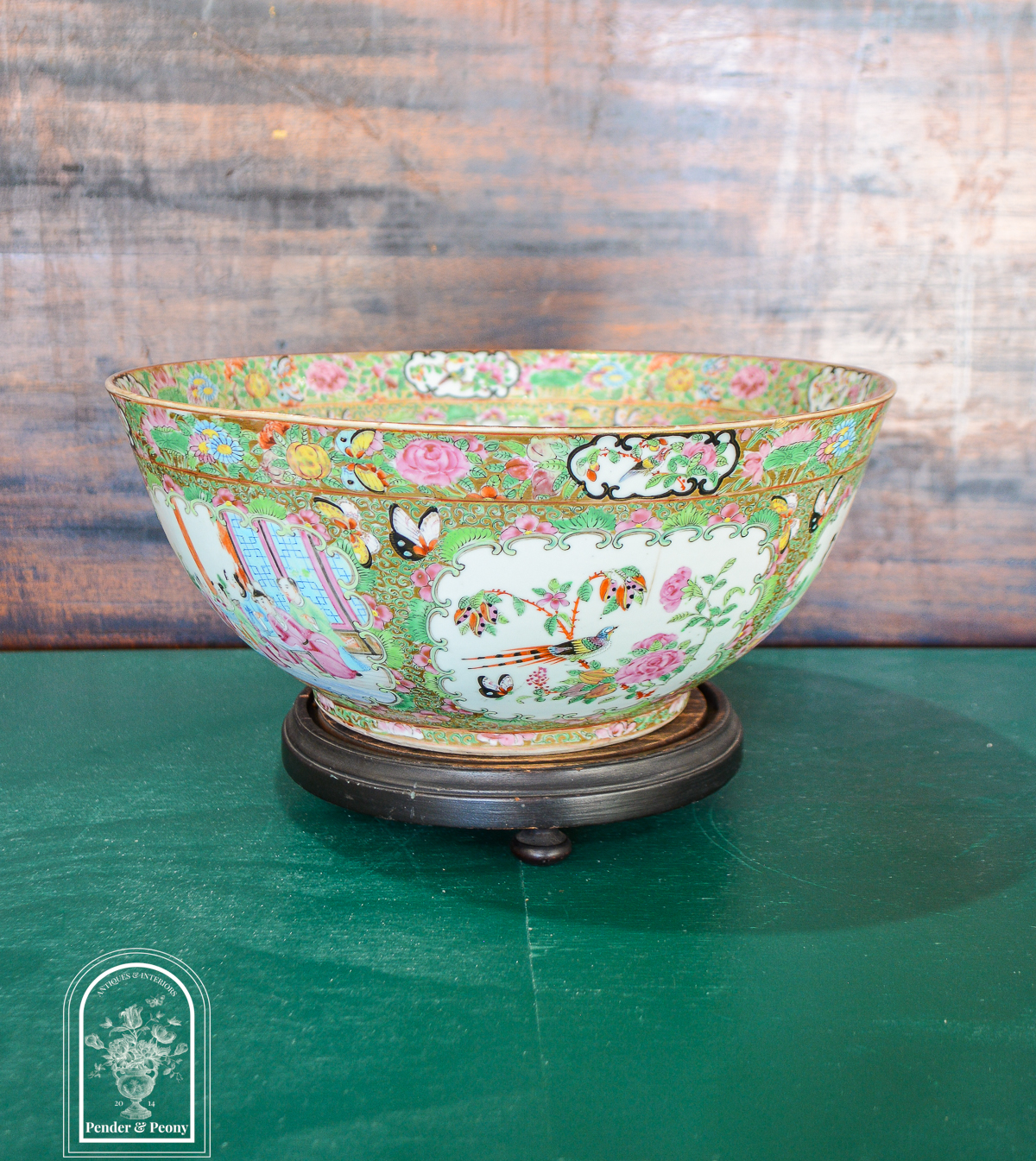
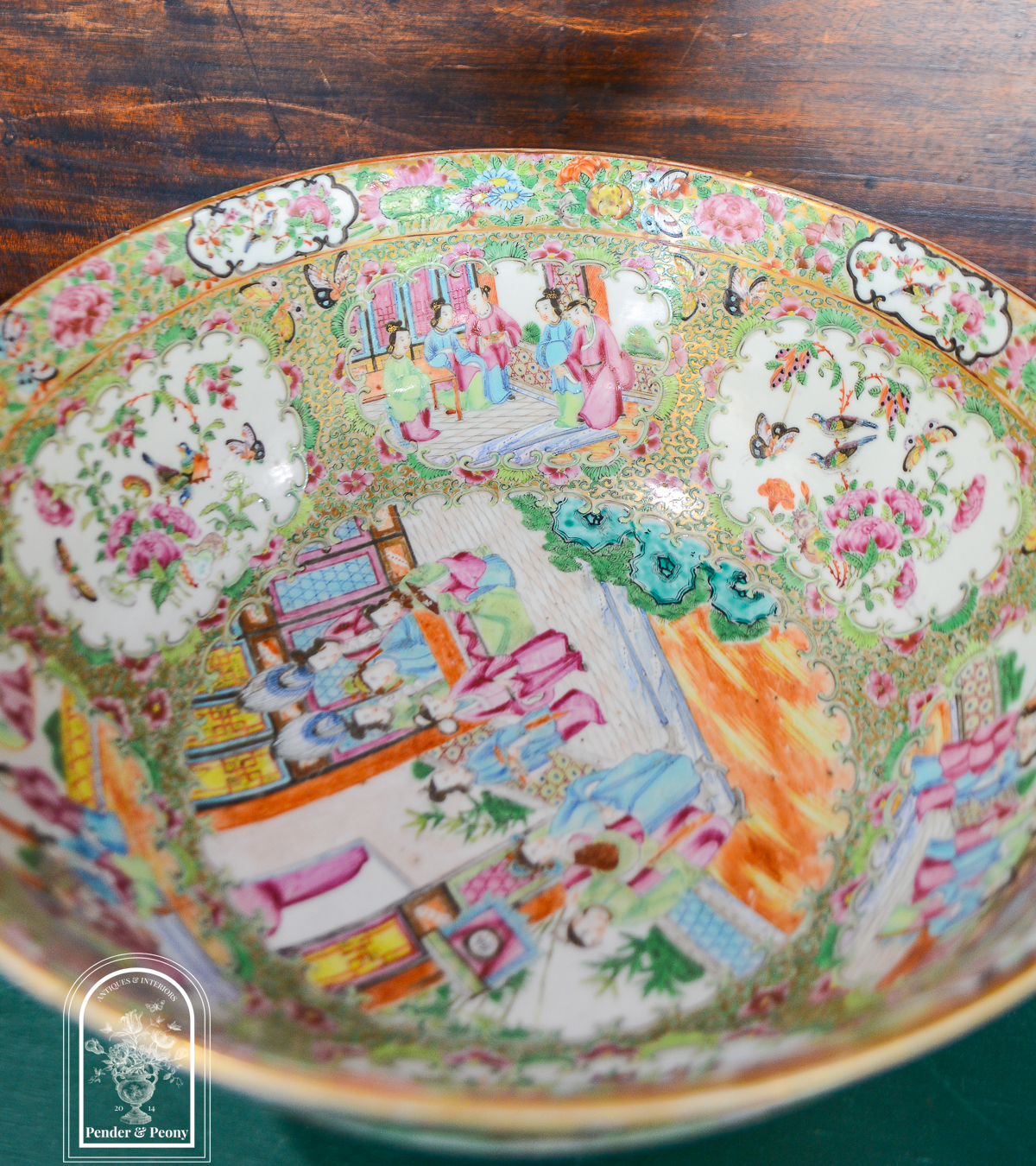
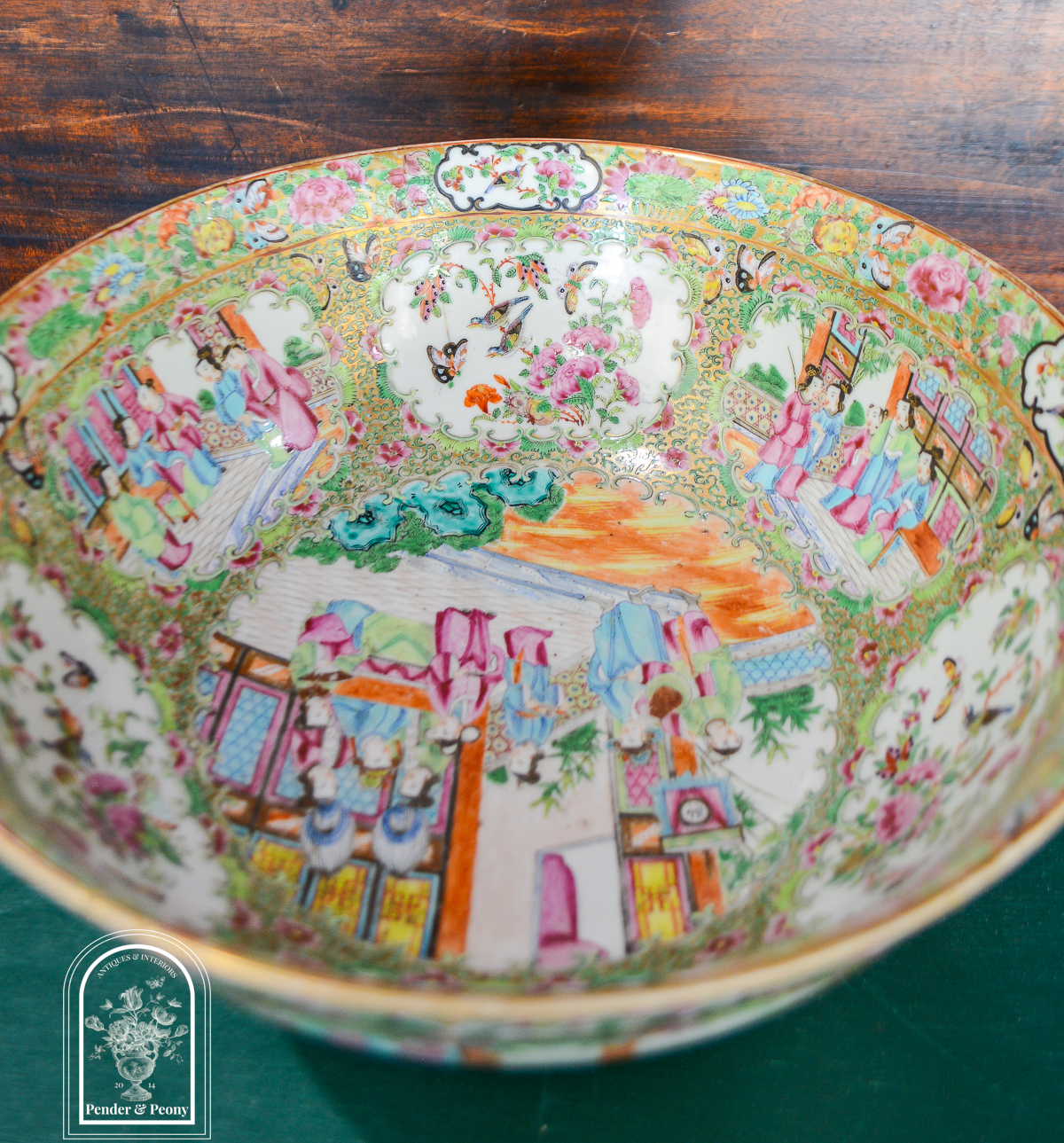
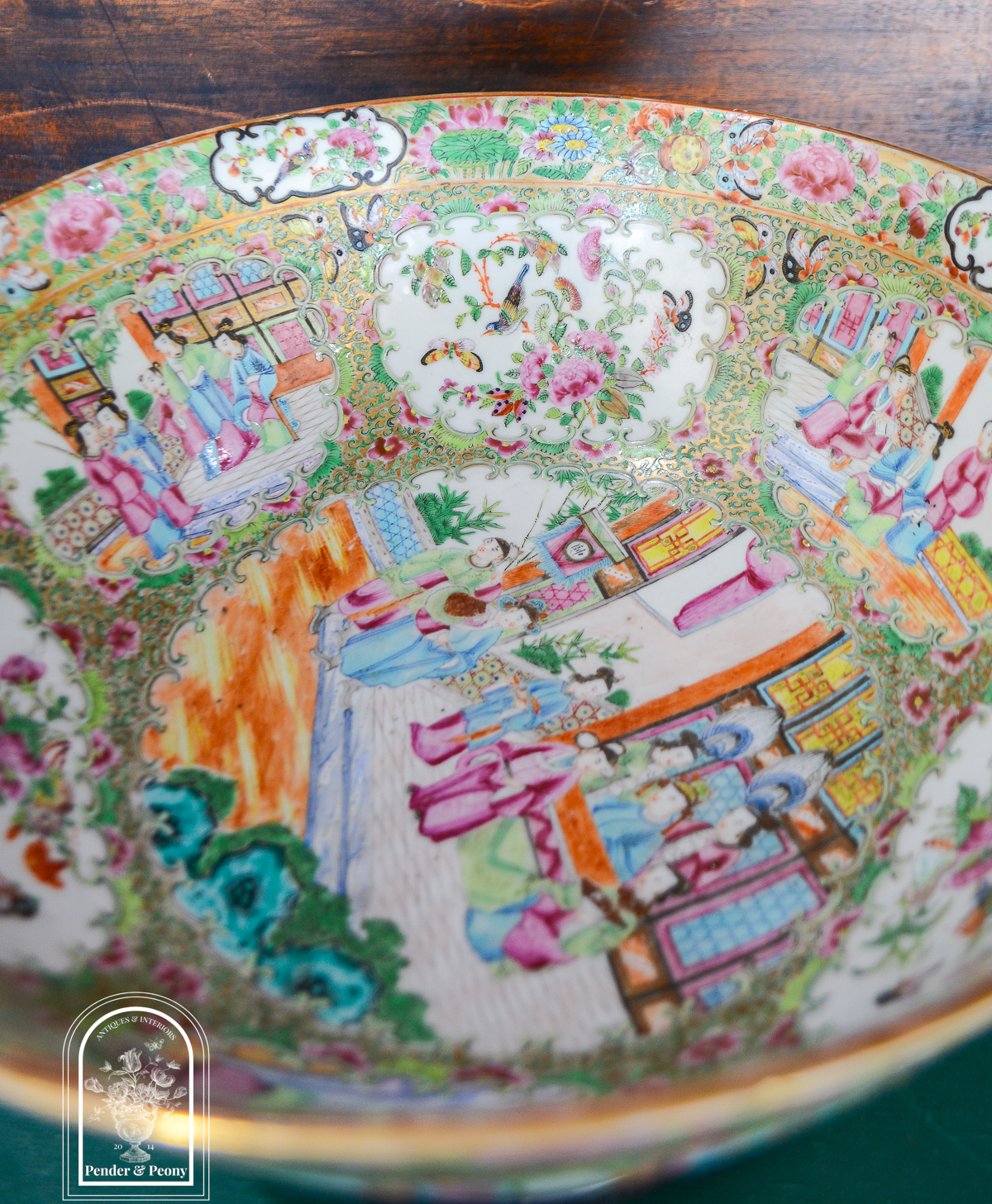
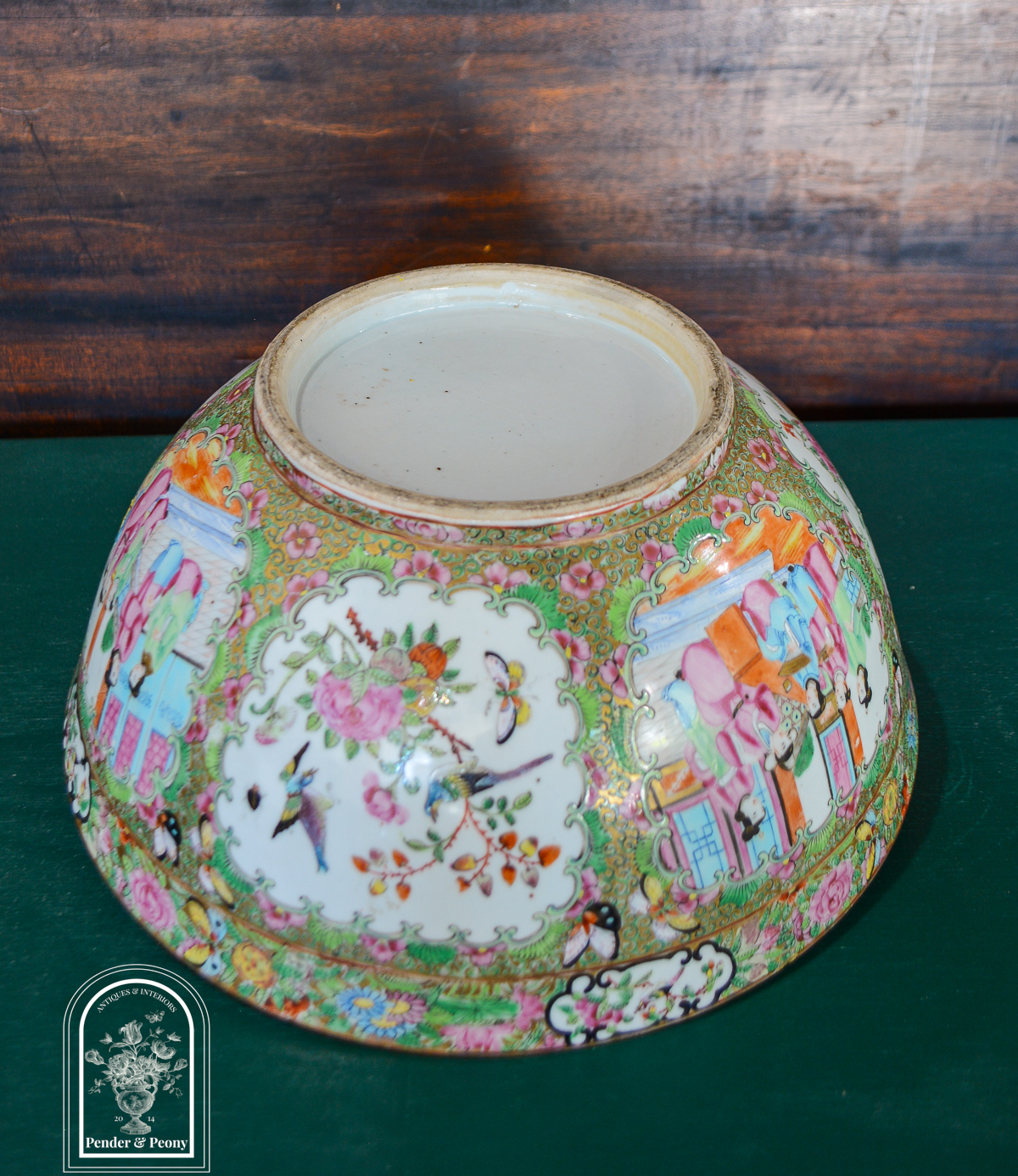
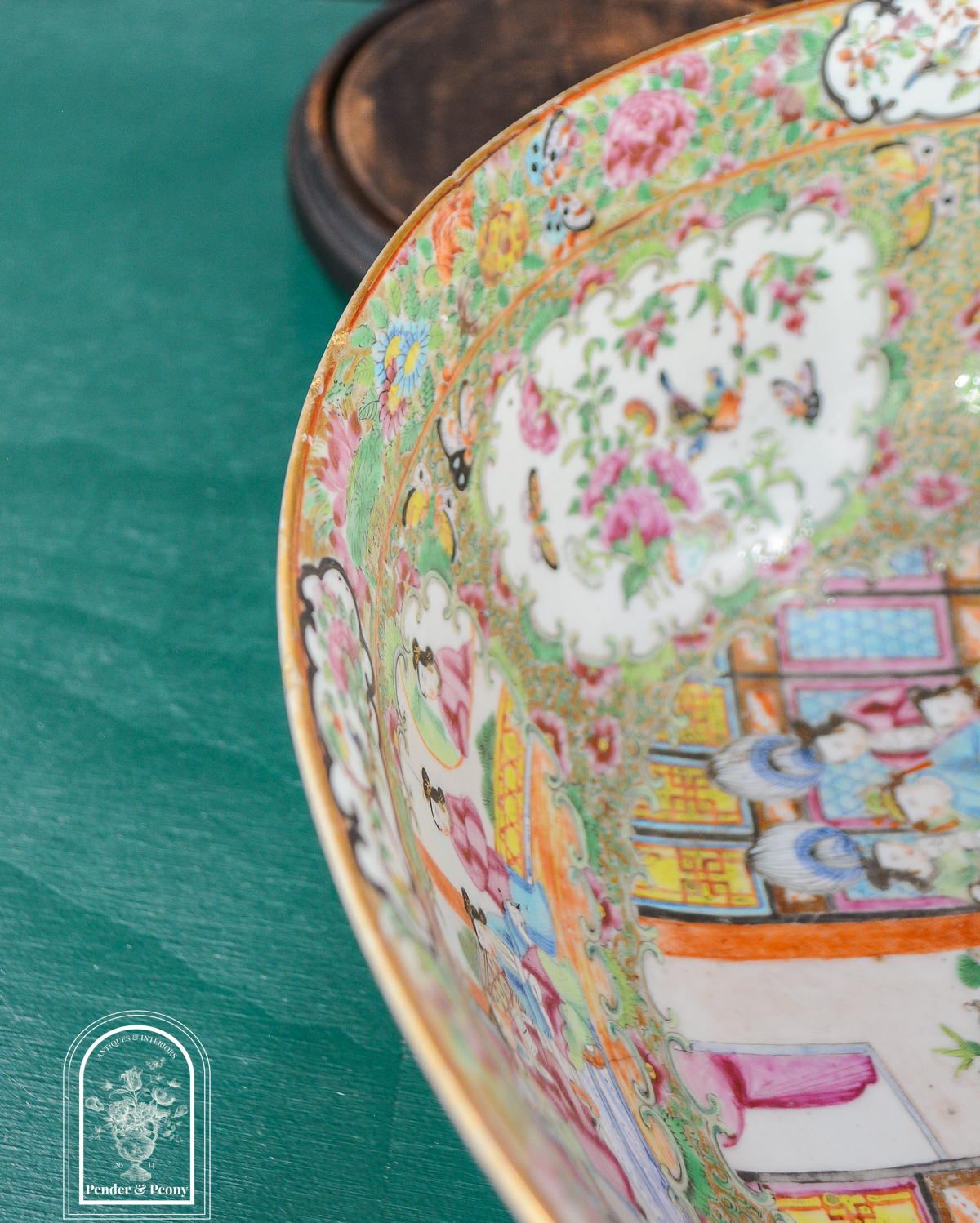
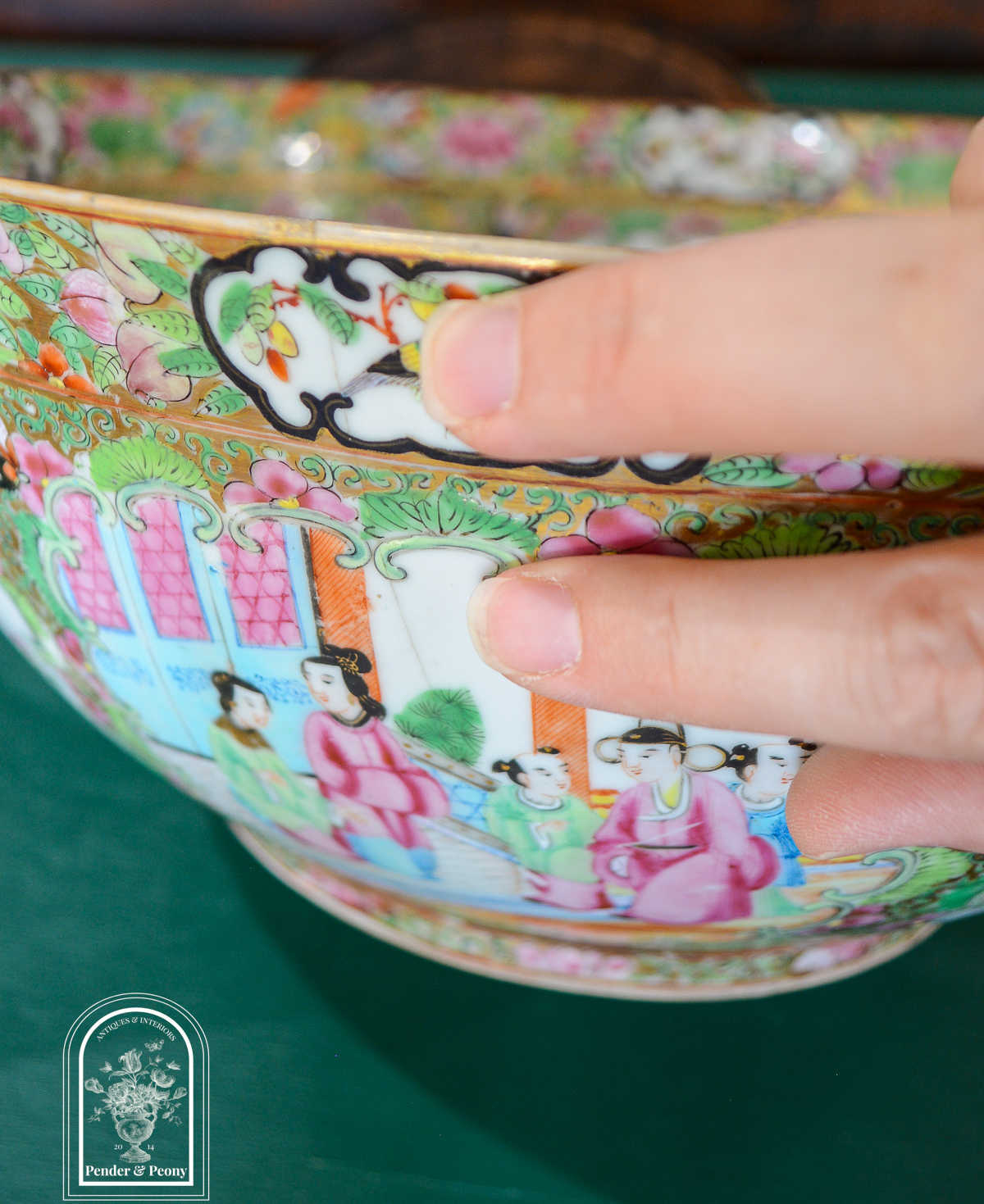
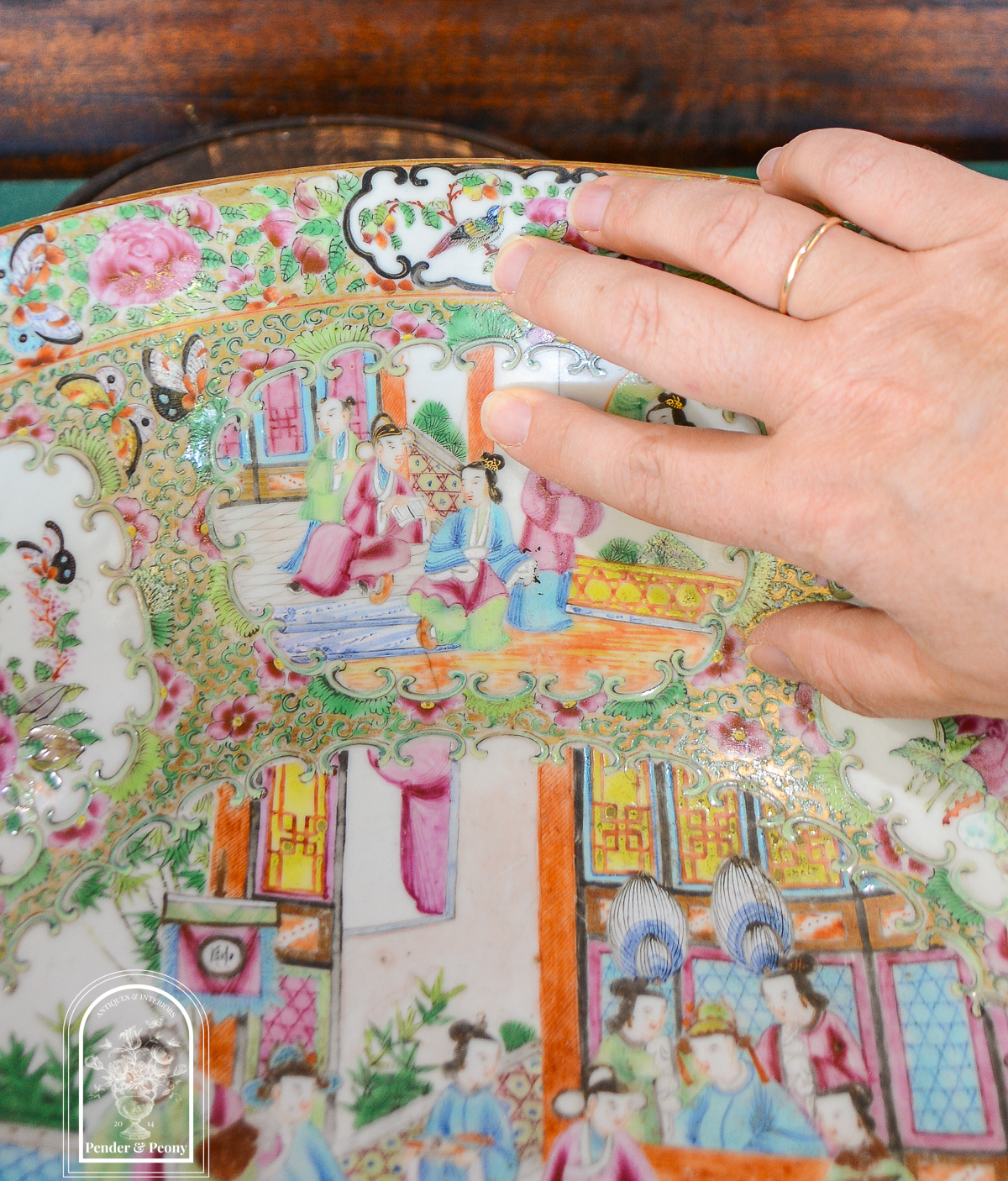
19th C Rose Medallion Punch Bowl 13″D
$489.00
Unmarked. Mid 19th century.
In stock


