
Toddlers & Antiques: How To Prevent Breaks
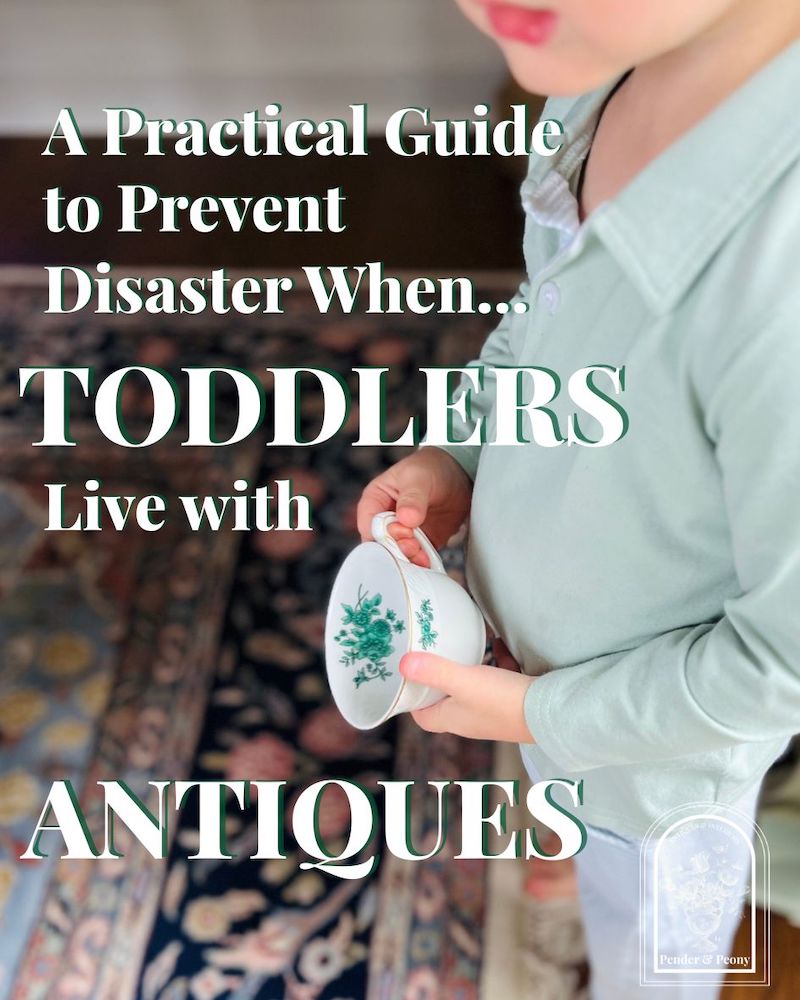
A practical guide to prevent disaster when toddlers live with antiques.
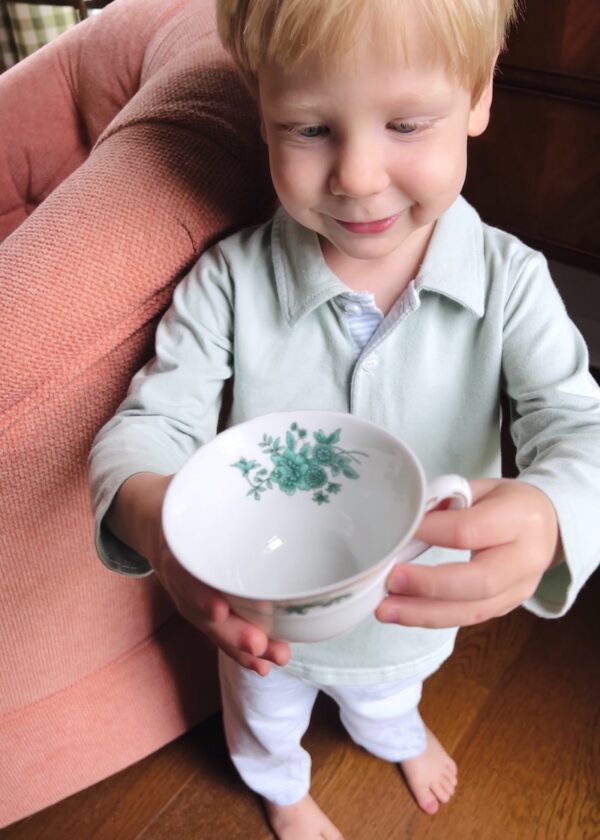
Toddlers and antiques CAN coexist quite happily without disaster!
My family lives this every day.
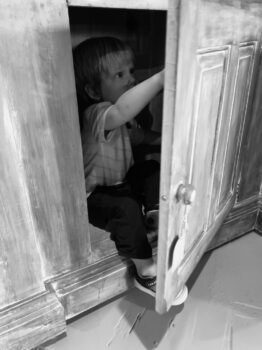
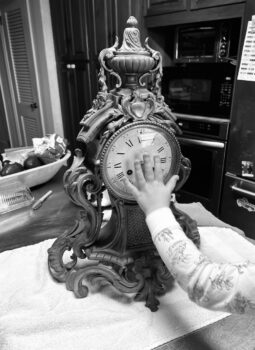
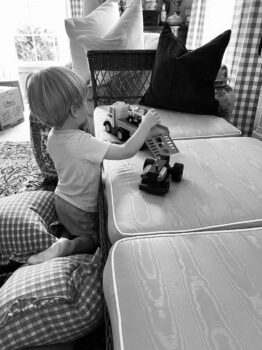
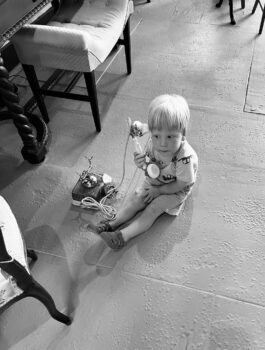
My son, James, is two and a half years old and he is allowed in every room in the house AND every room has antiques. With the exception of our crystal glassware and a few really fine Chinese porcelains he can touch anything he wants. Seriously.
James even ran free most days at my antique shop. Shoppers were amazed and slightly alarmed by him roaming around the shop and offering them ceramic teacups or whatever he could reach.
Were there a few close calls? Yep, but he never broke anything and he now understands better how to respect and appreciate beautiful antiques.
If you don’t teach a kid how to be careful and give him opportunities to practice, he won’t learn this valuable skill! Simple as that!
AND this is an important life skill: learning how to be careful with something and treat it with respect will serve him well for life.
Now was it a free-for-all from day one?
No! Here's how we started:
When James was crawling and just learning to walk we had lots of baby gates (we use these for doorways) blocking off certain rooms and stairways. We put up this modular fencing around dangerous areas like the fireplace. I moved most of my fragile ceramic and glass decor up high where he couldn’t reach within those zones.
In our formal living room I placed a wooden playpen in one corner of the room with a soft play mat. This helped us enjoy that room together safely with minimal anxiety. It also allowed him to get comfortable in that space surrounded by antique furniture, ceramics, art, and more.
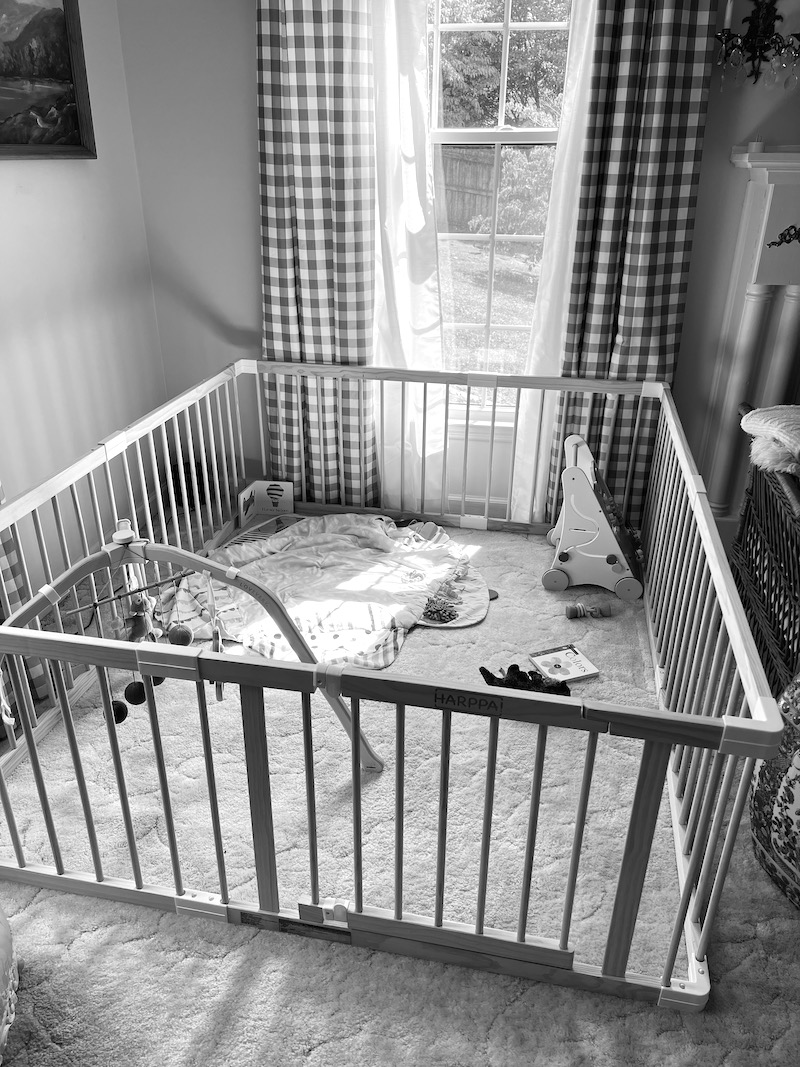

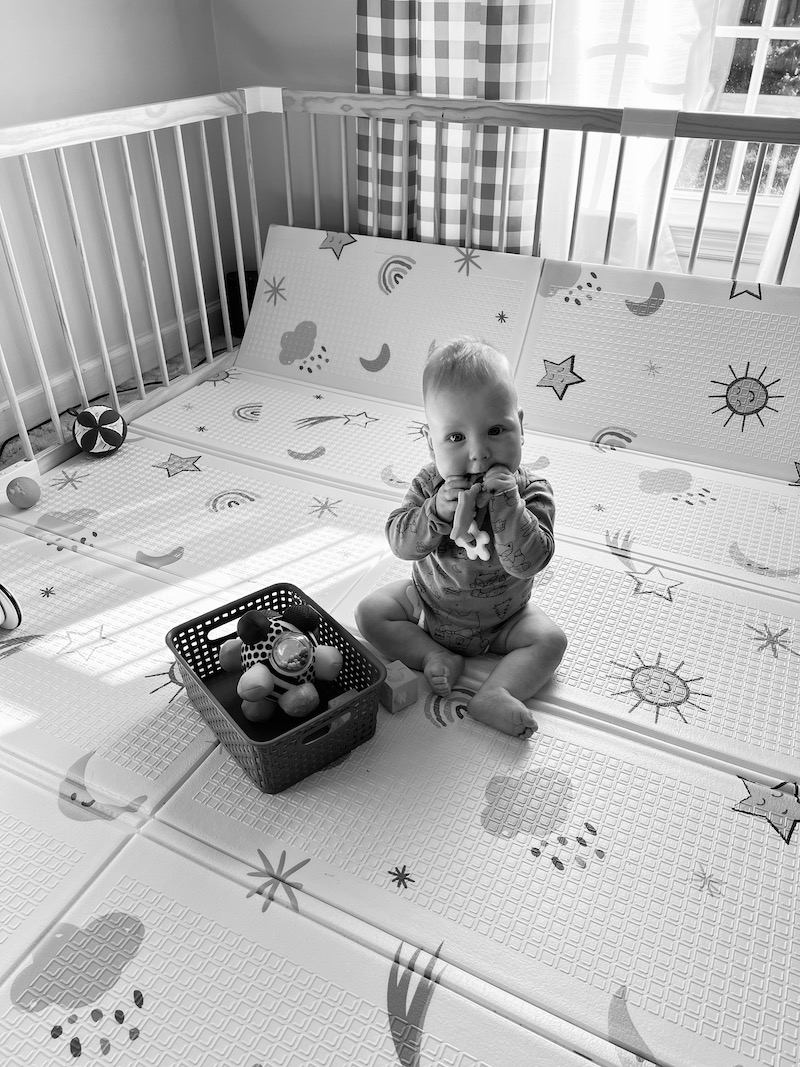
Once James was walking well and understanding more language, we started teaching him to be gentle with things and modeling gentle hands. I showed him how to carry with two hands and how to set things down slowly and carefully. We talked a lot about observing and watching where we put things and how we moved our feet.
Then I started moving my antique treasures back down, and I supervised his interactions closely to protect him and my collections at first.
A year and a half later:
Now at two and a half its about teaching him appreciation for these beautiful pieces and continuing to practice being gentle. He loves the paintings in our house and we tell stories about what’s happening in them. He knows what a teacup is and understands that ceramic and glass mean fragile.
When I can supervise him or check on him frequently from another room, James plays and explores freely all over the house. When I need to work with undivided focus he goes in the "play zone." This is our den, which is still gated off. I’ve removed most of the fragile antiques from that space that could get knocked over, and it’s truly his space to just be in and play how he wants.
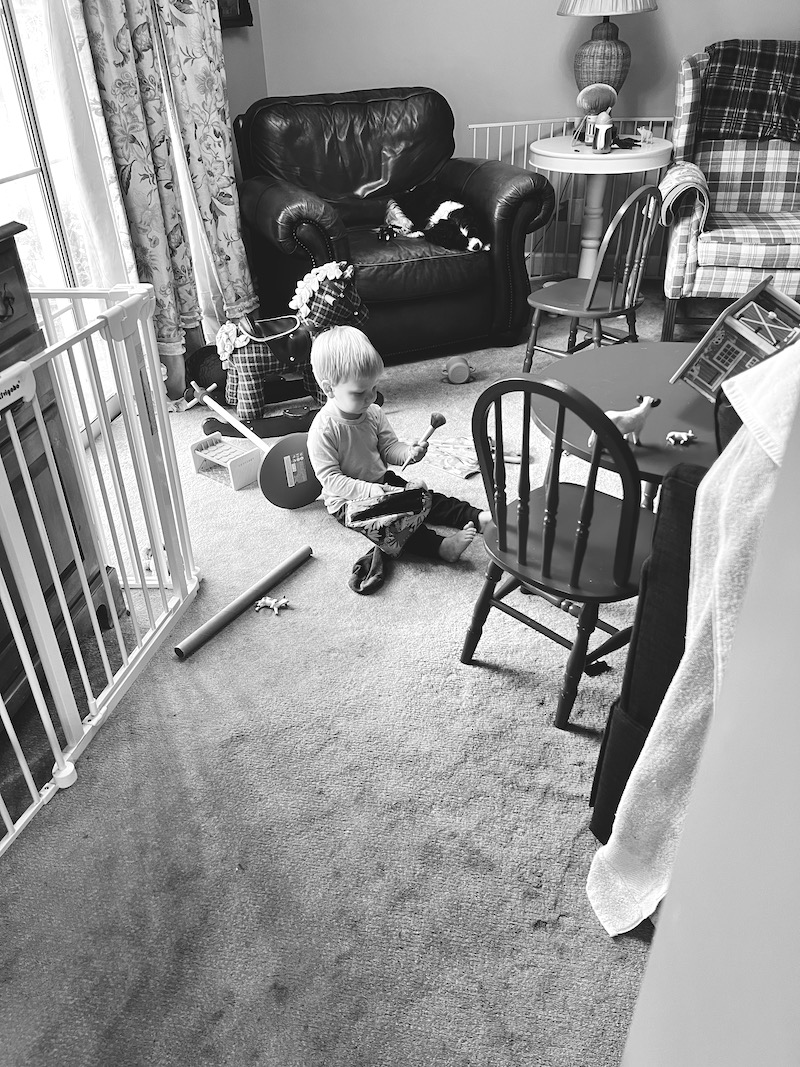
You can see the fencing in action here in our den which serves as the play zone. We used fencing to block off the hutch and fireplace.
For us it’s a balancing act between restrictions and freedom to explore. We set boundaries about what he can only examine versus what is for playing. I tell him “this is something we enjoy with our eyes,” or "this is mama's and not for James to play with."
We also have boundaries for how he can play in certain rooms. For example, in the formal living room where a lot of my more precious pieces live he is not allowed to throw toys in that room. He can throw soft toys in his “play zone.”
When he is in a rambunctious mood we don’t stay in the formal living room, we go to the “play zone” or outside! I don’t expect him to be careful with everything. He has lots of opportunities to run wild and just be a kid.
Here's what I know about toddlers living with antiques:
Something somewhere will eventually get broken.
But antiques are forgiving. They are made of strong stuff. More often than not they can be repaired. An extra scratch somewhere will blend in and become part of the patina and story. As long as James isn’t hurt, I don't stress too much about this eventuality.
To me that risk is worth James growing up in a beautifully decorated home with history, character, good design, and beauty!
I'm surprised daily about what he notices around our house and what he wants to explore. Candles and candlesticks are very fascinating right now. LOL...
Life is too short to put away all the good stuff!
Just because I have a toddler does NOT mean I have to live in a Montessori classroom.


Ok off my soap box and on to my practical tips to help prevent antiques from being damaged by a toddler!
10 Practical Tips for Coexistence
No. 1 Create a "play zone"
This is a safe place inside where kiddos can be free to play near where your family gathers and close to the kitchen.
We use our family den for this zone, and most of James' toys are in here on an Ikea shelf. I've removed fragile antiques from the tabletops and have left a few decorative pieces on the mantel and a tall shelf. The art and plates are still hung on the walls.
I keep nothing on the coffee table because that is a prime digger and truck driving highway.
No. 2 Teach "gentle hands" and "fragile"
Explain in a few words and show how to touch a fragile antique carefully. We use the term “gentle hands”. I also explain why something is fragile. For example “it is fragile because it is made of ceramic and it could break easily.”
The key here is modeling the behavior even when you think your child isn’t paying attention. They will learn by how you handle an antique when not in “teaching” moments.
No. 3 Manage your own anxiety
If you are anxious, chances are you will make your child anxious as they feed off your energy and demeanor. So stay calm and give clear simple directions.
No. 4 Take precautions
In no way am I encouraging you to just let your toddler run crazy in your house with all your beloved antiques. You do have to take precautions!
- Out of sight out of mind - If something is really valuable either monetarily or sentimental, consider storing it away for a while. Is there a china cabinet or bookcase you could move it to?
- Use your common sense - I don’t let James touch the fine crystal. It is too easily broken and then he could be cut by the glass. No matter how comfortable you get with your child handling antiques, always proceed with good common sense.
- Rugs are your friends - make it a softer landing. Consider what type of flooring you have in your house and where fragile antiques are located. It may be wise to move valuables out of rooms with hard tile floors. OR only let your child examine something over a rug or carpet that way if it gets dropped there is less chance of it breaking.
No. 5 Use museum putty
Do you know about this stuff? Highly recommend for securing plates standing up in a hutch or cabinet or making sure tall items like lamps don’t get knocked over.
No. 6 Teach “enjoy with your eyes” and appreciation
When I don’t want James to touch an antique or play with it I’ll say, “this is for enjoying with your eyes.” Then I point out something I can see like...
- “look at the beautiful blue” or
- “do you see how round it is?”
- then ask “what do you see?”
This gives him something to do other than touch and starts to build his observation skills.
No. 7 Set boundaries
As I mentioned above boundaries are important for teaching children how to live with antiques. We mostly have boundaries around how James can play in certain rooms and what he can and cannot play with.
You have to figure out your own set of boundaries for behavior, but I’ve definitely learned that you must be consistent, firm, and concise. Sometimes no explanation is necessary.
No. 8 Remove unsafe antiques
Most of this list is about how to avoid the damage a toddler could do to an antique, but the reverse is important to consider. Some antiques are simply never going to be safe to have around a toddler. For instance any piece painted in lead paint with an unstable flaking surface or tall etageres that could topple over easily or electrical items they can reach.
So take stock of these hazardous pieces as you baby proof and devise a plan for their removal or storage.
No. 9 Practice reciprocal respect
If you are asking your toddler to behave a certain way around antiques, you in turn have to respect the nature of childhood and not expect perfection all the time. I am constantly reminding James to use gentle hands. At two and a half I don’t expect him to always remember every boundary.
A child who is in the mood to run and just bubbling over with energy needs to go outside for a bit before dealing with an antique. James and I start most mornings with a trip outside or a dance party in the “play zone” to channel that enthusiasm.
No. 10 Wax your furniture
So many people don’t understand the benefits of waxing their furniture. Seriously, buy a really good furniture wax and spend a quiet afternoon applying a coat of wax to your antique wood furniture once a year. Wax protects the surface from general handling, dust, light scratches, and water splashes.
Wax isn't child proof, but it will help!
I really do hope this post is helpful. I was inspired to share my thoughts on toddlers living with antiques by my friend Ashley who asked me how we made it work in this interview for her Substack blog Secondhand Savvy.
In many ways living with a toddler and a house full of antiques comes naturally to me. I was raised in a beautiful carefully collected home and my brother and I were expected to treat it with respect. I think a lot of this boils down to whether you are actually comfortable living with antiques yourself.
When I hear people say, "We could never have such nice things! We have two boys!" or ask, "How do you trust your toddler around all these breakables?" what I also hear them saying is that they are uncomfortable being around antiques. If you are trying to integrate toddlers and antiques too, consider if you need to start with your own mindset shift.
Pin this for later:
Fakes, Reproductions, & False Labels...
Everywhere!
So many antique malls don't even have antiques!
When hunting treasures how do you know what is authentic and not mislabeled?
You need to educate yourself ASAP, so you're not wasting money on knock-offs!
But how do you sift through all the millions of articles and books out there to get to the point?
Hi there! I'm Katherine...
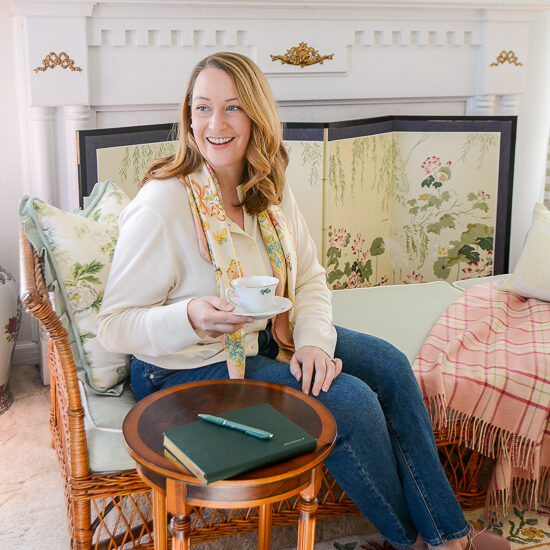
the curator, writer in residence, and decorator behind Pender & Peony.
I’ve decorated my entire 1960s brick colonial with secondhand finds and antiques on a budget without sacrificing style, quality, or comfort.
You CAN have a traditional home with timeless charm on a budget too!
The problem isn't your taste -- it's an industry that glorifies the next big trend and only showcases high end custom design.
That's why I created The Collected Room Method to teach you my approach to the collected interior!