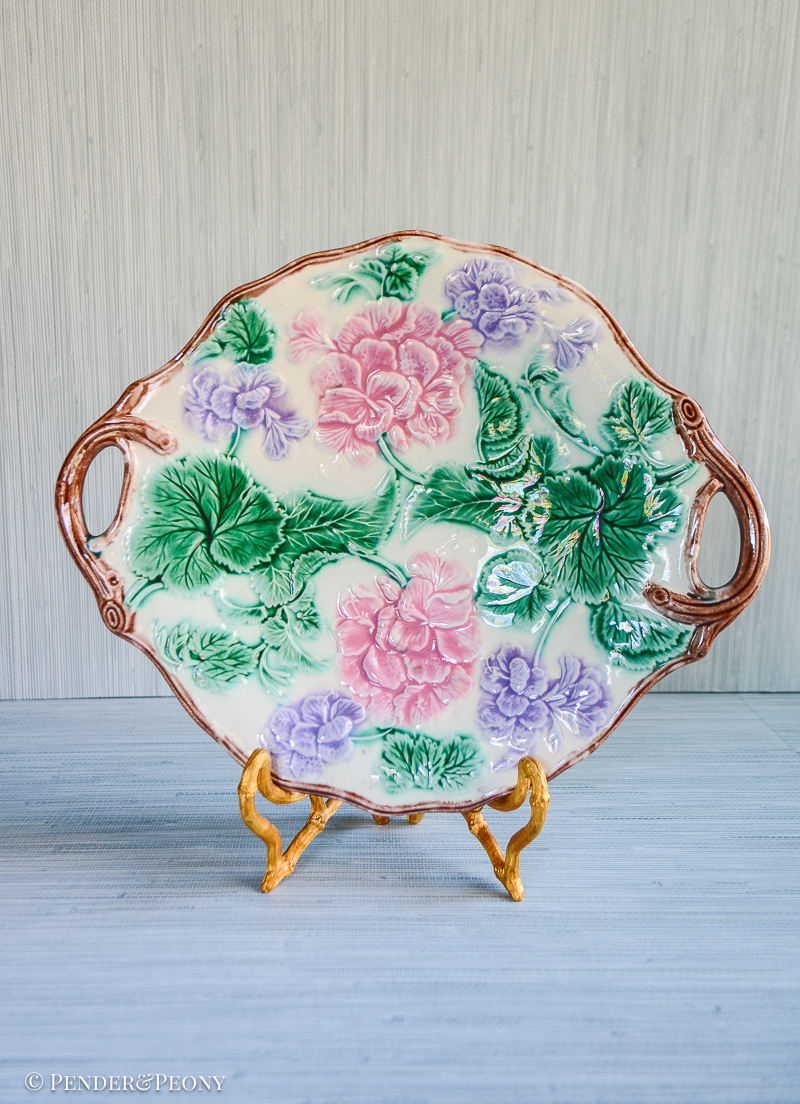
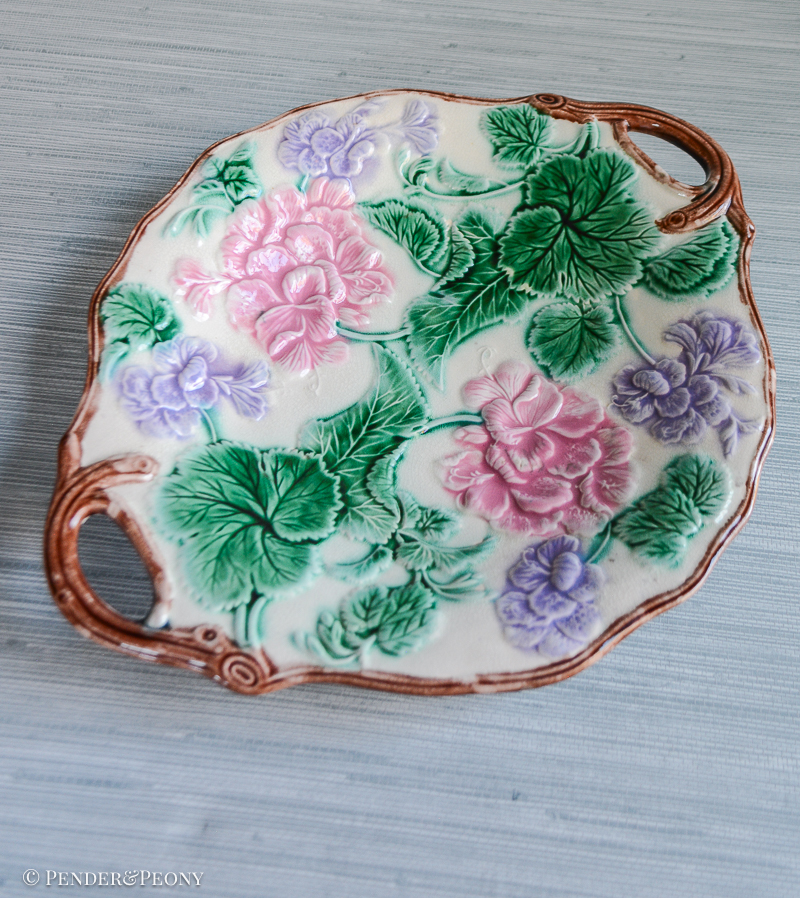
Griffen, Smith & Hill Etruscan Geranium Cake Plate
$167.00
Charming pink and purple geraniums dance across this whimsical Majolica dish with branch handles.
Sold Out
Description
This is a gorgeous antique floral plate in the Etruscan Majolica line by Griffen, Smith and Hill pottery in Pennsylvania, operating from 1879- 1903.
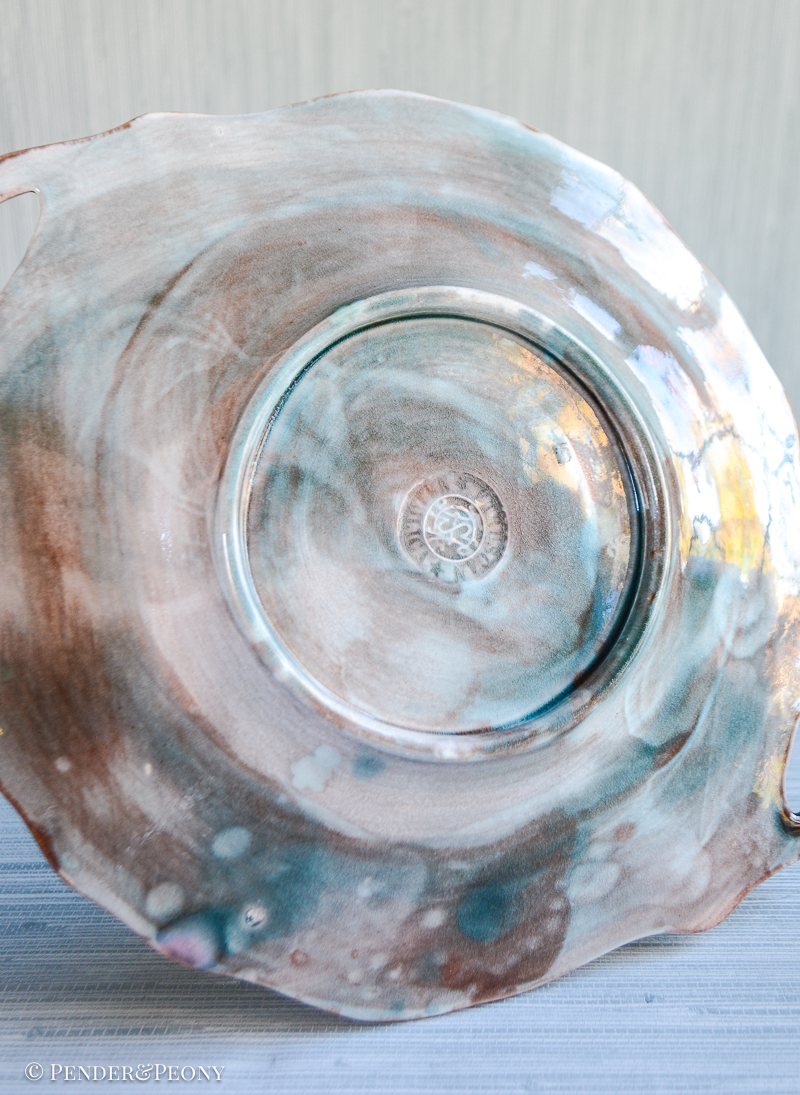
Note limited palette of colors (never turquoise) and bottom in brown/grey/green mottled. GS&H Etruscan mark on bottom.
Size: 12”L handle to handle x 10”D
On the history of Majolica:
Today, Majolica mostly refers to the Victorian pottery popularized by the English ceramicist Herbert Minton at the Great Exhibition in 1851. It is an earthenware fired to biscuit stage then coated with opaque lead or tin glaze. After drying, majolica pottery was hand painted with metal oxide glazes and fired again to produce the luster surface. Majolica takes many forms, including plates, urns, vases, tableware, and decorative objects.
Majolica quickly caught on among Europe’s middle and upper classes and by 1860 more than 30 major majolica manufactures thrived. Many of the most popular forms were focused on the natural world and probably delighted Victorian consumers who were increasingly leaving countryside behind for urban dwelling. Some of the important manufacturers of Majolica included: Minton, Wedgwood, Griffen, Smith & Hill, Onnaing, and Salins.
By the mid-1870s the popularity of European Majolica had captured the attention of potters in the United States. Griffen, Smith & Hill Company founded in 1879 was one of the major producers of American Majolica known for its quality “Etruscan Majolica” with distinctive glazes and vibrant, rich colors. Located in Phoenixville, Pennsylvania, GS&H was founded by brothers George and Henry Griffen and Staffordshire-trained potters David Smith and William Hill.
Popular among Victorian buyers and today’s collectors are the shell and seaweed wares, bamboo wares, sunflower series, and the vibrant geranium and begonia themed pieces.