How to Style Majolica Displays
A grandmillennial approach to styling Majolica displays with bold color, charming patterns, and natural decor.
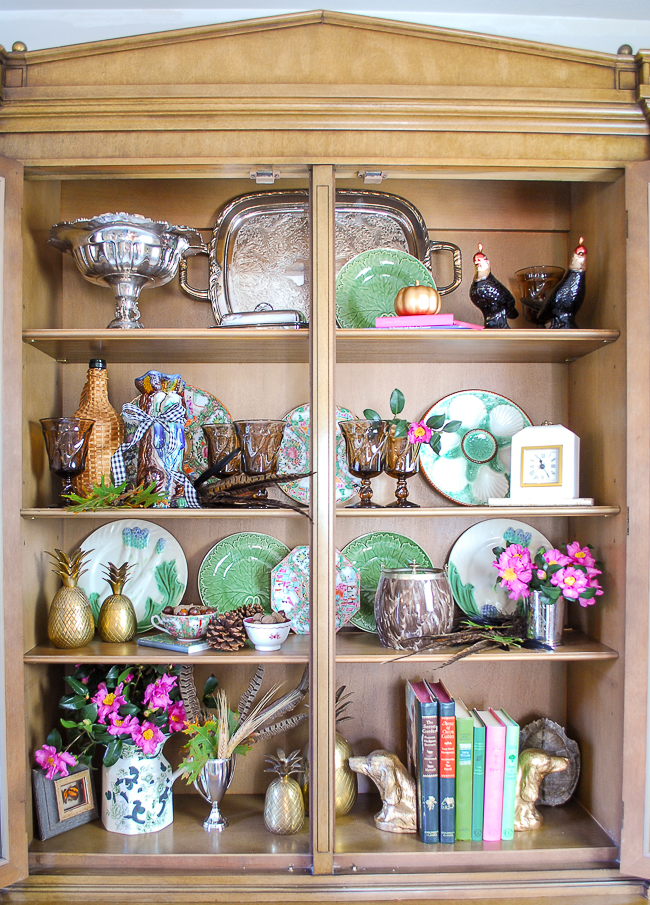
Oh Majolica! Your rich tones, whimsy, and natural motifs charm me every time! I love seeing you proudly hanging on plate walls, reclining on hutches, and beautifying traditional interiors.
If you are a fan of the French or English country looks then you have probably spotted a piece or two of majolica while perusing magazines and Pinterest. Other designers incorporate displays of this antique pottery into chic rustic cabins or mountain chalets. But how should we neo-traditionalists and grandmillennials adopt Majolica displays into our homes?
Sure you can display Majolica on a Welch dresser or hutch, but why not get as playful as majolica's fanciful designs and mix this antique ceramic in new ways?
What is Majolica?
Majolica //mah-JOLL-ick-ah// is an earthenware fired to biscuit stage then coated with opaque lead or tin glaze. After drying, majolica pottery was hand painted with metal oxide glazes and fired again to produce the luster surface. Majolica takes many forms, including plates, urns, vases, tableware, and decorative objects.
The primary glaze colors are cobalt blue, antimony yellow, iron red, copper green, and manganese purple.
History of Majolica:
Today, Majolica mostly refers to the Victorian pottery popularized by the English ceramicist Herbert Minton at the Great Exhibition in 1851. Designed for the Minton Factory by Léon Arnoux, Victorian Majolica advanced fanciful charm, visual pun, exuberant colors, and unique forms.
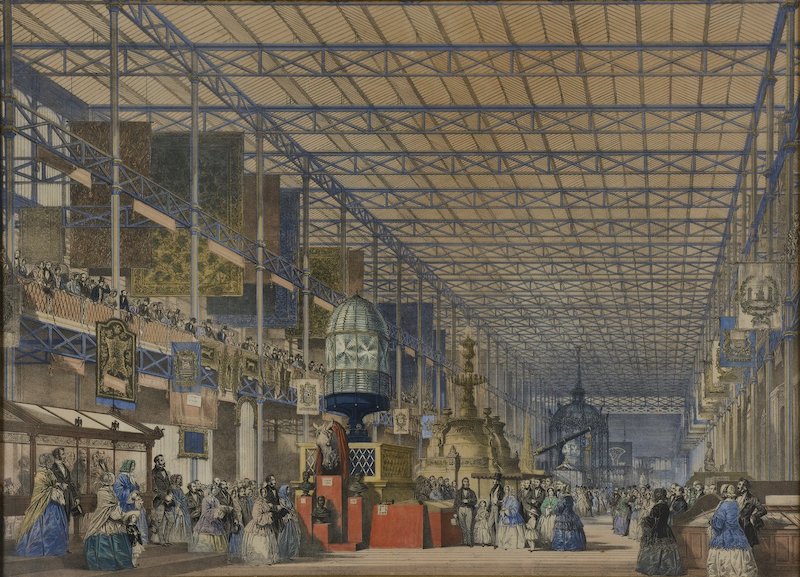
Great Exhibition 1851, Image via Meisterdrucke
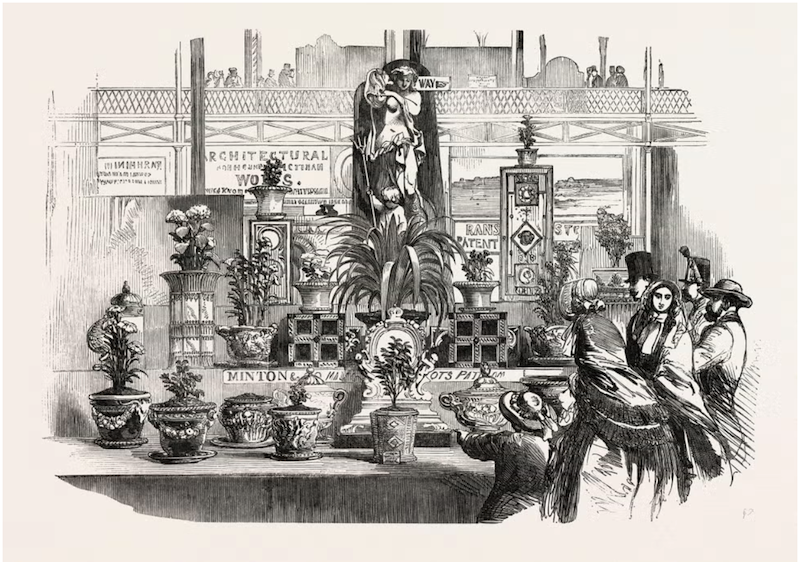
Minton's Majolica Debut, Image via Veranda
The pottery technique for producing Majolica dates back to 14th century Spain and was then introduced to Italy via the island Majorca. This style of pottery is known as Maiolica. 18th century French Faience is also a direct pre-curser to Majolica.
Bold, experimental, eccentric, and gloriously colorful, the ware appealed to a cross-section of classes and budgets, and by the end of the 19th century, could be found in all types of homes—from those of the royal family to the rapidly growing middle class. ~Dr. Susan Weber, Author and curator of Majolica Mania
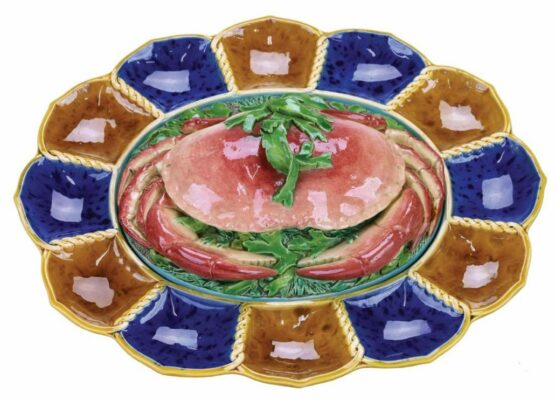
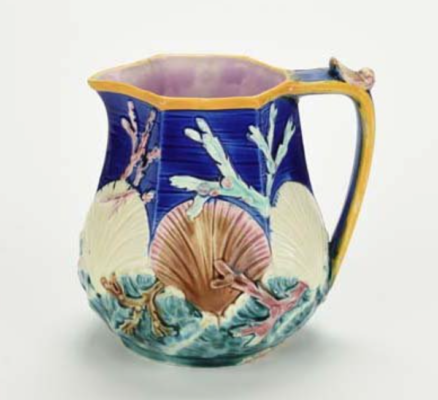
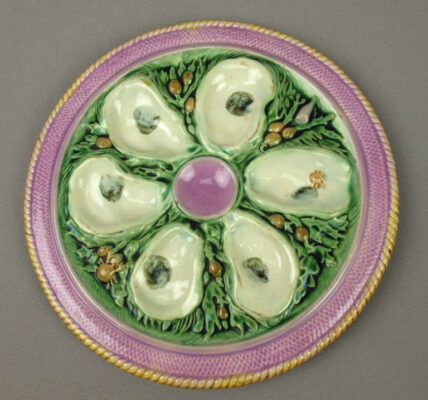
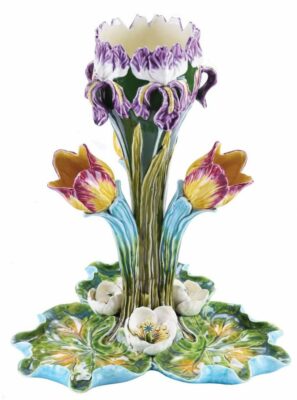
Images via Majolica International Society.
Majolica quickly caught on among Europe's middle and upper classes, and by 1860 more than 30 major majolica manufactures thrived. Themes common to Majolica included: antiquity, natural history, the countryside, exotic creatures, and Renaissance art. Many of the most popular forms were focused on the natural world and probably delighted Victorian consumers who were increasingly leaving countryside behind for urban dwelling.
Some of the important makers of Majolica included: Minton, Wedgwood, George Jones, Griffin, Smith & Hill, Onnaing, and Salins.
By 1900, Majolica had largely fallen out of favor as Art Nouveau forms gained popularity. Majolica was also hurt by the dangerous manufacturing conditions resulting from working with the glazes, which caused lead poisoning.
Know Before You Buy:
- Get Glossy! Antique Majolica has a shiny luster to the surface caused by the top glaze and second firing.
- Discriminating Details! Look for fine details in the molding and painting. Sloppy mistakes or dripped color is a sure sign of a reproduction.
- Marks are Up in the Air! Many of the major Majolica manufacturers like Minton and Wedgwood did mark the bottom of their pieces, but other smaller companies did not. The lack of a mark does not out rule authenticity. You can check marks against known pieces here.
- Garish Beware! Antique Majolica shows jewel like tones in a softer intensity. The colors should not be overly bright or garish.
- Bright White is Not Right! If white does show on the underbody or in highlights it should not be blindingly white, but more creamy.
- Heft is Good! Antique earthenware has a heft to it and should feel solid in your hands.
- Age Leaves its Mark! Look for pitting, crazing, cracks, chips, and scratches. Antique Majolica will likely have a use related blemish after all it may be as old as 168 years.
- Don't Eat, Cook, or Serve on Me! Lead is poisonous! Reproductions generally don't use lead based glazes.
Reproduction Example:
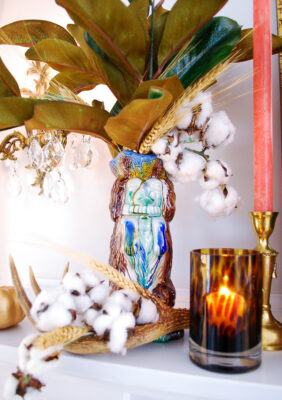
Take a look at my sweet begging spaniel pitcher. It is a reproduction majolica piece. This is evident for several reasons:
1. It is light weight.
2. The glaze has been dripped and washed on, intermixing colors.
3. The white is too bright and has a blueish tint.
4. The molding is not finely detailed.
5. The condition is too perfect.
Adding a reproduction Majolica piece to your collection is perfectly acceptable just as long as you recognize it as such and don't overpay for something that is inauthentic.
Shop my picks for Majolica around the web:
Mantel Inspiration:
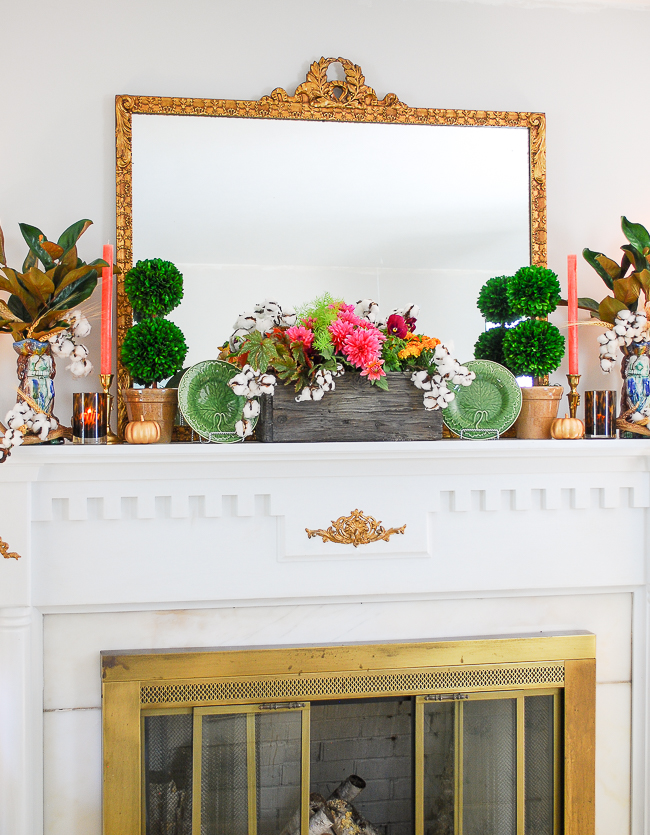
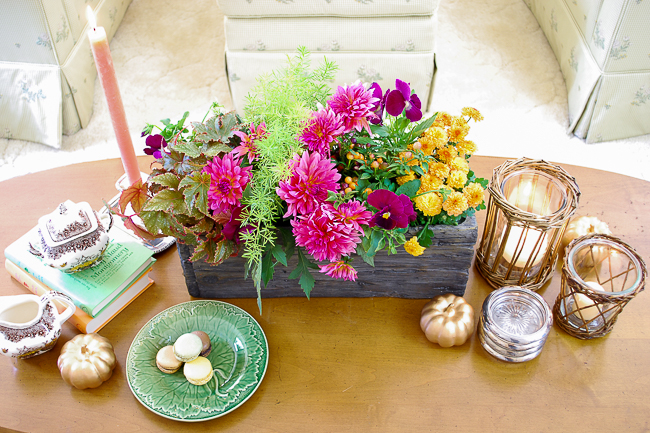
In my home, mantels get changed up seasonally, and I love to use Majolica for autumn themes. The rich tones and predominating greens, golds, and aquas make for charming companion to the autumn foliage outside. This year I paired my reproduction Majolica begging spaniels with Wedgwood style leaf plates and a faux bois planter filled with fall flowers for a unique seasonal look.
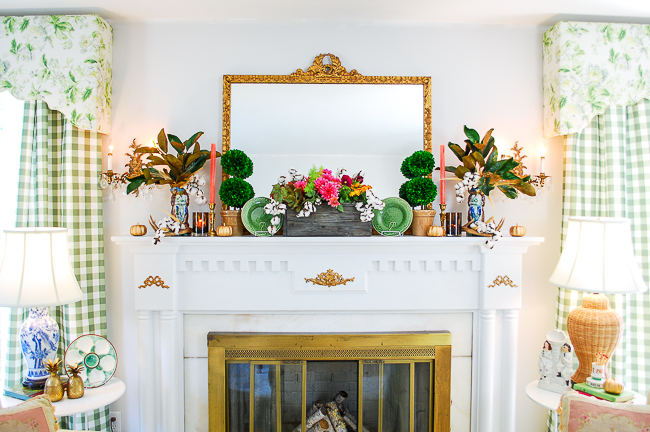
Head here to see all the details and photos of this mantel style!
In the Bookcase:
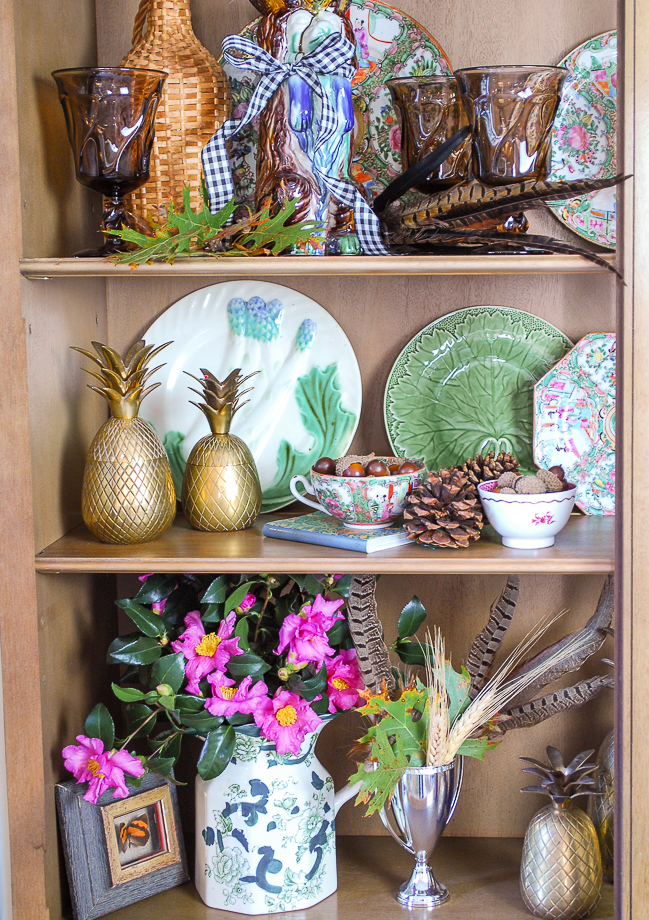
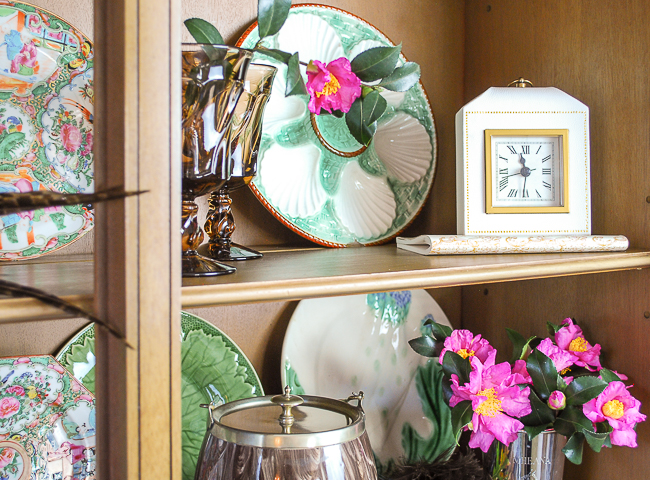
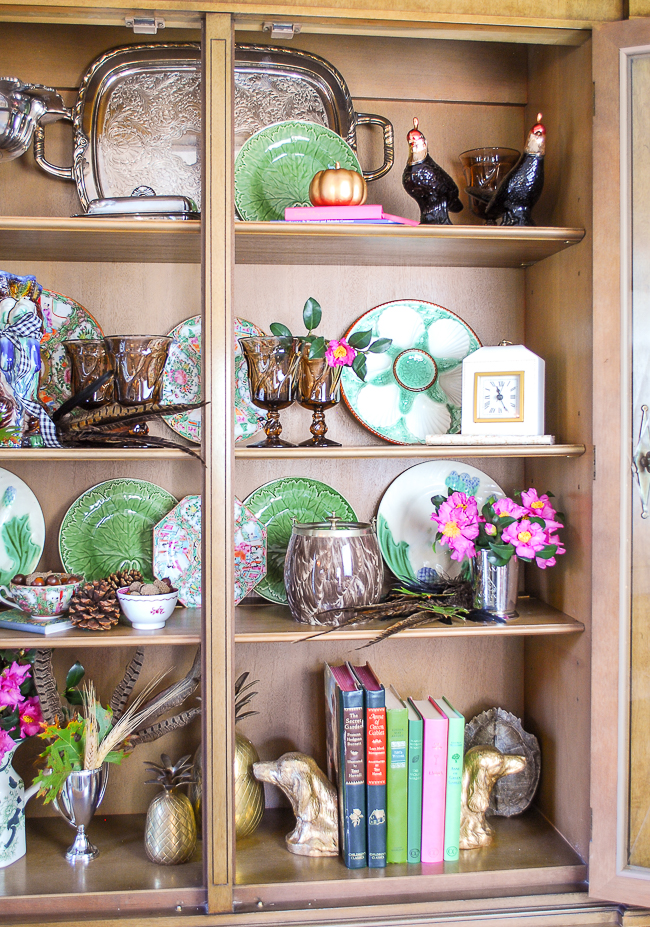
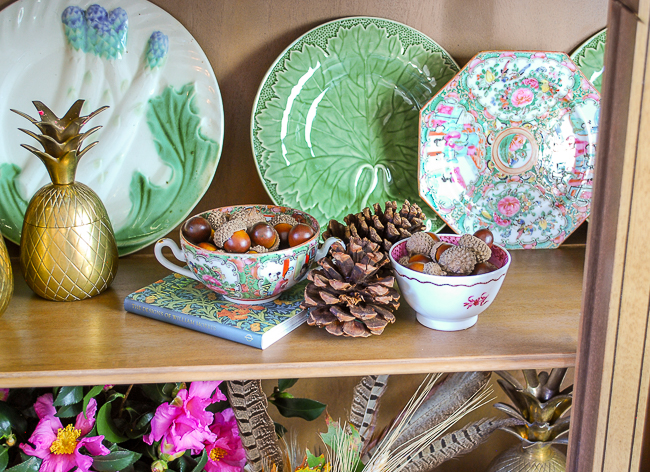
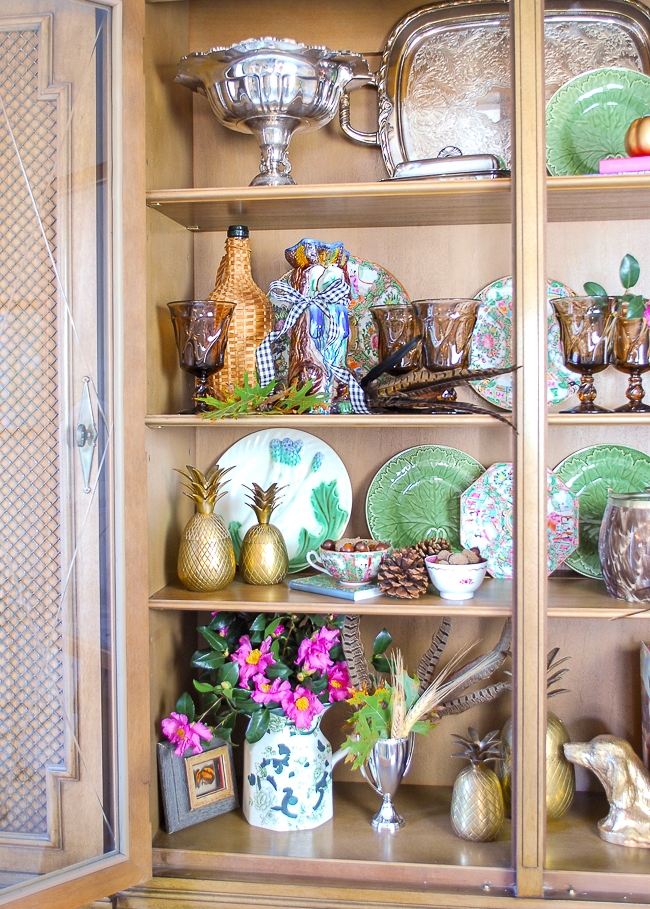
Bookcases, hutches, and china cabinets are classic locals for your Majolica displays. For a traditional look, if you have enough pieces, go whole hog and style the shelves in all Majolica. But for a more contemporary feel, I like to pair Majolica with other ceramics and decorative arts. This is particularly useful for those of us just building a collection!
See "Perfect Pairings" and "Proper Playmates" tabs for tips and inspiration.
Mirror Surround:
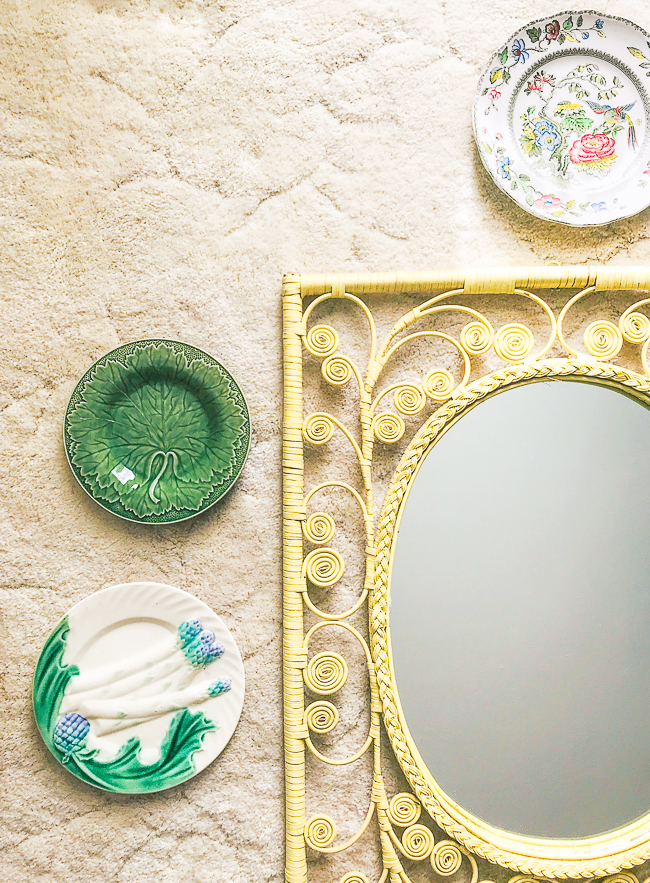
Majolica dishes also look fabulous mixed in a gallery wall or plate display wall. I have been toying with the idea of showcasing my Majolica around this wicker mirror. Before hanging anything, layout your design elements on the floor and play with the arrangement to achieve the desired effect.
Click the next pink tab "Perfect Pairings" to learn about the design elements that pair beautifully with Majolica.


Majolica in the P&P Shop:
-
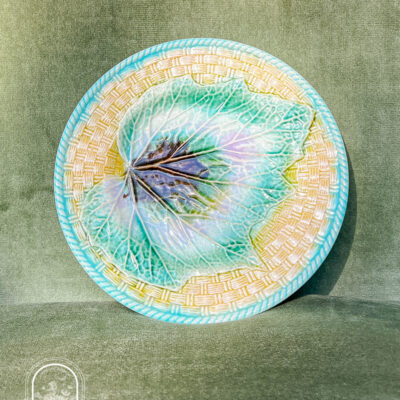
Adams & Bromley Majolica Plate with Begonia Leaf on Basket Weave
$124.00 Add to cart -
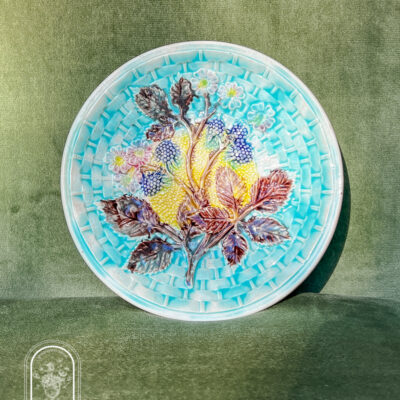
Arsenal Blackberry Majolica Plate
$93.00 Add to cart - Sale!
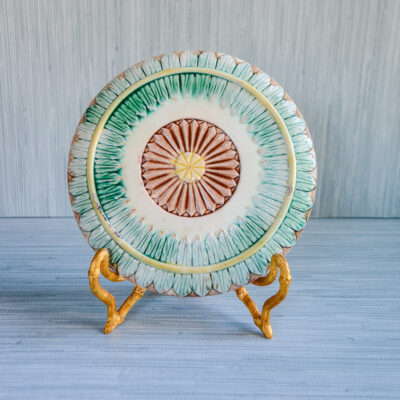
Etruscan Majolica Trivet, GS&H
Original price was: $42.00.$29.00Current price is: $29.00. Read more -
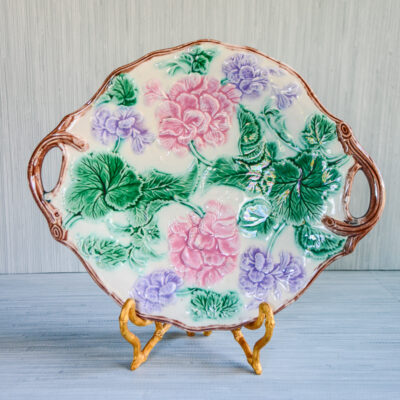
Griffen, Smith & Hill Etruscan Geranium Cake Plate
$167.00 Read more -
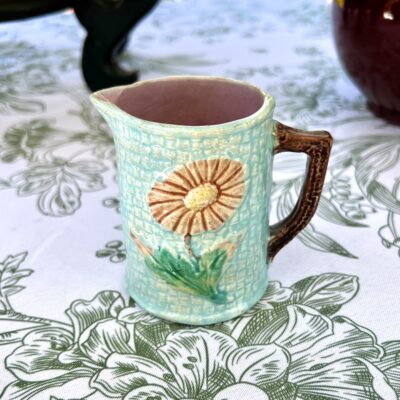
Small Majolica Flower Pitcher
$29.00 Add to cart -
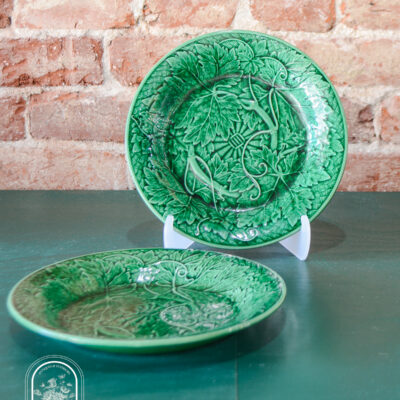
Wedgwood Green Majolica Leaf Plate
$79.00 Add to cart
Shop my picks for Majolica around the web:
Hi there! I'm Katherine...
the curator, writer in residence, and decorator behind Pender & Peony.
I’ve decorated my entire 1960s brick colonial with secondhand finds and antiques on a budget without sacrificing style, quality, or comfort.
You CAN have a traditional home with timeless charm on a budget too!
The problem isn't your taste -- it's an industry that glorifies the next big trend and only showcases high end custom design.
That's why I created The Collected Room Method to teach you my approach to the collected interior!
This piece on staging and displaying majolica was so helpful, thank you for the tips!
I’m so glad it helped! Thanks for stopping by!